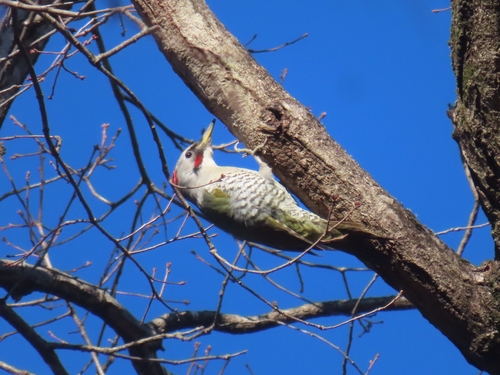
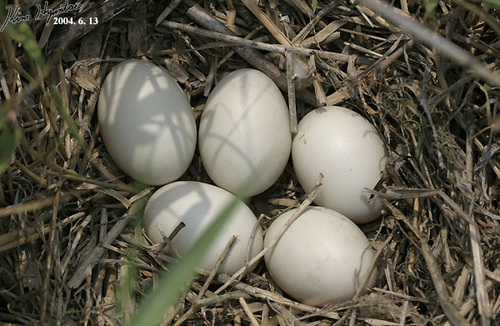
Pygmy Woodpecker

Pygmy Woodpecker

Yungipicus kizuki

Silhouette: Pepe Reigada · PhyloPic

Daily sighting probability ~60% · Likely
at Sendai

In 3 days ~90% in a week >90%

329 Verified sightings at Sendai
335 In 1 park From 2019 to 2026
February Best month
☀️ Diurnal When it's spotted

About the Pygmy Woodpecker

The Japanese pygmy woodpecker or simply pygmy woodpecker (Yungipicus kizuki) is a species of woodpecker. It is found in coniferous and deciduous forests in Russia, China, Korea and Japan. This species has also been placed in the genus Dendrocopos or Picoides. The International Union for Conservation of Nature (IUCN) has assessed it as a least-concern species.

This species was described by Temminck in 1836. The species has previously been placed in genera Dendrocopos and Picoides. The Japanese pygmy woodpecker is 13–15 cm (5.1–5.9 in) long. The crown is grey-brown. A white supercilium starts above the eye and continues to the neck and breast. The ear coverts are brown, and there is a white moustachial stripe and a grey-brown malar stripe. The chin and throat are white. The mantle and back are dark brown, with white bars. The upperwing coverts and flight feathers are brownish-black and have white... Wikipedia →

Sounds

Call1:07

Japan · 2026

© Ding Li Yong · XC1144965 · CC BY-NC-ND 4.0

Drumming1:24

South Korea · 2021

© Wonseok Jang · XC804650 · CC BY-NC-SA 4.0

Drum0:11

Japan · 2015

© Peter Boesman · XC285907 · CC BY-NC-ND 4.0

Global Distribution

Parks Where Found

# Park Country Daily sighting probability
1 Nikko National Park 🇯🇵 Japan
~60%

More parks will be added in future updates.

Cities Where Found

# City Country Daily sighting probability
1 Sendai 🇯🇵 Japan
~60%
2 Sapporo 🇯🇵 Japan
~40%
3 Seoul 🇰🇷 South Korea
~40%
4 Gwangju 🇰🇷 South Korea
~40%
5 Fukuoka 🇯🇵 Japan
~40%
6 Busan 🇰🇷 South Korea
~40%
7 Daejeon 🇰🇷 South Korea
~40%
8 Nagoya 🇯🇵 Japan
~30%
9 Tokyo 🇯🇵 Japan
~30%
10 Osaka 🇯🇵 Japan
~20%

Before you go

What are the chances of seeing a Pygmy Woodpecker in Sendai?

Likely

About 60% of wildlife watchers report a Pygmy Woodpecker sighting in Sendai on a given day, based on 329 verified sightings from GBIF citizen-science data. It is the 13th most-seen of the 107 birds we can rate there. Over three days the chance rises to about 90%, and over a week to over 90%, if each day is a fresh chance.

When is the best time to see a Pygmy Woodpecker in Sendai?

August–October and December–June

In those months about 60% of wildlife watchers report a Pygmy Woodpecker in Sendai on a given day, against about 40% in July, the lowest month.

What time of day is best to see a Pygmy Woodpecker?

Between 7 and 10 am

Across all the parks we cover, that three-hour window holds the most Pygmy Woodpecker sightings with a recorded time, and about 9 in 10 of them come between 6 am and 6 pm: it is a daytime animal.

Is Sendai the best place to see a Pygmy Woodpecker?

Yes

Of the 14 cities where we can rate Pygmy Woodpecker sightings, Sendai has the highest daily chance: about 60%. Next come Sapporo (Japan, about 40%) and Seoul (South Korea, about 40%).

Which relatives of the Pygmy Woodpecker live in Sendai?

Same family: Picidae

The closest relatives of the Pygmy Woodpecker that you can see in Sendai (family Picidae, Woodpeckers) are Japanese Green Woodpecker (about 30%) and Great Spotted Woodpecker (about 20%), with each one's daily chance of a sighting.

Where does the Pygmy Woodpecker sighting chance come from?

GBIF citizen-science records

It is estimated from how often the Pygmy Woodpecker is recorded against all the birds logged in Sendai (329 verified sightings), calibrated against known sighting rates. Figures are rounded to the nearest 10% because citizen-science data supports honest approximations, not decimals, and months with records from fewer than five people show "—". How it works.

← Back to Sendai