Bellflower Resin Bee
Daily sighting probability <5% · Rare
at Toronto

In 3 days ~10% in a week ~20%

25 Verified sightings at Toronto
July Best month

About the Bellflower Resin Bee

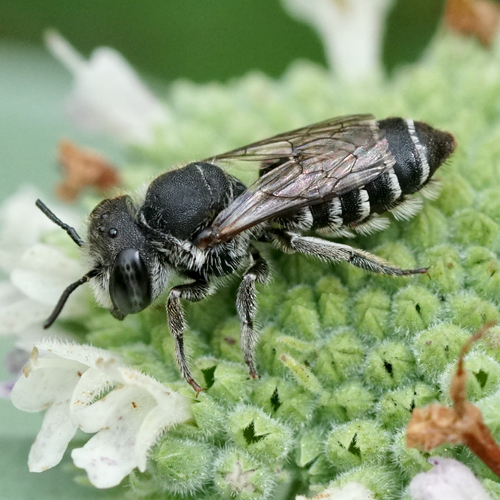
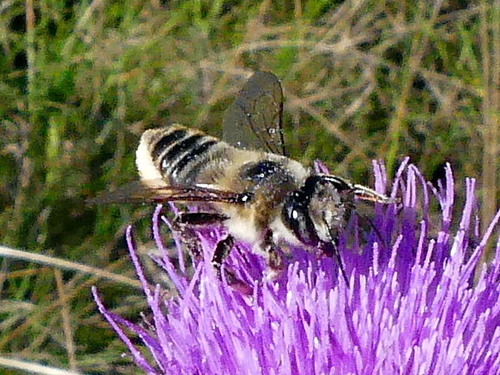
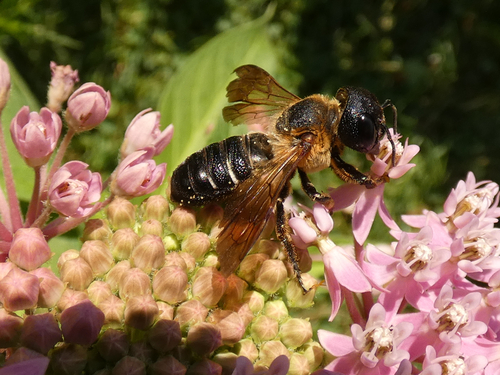
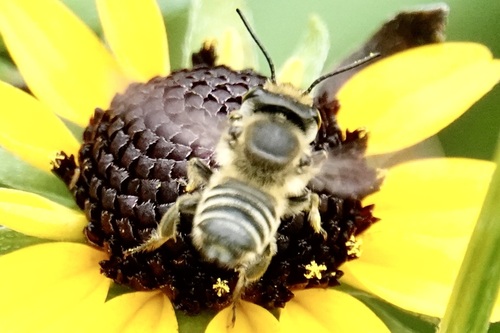
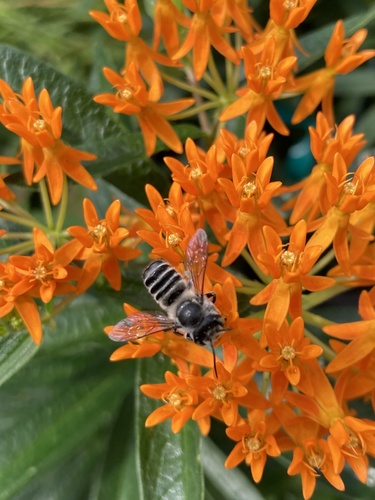
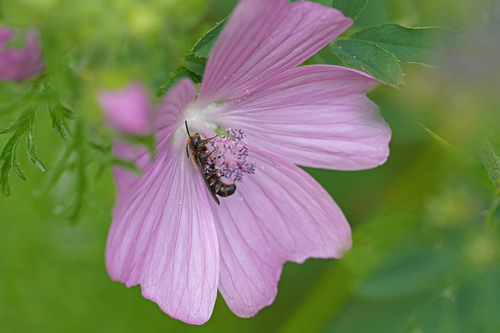
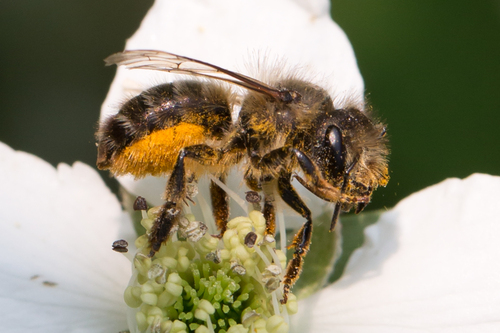
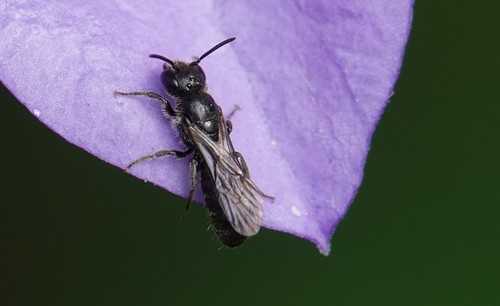
Megachile campanulae, known as the bellflower resin bee, is a species of bee in the family Megachilidae. Described in 1903, these solitary bees are native to eastern North America. Studies in 2013 placed them among the first insect species to use synthetic materials for making nests. They are considered mason bees, which is a common descriptor of bees in several families, including Megachilidae. Within the genus Megachile, frequently also referred to as leafcutter bees, M. campanulae is a member of the subgenus Chelostomoides, which do not construct nests from cut leaves, but rather from plant resins and other materials. Females lay eggs in nests constructed with individual cell compartments for each egg. Once hatched, the eggs progress through larval stages and subsequently will overwinter as pupae. The bees are susceptible to parasitism from several other bee species, which act as brood parasites. They are medium-sized bees and the female adults are typically larger than the males. They are important pollinators of numerous native plant species throughout their range.

Megachile campanulae was originally described in 1903 under the name Oligotropus... Wikipedia →
Global Distribution

Parks Where Found

# Park Country Daily sighting probability

More parks will be added in future updates.

Cities Where Found

# City Country Daily sighting probability
1 Minneapolis [Saint Paul] 🇺🇸 United States
<5%
2 Toronto 🇨🇦 Canada
<5%
3 Boston 🇺🇸 United States
<5%
4 Chicago 🇺🇸 United States
<5%
5 New York City 🇺🇸 United States
<5%

Before you go

What are the chances of seeing a Bellflower Resin Bee in Toronto?

Rare

Under 5% of wildlife watchers report a Bellflower Resin Bee sighting in Toronto on a given day, based on 25 verified sightings from GBIF citizen-science data. It is the 577th most-seen of the 1689 insects we can rate there. Over three days the chance rises to about 10%, and over a week to about 20%, if each day is a fresh chance.

When is the best time to see a Bellflower Resin Bee in Toronto?

July

In that month about 10% of wildlife watchers report a Bellflower Resin Bee in Toronto on a given day, against under 5% in August to June, the lowest months.

Is Toronto the best place to see a Bellflower Resin Bee?

Among the best

Of the 5 cities where we can rate Bellflower Resin Bee sightings, Toronto ranks 2nd at under 5%, level with the leaders once rounded. The best odds are in Minneapolis [Saint Paul] (United States, under 5%).

Where does the Bellflower Resin Bee sighting chance come from?

GBIF citizen-science records

It is estimated from how often the Bellflower Resin Bee is recorded against all the insects logged in Toronto (25 verified sightings), calibrated against known sighting rates. Figures are rounded to the nearest 10% because citizen-science data supports honest approximations, not decimals, and months with records from fewer than five people show "—". How it works.

← Back to Toronto