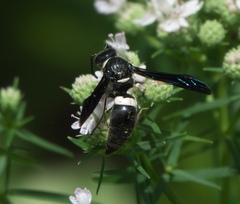
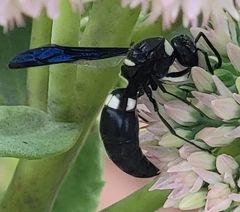
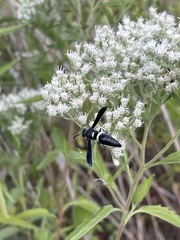
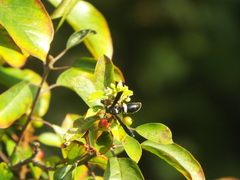
Four-Toothed Mason Wasp

Four-Toothed Mason Wasp

Monobia quadridens

Daily sighting probability ~10% · With luck
at Toronto

In 3 days ~20% in a week ~30%

145 Verified sightings at Toronto
50 In all 4 parks From 2019 to 2026
August Best month
☀️ Diurnal When it's spotted

About the Four-Toothed Mason Wasp

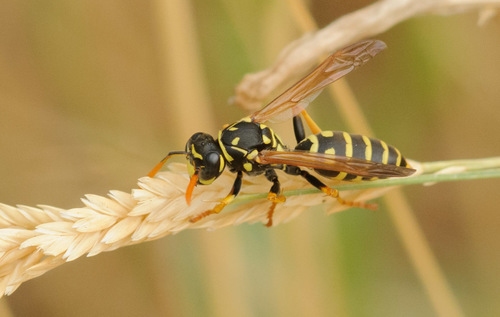
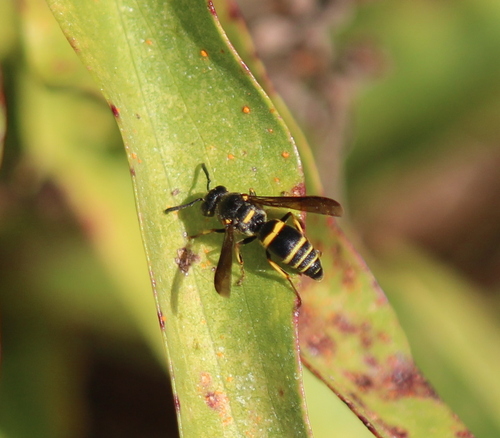
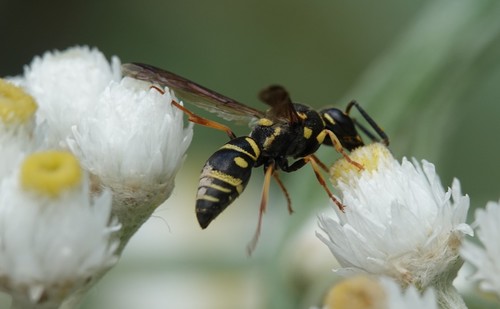
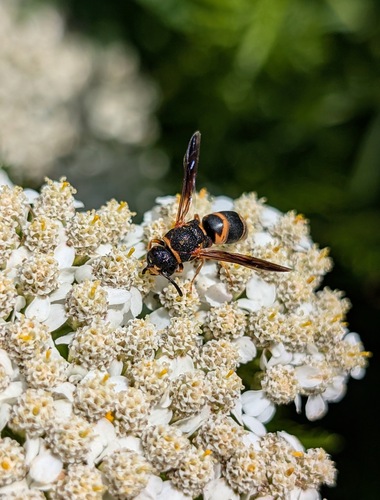
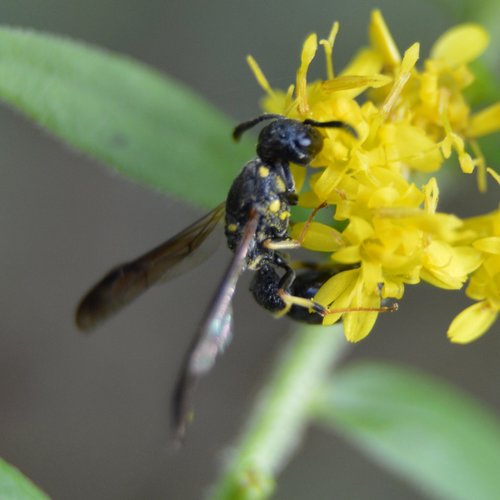
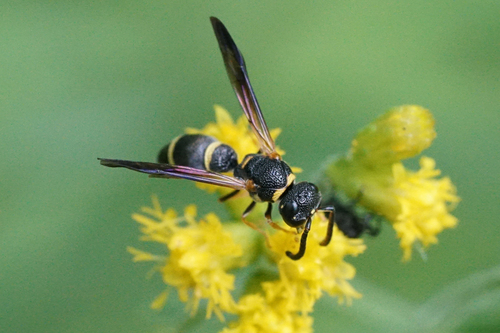
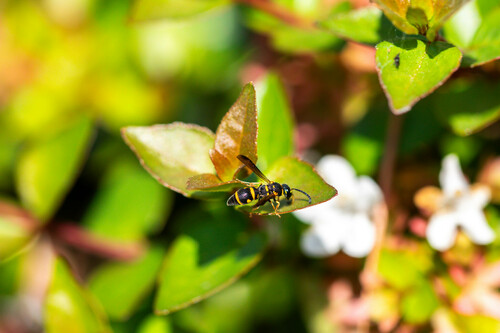
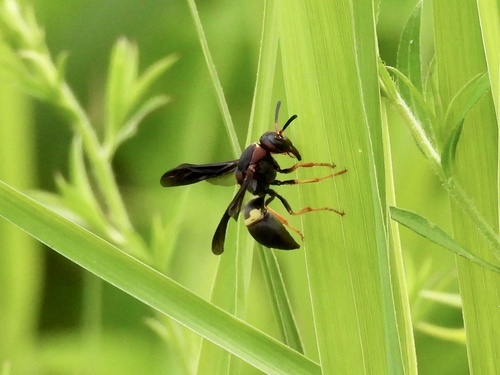
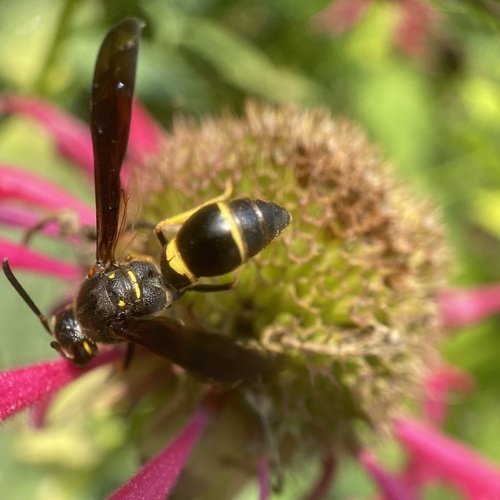
Monobia quadridens, also known as the four-toothed mason wasp, is a species of solitary potter wasp (subfamily Eumeninae) found in North America. It grows to a wingspan of 18 mm (0.71 in), and feeds on small caterpillars and pollen. Two generations occur per year, with one generation overwintering as pupae.

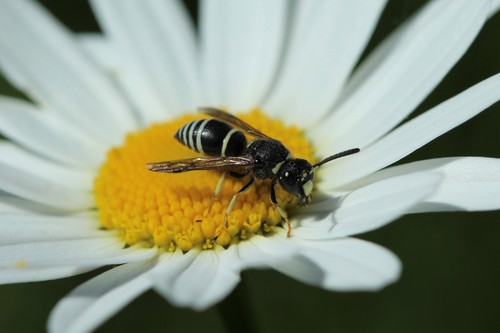
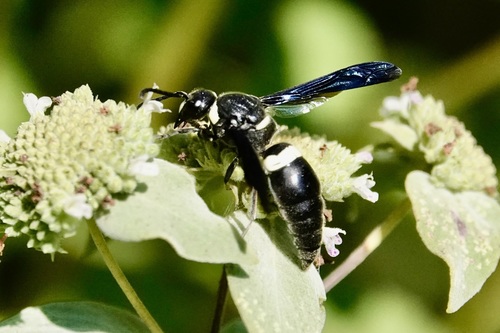
The abdomen of M. quadridens is entirely black, except for a broad ivory-coloured band on the first tergite. The wingspan is typically 11.0–14.5 mm (0.43–0.57 in) for males, and 14–18 mm (0.55–0.71 in) for females. It closely resembles Euodynerus bidens in size and colouration.

Monobia quadridens has a wide distribution in eastern North America. In Mexico, it is found in the states of Tamaulipas and Nuevo León, while in the United States, it is found from New Mexico, Kansas, and Wisconsin east to the Eastern Seaboard. The occurrence of the species in Canada has been recorded by Buck (2008 https://cjai.biologicalsurvey.ca/bmc_05/pdf/bmc05.pdf) and specimens identified as M. quadridens have been present in Canadian entomological collections for a long time.

Monobia quadridens was first described by Carl Linnaeus in his 1763 work... Wikipedia →
Global Distribution

Parks Where Found

# Park Country Daily sighting probability
1 Point Pelee National Park 🇨🇦 Canada
~10%
2 Great Smoky Mountains National Park 🇺🇸 United States
~10%
3 Shenandoah National Park 🇺🇸 United States
~10%
4 Everglades National Park 🇺🇸 United States
<5%

Cities Where Found

# City Country Daily sighting probability
1 Baltimore 🇺🇸 United States
~10%
2 Boston 🇺🇸 United States
~10%
3 Washington 🇺🇸 United States
~10%
4 Philadelphia 🇺🇸 United States
~10%
5 New York City 🇺🇸 United States
~10%
6 Toronto 🇨🇦 Canada
~10%
7 Houston 🇺🇸 United States
~10%
8 Dallas 🇺🇸 United States
<5%
9 Detroit 🇺🇸 United States
<5%
10 Austin 🇺🇸 United States
<5%

Before you go

What are the chances of seeing a Four-Toothed Mason Wasp in Toronto?

With luck

About 10% of wildlife watchers report a Four-Toothed Mason Wasp sighting in Toronto on a given day, based on 145 verified sightings from GBIF citizen-science data. It is the 165th most-seen of the 1689 insects we can rate there. Over three days the chance rises to about 20%, and over a week to about 30%, if each day is a fresh chance.

When is the best time to see a Four-Toothed Mason Wasp in Toronto?

July and August

In those months about 10% of wildlife watchers report a Four-Toothed Mason Wasp in Toronto on a given day, against under 5% in September to June, the lowest months.

What time of day is best to see a Four-Toothed Mason Wasp?

Between 11 am and 2 pm

Across all the parks we cover, that three-hour window holds the most Four-Toothed Mason Wasp sightings with a recorded time, and nearly all of them come between 6 am and 6 pm: it is a daytime animal.

Is Toronto the best place to see a Four-Toothed Mason Wasp?

Among the best

Of the 13 cities where we can rate Four-Toothed Mason Wasp sightings, Toronto ranks 6th at about 10%, level with the leaders once rounded. The best odds are in Baltimore (United States, about 10%), Boston (United States, about 10%) and Washington (United States, about 10%).

Which relatives of the Four-Toothed Mason Wasp live in Toronto?

Same family: Eumenidae

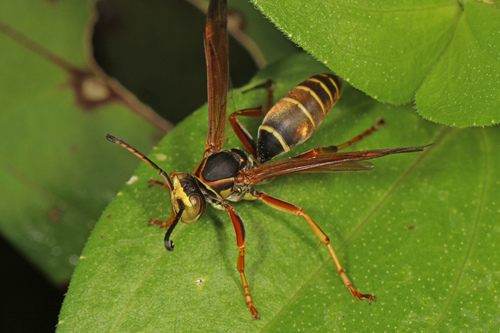
The closest relatives of the Four-Toothed Mason Wasp that you can see in Toronto (family Eumenidae) are European Paper Wasp (about 10%) and Northern Paper Wasp (about 10%), with each one's daily chance of a sighting.

Where does the Four-Toothed Mason Wasp sighting chance come from?

GBIF citizen-science records

It is estimated from how often the Four-Toothed Mason Wasp is recorded against all the insects logged in Toronto (145 verified sightings), calibrated against known sighting rates. Figures are rounded to the nearest 10% because citizen-science data supports honest approximations, not decimals, and months with records from fewer than five people show "—". How it works.

← Back to Toronto