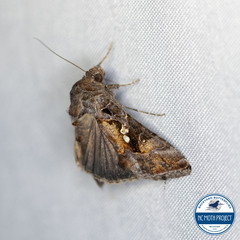
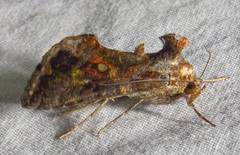
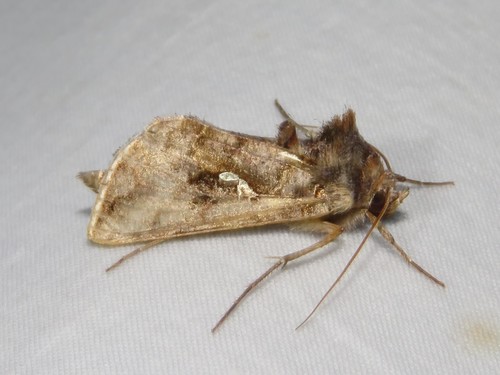
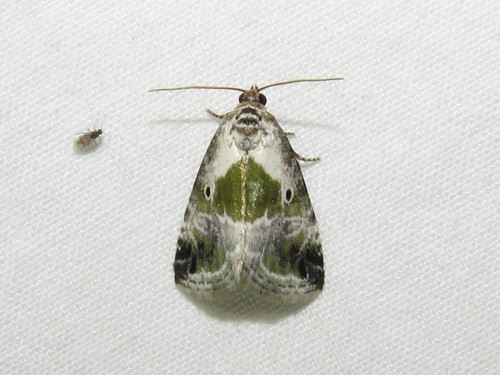
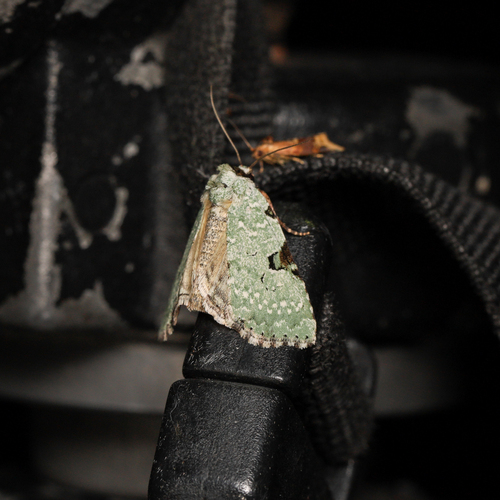
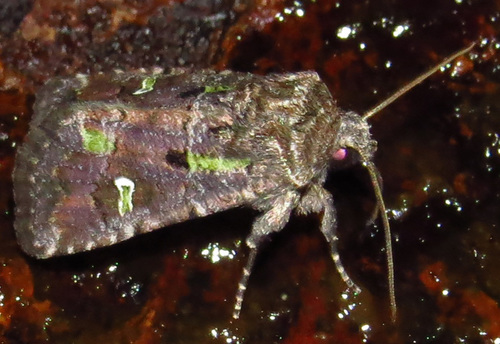
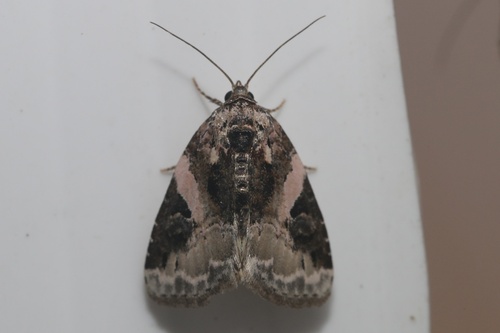
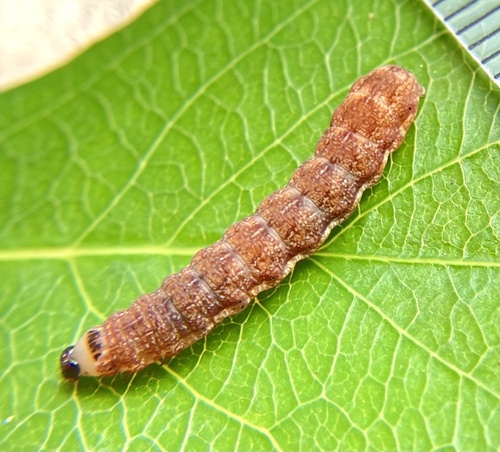
Soybean Looper Moth

Soybean Looper Moth

Chrysodeixis includens

Daily sighting probability <5% · Rare
at Toronto

In 3 days ~10% in a week ~20%

28 Verified sightings at Toronto
5 In 1 park From 2019 to 2026
September Best month
🌅 Crepuscular When it's spotted

About the Soybean Looper Moth

Chrysodeixis includens, the soybean looper, is a moth of the family Noctuidae. It is known as falso medidor in north-eastern Mexico. It is found from southern Quebec and southern Ontario through the eastern and southern part of the United States to Central America and South America, the Antilles and the Galápagos Islands. It is known to be migratory. The species was first described by Francis Walker in 1858.

The wingspan is 28–39 mm. The adults are on wing from April to November depending on the location. The larvae feed on a wide range of plants. Recorded food plants are Asteraceae, Brassicaceae, Commelinaceae, Euphorbiaceae, Fabaceae, Geraniaceae, Lamiaceae, Lauraceae, Malvaceae, Solanaceae, Verbenaceae, Medicago sativa, Phaseolus polystachios, Glycine max, Gossypium herbaceum, Nicotiana tabacum, Lycopersicon esculentum, Brassica and Lactuca sativa.

The Mexican free-tailed bat (Tadarida brasiliensis) may feed on the soybean looper. Wikipedia →
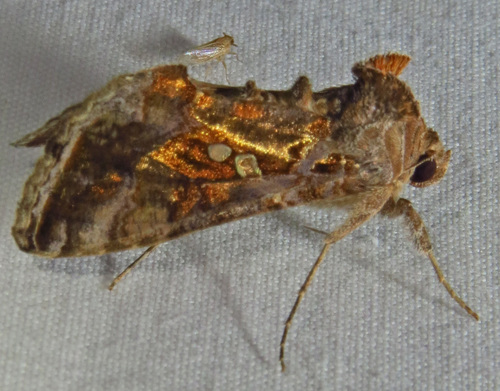
Global Distribution

Parks Where Found

# Park Country Daily sighting probability
1 Point Pelee National Park 🇨🇦 Canada
~10%

More parks will be added in future updates.

Cities Where Found

# City Country Daily sighting probability
1 Chicago 🇺🇸 United States
~10%
2 Austin 🇺🇸 United States
<5%
3 Dallas 🇺🇸 United States
<5%
4 Philadelphia 🇺🇸 United States
<5%
5 Boston 🇺🇸 United States
<5%
6 Toronto 🇨🇦 Canada
<5%
7 Washington 🇺🇸 United States
<5%
8 New York City 🇺🇸 United States
<5%
9 Houston 🇺🇸 United States
<5%
10 San Diego 🇺🇸 United States
<5%

Before you go

What are the chances of seeing a Soybean Looper Moth in Toronto?

Rare

Under 5% of wildlife watchers report a Soybean Looper Moth sighting in Toronto on a given day, based on 28 verified sightings from GBIF citizen-science data. It is the 529th most-seen of the 1689 insects we can rate there. Over three days the chance rises to about 10%, and over a week to about 20%, if each day is a fresh chance.

When is the best time to see a Soybean Looper Moth in Toronto?

September

In that month about 10% of wildlife watchers report a Soybean Looper Moth in Toronto on a given day, against under 5% in October to August, the lowest months.

What time of day is best to see a Soybean Looper Moth?

Between 4 and 7 am

Across all the parks we cover, that three-hour window holds the most Soybean Looper Moth sightings with a recorded time, and about 6 in 10 of them come between 6 am and 6 pm: it is most active around dawn and dusk.

Is Toronto the best place to see a Soybean Looper Moth?

6th of 11

Of the 11 cities where we can rate Soybean Looper Moth sightings, Toronto ranks 6th at under 5%. The best odds are in Chicago (United States, about 10%), Austin (United States, under 5%) and Dallas (United States, under 5%).

Which relatives of the Soybean Looper Moth live in Toronto?

Same family: Noctuidae

The closest relatives of the Soybean Looper Moth that you can see in Toronto (family Noctuidae, Cutworm Moths and Allies) are American Dagger (about 10%), Large Yellow Underwing (about 10%) and Armyworm Moth (about 10%), with each one's daily chance of a sighting.

Where does the Soybean Looper Moth sighting chance come from?

GBIF citizen-science records

It is estimated from how often the Soybean Looper Moth is recorded against all the insects logged in Toronto (28 verified sightings), calibrated against known sighting rates. Figures are rounded to the nearest 10% because citizen-science data supports honest approximations, not decimals, and months with records from fewer than five people show "—". How it works.

← Back to Toronto