Water Dragon

Water Dragon

Physignathus cocincinus

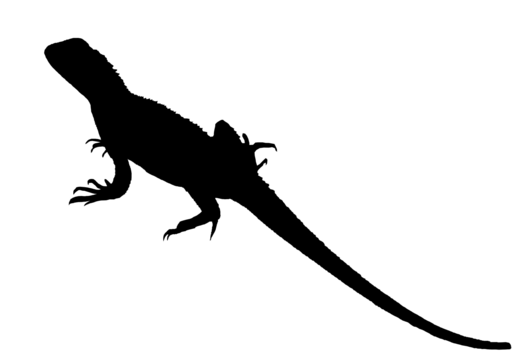
Silhouette: Michael Scroggie · PhyloPic

LCNTVUVulnerableENCR
Daily sighting probability ~10% · With luck
at Tuen Mun

In 3 days ~20% in a week ~40%

7 Verified sightings at Tuen Mun
119 In all 2 parks From 2019 to 2026
August Best month
☀️🌙 Day & Night When it's spotted

About the Water Dragon

Physignathus cocincinus is a species of agamid lizard native to southern China and mainland Southeast Asia. It is commonly known as the Chinese water dragon, Indochinese water dragon, Asian water dragon, Thai water dragon, or green water dragon.

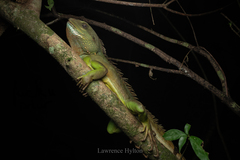
Chinese water dragons are large diurnal lizards adapted for dense subtropical forests replete with unpolluted streams. They are semi-arboreal, roosting at night on branches overlooking streams, which offer an escape route when the lizards are disturbed. Arthropods are their main source of food, though worms, snails, vertebrates, and plants make up a notable portion of the diet as well. Males are territorial towards each other and bear display features such as crests and jowls. Females are oviparous and reproduce sexually in the wild, though at least one captive Chinese water dragon is known to have reproduced via parthenogenesis. Physignathus cocincinus is related to Australasian lizards in the subfamily Amphibolurinae. One amphibolurine, the Australian water dragon (Intellagama lesuerii) is so anatomically and ecologically similar to Physignathus cocincinus that it was once (erroneously) placed in the same genus.

Feral populations introduced to Hong Kong and Taiwan flourish in high densities despite countermeasures in the latter territory. Their populations are also stable (albeit not widespread) in protected areas of Thailand. However, in the rest of their native range, Chinese water dragons have seen sharp population declines in recent decades. They are listed as a Vulnerable species at risk of extinction in the future, based on current trends. The largest threat to the species is overharvesting for meat and the pet trade. Their meat is in high demand in Vietnam, and captive breeding is currently incapable of replacing wild collection by hunters and poachers. Due to their charismatic appearance, captured Chinese water dragons are sold as pets for both local and international markets. Yearly exports to the European Union and the United States number in the tens of thousands, all of which are taken from wild populations. Habitat loss is another source of pressure, as undisturbed streamside forest is converted into cropland or subjected to illegal logging and other human activities. Wikipedia →

Global Distribution

Parks Where Found

# Park Country Daily sighting probability
1 Khao Yai National Park 🇹🇭 Thailand
~40%
2 Cat Tien National Park 🇻🇳 Vietnam
~20%

Cities Where Found

# City Country Daily sighting probability
1 Hong Kong 🇨🇳 China
~30%
2 Tuen Mun 🇨🇳 China
~10%

Zoos & Centres Where Found

# Zoo / Centre Country
1 National Zoological Park 🇺🇸 United States In captivity
2 Natura Artis Magistra 🇳🇱 Netherlands In captivity
3 Planckendael Zoo 🇧🇪 Belgium In captivity
4 Barcelona Zoo 🇪🇸 Spain In captivity
5 Kolmården Wildlife Park 🇸🇪 Sweden In captivity
6 Yekaterinburg Zoo 🇷🇺 Russia In captivity
7 Zoobotánico Jerez 🇪🇸 Spain In captivity
8 Karagandy Zoo 🇰🇿 Kazakhstan In captivity
9 Vinpearl Safari 🇻🇳 Vietnam In captivity
10 Toronto Zoo 🇨🇦 Canada In captivity
11 Taipei Zoo 🇹🇼 Taiwan In captivity
12 Bronx Zoo 🇺🇸 United States In captivity
13 Kadoorie Farm and Botanic Garden 🇭🇰 Hong Kong SAR China In captivity
14 Nakhon Ratchasima Zoo 🇹🇭 Thailand In captivity
15 Planète Sauvage 🇫🇷 France In captivity
16 Parco Natura Viva 🇮🇹 Italy In captivity
17 Luisenpark 🇩🇪 Germany In captivity
18 Warsaw Zoo 🇵🇱 Poland In captivity
19 Novosibirsk Zoo 🇷🇺 Russia In captivity
20 Zoo La Barben 🇫🇷 France In captivity
21 Kyiv Zoo 🇺🇦 Ukraine In captivity
22 Wrocław Zoological Garden 🇵🇱 Poland In captivity
23 ZOOM Erlebniswelt 🇩🇪 Germany In captivity
24 Night Safari 🇸🇬 Singapore In captivity
25 Singapore Zoo 🇸🇬 Singapore In captivity
26 Cologne Zoological Garden 🇩🇪 Germany In captivity
27 Nikolaev Zoo 🇺🇦 Ukraine In captivity
28 Saigon Zoo and Botanical Gardens 🇻🇳 Vietnam In captivity
29 Ecopark 🇦🇷 Argentina In captivity
30 Lithuanian Zoo 🇱🇹 Lithuania In captivity
31 Kharkiv Zoo 🇺🇦 Ukraine In captivity
32 Aquarama Barcelona 🇪🇸 Spain In captivity
33 bioparco 🇮🇹 Italy In captivity
34 Plock Zoo 🇵🇱 Poland In captivity
35 Northumberland Zoo 🇬🇧 United Kingdom In captivity
36 Johnsons of Old Hurst 🇬🇧 United Kingdom In captivity
37 Reserva Zoológica Oasys MiniHollywood 🇪🇸 Spain In captivity
38 Espace zoologique de Saint-Martin-la-Plaine 🇫🇷 France In captivity
39 River Wonders 🇸🇬 Singapore In captivity
40 Ueno Zoological Gardens (West Garden) 🇯🇵 Japan In captivity
41 Alligator Adventure 🇺🇸 United States In captivity
42 Reptile Gardens 🇺🇸 United States In captivity
43 Thrigby Hall Wildlife Gardens 🇬🇧 United Kingdom In captivity
44 King's Garden 🇻🇳 Vietnam In captivity
45 Farm in the City 🇲🇾 Malaysia In captivity
46 Vancouver Aquarium 🇨🇦 Canada In captivity
47 Entopia 🇲🇾 Malaysia In captivity
48 Aquarium Barcelona 🇪🇸 Spain In captivity
49 Africarium 🇵🇱 Poland In captivity
50 Exotarium Sosnowiec 🇵🇱 Poland In captivity

Before you go

What are the chances of seeing a Water Dragon in Tuen Mun?

With luck

About 10% of wildlife watchers report a Water Dragon sighting in Tuen Mun on a given day, based on 7 verified sightings from GBIF citizen-science data. It is the 20th most-seen of the 21 reptiles we can rate there. Over three days the chance rises to about 20%, and over a week to about 40%, if each day is a fresh chance.

When is the best time to see a Water Dragon in Tuen Mun?

March–April and August–November

In those months about 10% of wildlife watchers report a Water Dragon in Tuen Mun on a given day, against under 5% in May–July and December–February, the lowest months.

What time of day is best to see a Water Dragon?

Between 8 and 11 pm

Across all the parks we cover, that three-hour window holds the most Water Dragon sightings with a recorded time, and about half of them come between 6 pm and 6 am: it is seen both by day and at night.

Is Tuen Mun the best place to see a Water Dragon?

2nd of 2

Of the 2 cities where we can rate Water Dragon sightings, Tuen Mun ranks 2nd at about 10%. The best odds are in Hong Kong (China, about 30%).

Where does the Water Dragon sighting chance come from?

GBIF citizen-science records

It is estimated from how often the Water Dragon is recorded against all the reptiles logged in Tuen Mun (7 verified sightings), calibrated against known sighting rates. Figures are rounded to the nearest 10% because citizen-science data supports honest approximations, not decimals, and months with records from fewer than five people show "—". How it works.

← Back to Tuen Mun