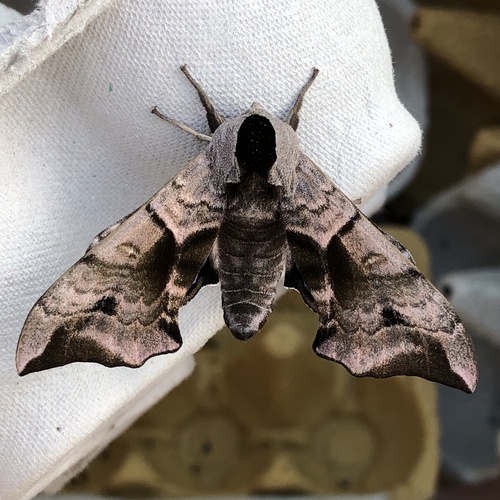
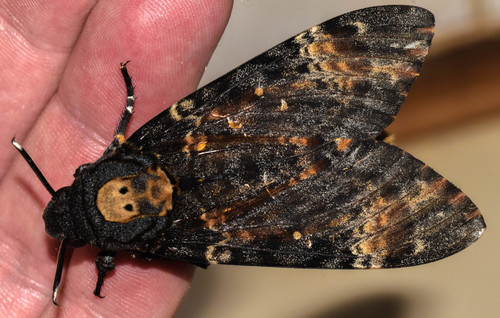
Privet Hawkmoth

Privet Hawkmoth

Sphinx ligustri

Daily sighting probability <5% · Rare
at Vienna

In 3 days ~10% in a week ~30%

27 Verified sightings at Vienna
104 In all 7 parks From 2019 to 2026
June Best month
☀️ Diurnal When it's spotted

About the Privet Hawkmoth

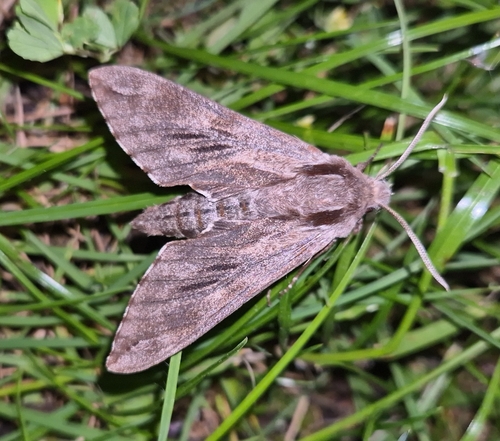
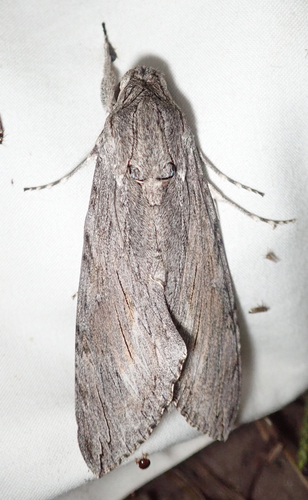
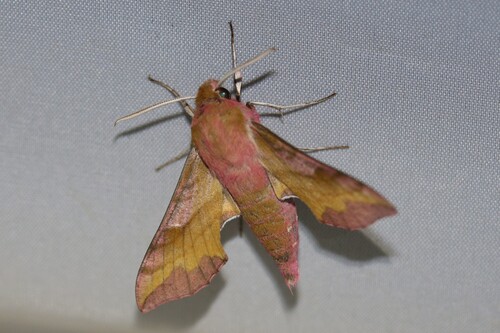
Sphinx ligustri, the privet hawk moth, is a moth found in most of the Palearctic realm. The species was first described by Carl Linnaeus in his 1758 10th edition of Systema Naturae. It has a 12 centimetres (4.7 in) wingspan (generally deflexed at rest), and is found in urban areas, forests and woodlands.

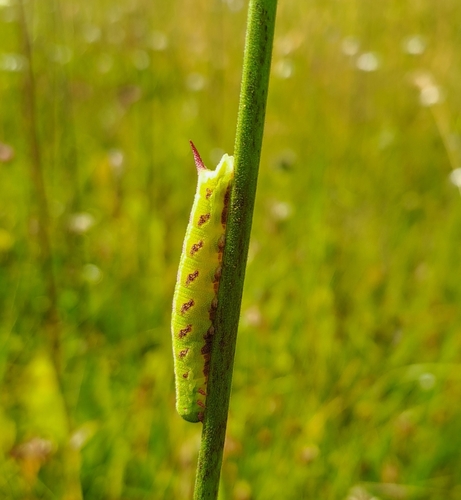
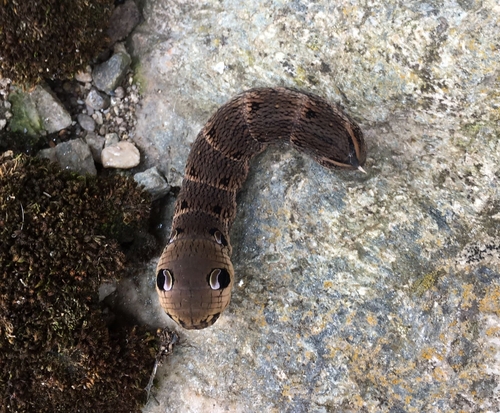
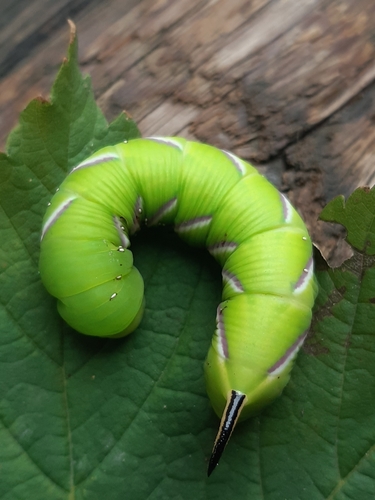
The male privet hawk moth can make a hissing sound, if disturbed, by rubbing together a set of scales and spines at the end of its abdomen. The larvae are usually found between July and August: and bury themselves in the earth when preparing to become a pupa. They then fly in the following June.

As both its common name and specific name - ligustri being derived from the Latin ligustrum, 'privet' - describes, the caterpillars feed on privets, as well as ash trees, lilacs, jasmine, and a number of other plants. Media related to Sphinx ligustri at Wikimedia Commons

Data related to Sphinx ligustri at Wikispecies "69.006 BF1976 Privet Hawk-moth Sphinx ligustri Linnaeus, 1758". UKMoths. Retrieved December 13, 2018. Pittaway, A. R. (2018). "Sphinx Linnaeus, 1758". Sphingidae of the Western Palaearctic. Retrieved... Wikipedia →
Global Distribution

Parks Where Found

# Park Country Daily sighting probability
1 Ordesa y Monte Perdido National Park 🇪🇸 Spain
~20%
2 Aigüestortes National Park 🇪🇸 Spain
~10%
3 Cévennes National Park 🇫🇷 France
~10%
4 Ecrins National Park 🇫🇷 France
~10%
5 Pyrénées National Park 🇫🇷 France
~10%
6 Wadden Sea National Park 🇩🇪 Germany
~10%
7 Bavarian Forest National Park 🇩🇪 Germany
<5%

Cities Where Found

# City Country Daily sighting probability
1 London 🇬🇧 United Kingdom
~10%
2 Essen 🇩🇪 Germany
<5%
3 Berlin 🇩🇪 Germany
<5%
4 Vienna 🇦🇹 Austria
<5%
5 Prague 🇨🇿 Czechia
<5%
6 Nizhny Novgorod 🇷🇺 Russia
<5%
7 Seoul 🇰🇷 South Korea
<5%
8 Kyiv 🇺🇦 Ukraine
<5%
9 Munich 🇩🇪 Germany
<5%
10 Helsinki 🇫🇮 Finland
<5%

Before you go

What are the chances of seeing a Privet Hawkmoth in Vienna?

Rare

Under 5% of wildlife watchers report a Privet Hawkmoth sighting in Vienna on a given day, based on 27 verified sightings from GBIF citizen-science data. It is the 482nd most-seen of the 1406 insects we can rate there. Over three days the chance rises to about 10%, and over a week to about 30%, if each day is a fresh chance.

When is the best time to see a Privet Hawkmoth in Vienna?

June

In that month about 10% of wildlife watchers report a Privet Hawkmoth in Vienna on a given day, against under 5% in July to May, the lowest months. That is one of Vienna's wettest months, with about 90 mm of rain against 40 mm in February.

What time of day is best to see a Privet Hawkmoth?

Between 7 and 10 am

Across all the parks we cover, that three-hour window holds the most Privet Hawkmoth sightings with a recorded time, and about 8 in 10 of them come between 6 am and 6 pm: it is a daytime animal.

Is Vienna the best place to see a Privet Hawkmoth?

4th of 11

Of the 11 cities where we can rate Privet Hawkmoth sightings, Vienna ranks 4th at under 5%. The best odds are in London (United Kingdom, about 10%), Essen (Germany, under 5%) and Berlin (Germany, under 5%).

Where does the Privet Hawkmoth sighting chance come from?

GBIF citizen-science records

It is estimated from how often the Privet Hawkmoth is recorded against all the insects logged in Vienna (27 verified sightings), calibrated against known sighting rates. Figures are rounded to the nearest 10% because citizen-science data supports honest approximations, not decimals, and months with records from fewer than five people show "—". How it works.

← Back to Vienna