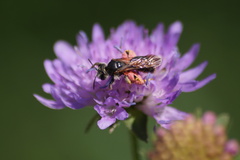
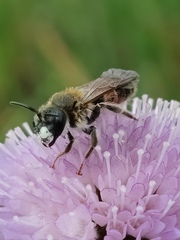
Large Scabious Mining Bee

Large Scabious Mining Bee

Andrena hattorfiana

Daily sighting probability ~10% · With luck
at Warsaw

In 3 days ~20% in a week ~40%

27 Verified sightings at Warsaw
49 In all 4 parks From 2019 to 2026
June Best month
☀️ Diurnal When it's spotted

About the Large Scabious Mining Bee

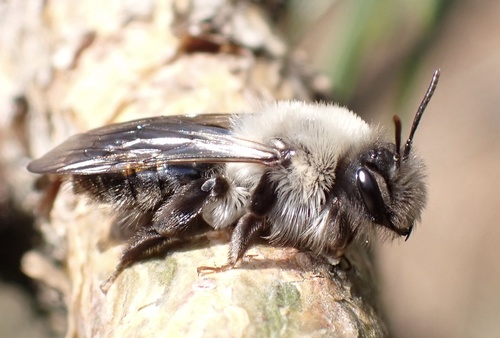
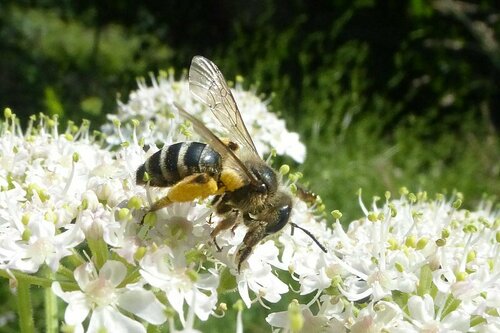
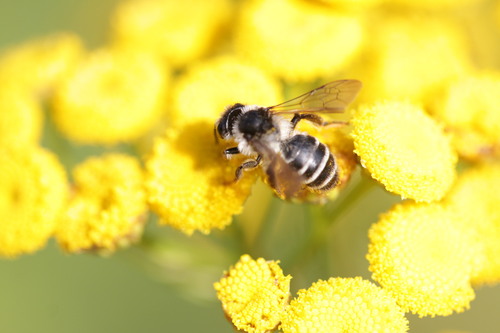
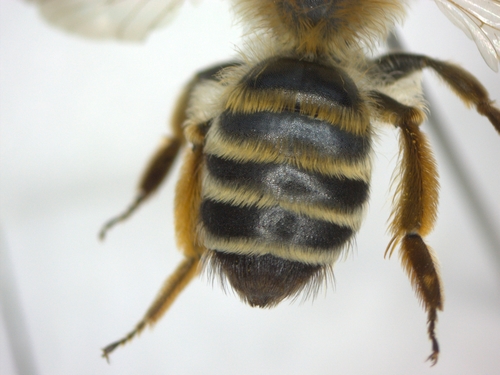
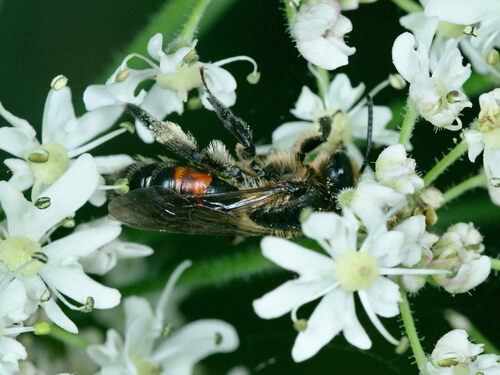
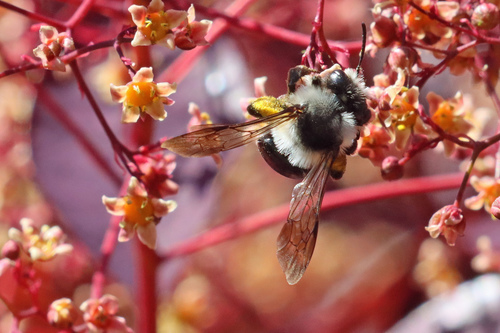
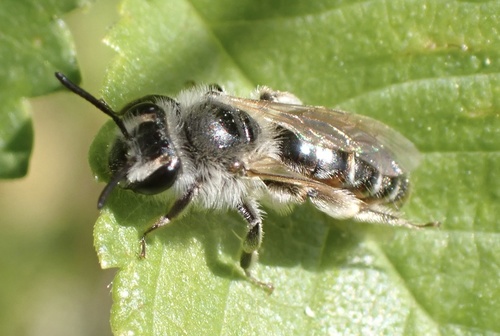
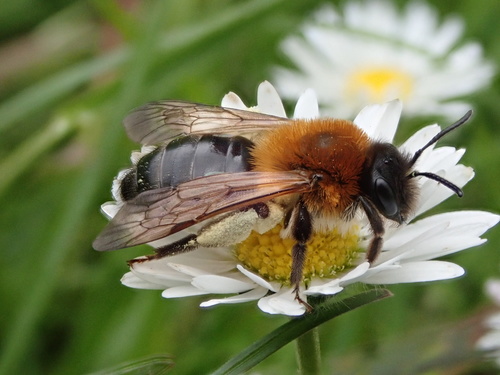
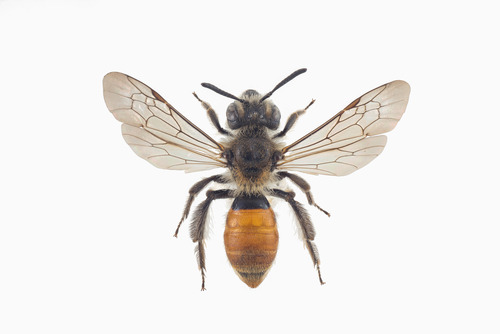
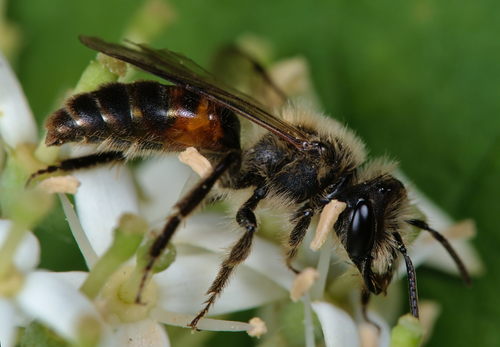
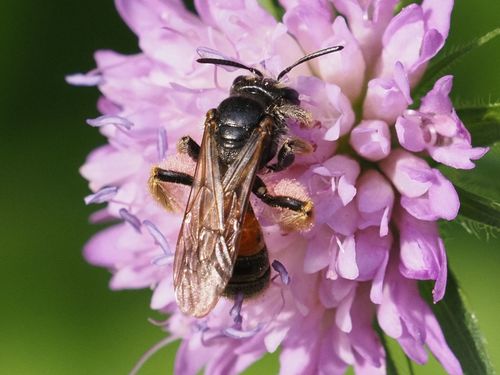
Andrena hattorfiana is a species of mining bees belonging to the family Andrenidae subfamily Andreninae. The adults grow up to 13–16 millimetres (0.51–0.63 in) long. They have a black-brown body with sparse light hair, while the first and the second abdominal segment are reddish. The females have a pollen basket of curved hairs on the sides of the thorax.

This endangered solitary bee is present in most of Europe and in the Near East. From central Spain via Ukraine to the Urals and via Asia Minor to the Caucasus; north to southern England and south Wales, in Norway and Sweden to 60.5 ° N, in Finland to 62.5 ° N, in Russia to Perm, south to Sicily, Peloponnese and southern Turkey; not in Crete. In the eastern Mediterranean area (westwards to Sicily) the ssp. dimidiata BRULLE, 1832 occurs. The species is generally uncommon.

Dry nutrient rich and poor meadows, flood dams, road embankments, forest edges. From the lowlands to the montane elevation. Andrena hattorfiana is an oligolectic species, feeding on cardiac plants (Dipsacaceae); The main pollen source in the area is Knautia arvensis, the secondary pollen source is Knautia dipsacifolia... Wikipedia →
Global Distribution

Parks Where Found

# Park Country Daily sighting probability
1 Bavarian Forest National Park 🇩🇪 Germany
~10%
2 Białowieża National Park 🇵🇱 Poland
~10%
3 Pyrénées National Park 🇫🇷 France
<5%
4 Wadden Sea National Park 🇩🇪 Germany
<5%

Cities Where Found

# City Country Daily sighting probability
1 Warsaw 🇵🇱 Poland
~10%
2 Cologne 🇩🇪 Germany
<5%
3 Essen 🇩🇪 Germany
<5%
4 Vienna 🇦🇹 Austria
<5%
5 Munich 🇩🇪 Germany
<5%
6 Milan 🇮🇹 Italy
<5%
7 Berlin 🇩🇪 Germany
<5%
8 Paris 🇫🇷 France
<5%
9 Moscow 🇷🇺 Russia
<5%

Before you go

What are the chances of seeing a Large Scabious Mining Bee in Warsaw?

With luck

About 10% of wildlife watchers report a Large Scabious Mining Bee sighting in Warsaw on a given day, based on 27 verified sightings from GBIF citizen-science data. It is the 216th most-seen of the 580 insects we can rate there. Over three days the chance rises to about 20%, and over a week to about 40%, if each day is a fresh chance.

When is the best time to see a Large Scabious Mining Bee in Warsaw?

May to July

In those months about 10% of wildlife watchers report a Large Scabious Mining Bee in Warsaw on a given day, against under 5% in August to April, the lowest months.

What time of day is best to see a Large Scabious Mining Bee?

Between 2 and 5 pm

Across all the parks we cover, that three-hour window holds the most Large Scabious Mining Bee sightings with a recorded time, and about 9 in 10 of them come between 6 am and 6 pm: it is a daytime animal.

Is Warsaw the best place to see a Large Scabious Mining Bee?

Yes

Of the 9 cities where we can rate Large Scabious Mining Bee sightings, Warsaw has the highest daily chance: about 10%. Next come Cologne (Germany, under 5%) and Essen (Germany, under 5%).

Which relatives of the Large Scabious Mining Bee live in Warsaw?

Same genus: Andrena

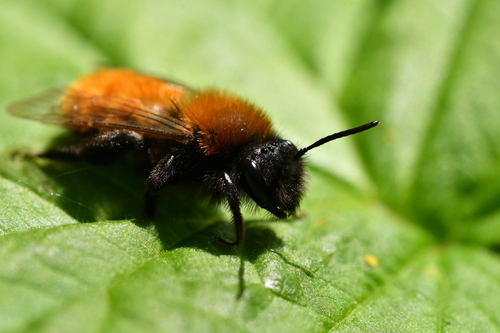
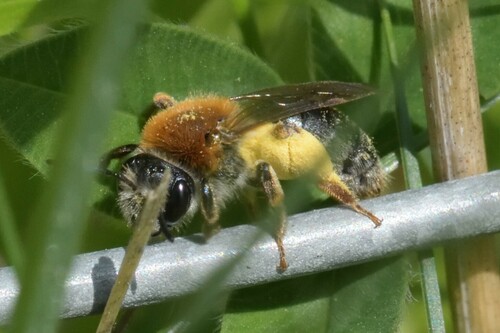
The closest relatives of the Large Scabious Mining Bee that you can see in Warsaw (genus Andrena, Mining Bees) are Tawny Mining Bee (about 10%), Early Mining Bee (about 10%) and Grey-Backed Mining Bee (about 10%), with each one's daily chance of a sighting.

Where does the Large Scabious Mining Bee sighting chance come from?

GBIF citizen-science records

It is estimated from how often the Large Scabious Mining Bee is recorded against all the insects logged in Warsaw (27 verified sightings), calibrated against known sighting rates. Figures are rounded to the nearest 10% because citizen-science data supports honest approximations, not decimals, and months with records from fewer than five people show "—". How it works.

← Back to Warsaw