Texas Spiny Lizard

Texas Spiny Lizard

Sceloporus olivaceus

Silhouette: LO Frishkoff · PhyloPic

LCLeast ConcernNTVUENCR
Daily sighting probability ~20% · Possible
at Cumbres de Monterrey National Park

In 3 days ~50% in a week ~80%

102 Verified sightings at Cumbres de Monterrey National Park From 2019 to 2026
107 In all 2 parks
March Best month
☀️ Diurnal When it's spotted

About the Texas Spiny Lizard

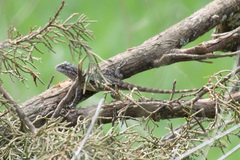
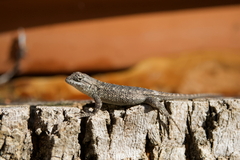
The Texas spiny lizard (Sceloporus olivaceus) is a species of phrynosomatid lizard native to the south central United States, in the states of Texas, Arizona and Oklahoma, and northeastern Mexico in the states of Coahuila, Nuevo León, Tamaulipas, and San Luis Potosí. They are quite common throughout their range, where they can be found in trees or on fences.

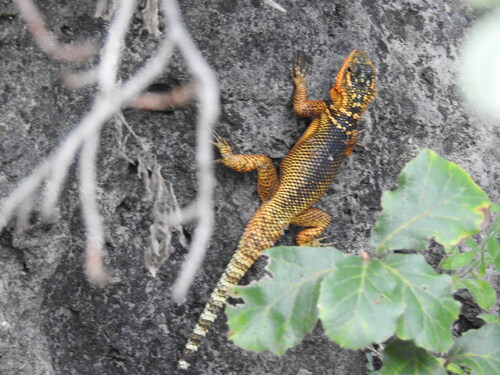
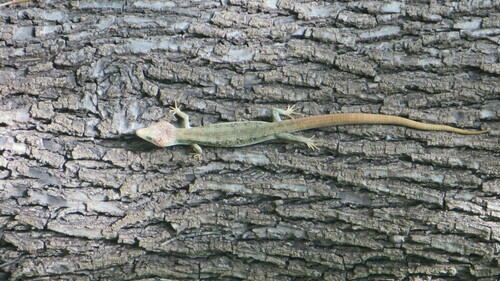
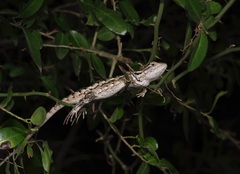
Adults are 7.5–11 in (19–28 cm) in total length, and are typically grey in color with black, white, or red-brown blotching down the back. Patterns vary greatly by locality, but the colors and pattern typically serve to be adequate camouflage against the bark of trees in its chosen habitat. The underside is usually uniformly light grey in color, but males typically have blue patches on either side of the belly. Adult males are also larger on average. The lizards' scales have a distinctly spiny texture to them. They have long toes, and sharp claws suited to climbing.

The Texas spiny lizard will breed throughout the summer months of the year, and is capable of laying four clutches each year if nutrients are plentiful. Each clutch will contain 2 to 20 eggs at a time. The Texas... Wikipedia →

Global Distribution

Parks Where Found

# Park Country Daily sighting probability
1 Cumbres de Monterrey National Park 🇲🇽 Mexico
~20%
2 Big Bend National Park 🇺🇸 United States
~10%

Cities Where Found

# City Country Daily sighting probability
1 Austin 🇺🇸 United States
~50%
2 San Antonio 🇺🇸 United States
~50%
3 Dallas 🇺🇸 United States
~30%
4 Monterrey 🇲🇽 México
~10%

Zoos & Centres Where Found

# Zoo / Centre Country
1 Fort Worth Zoo 🇺🇸 United States In captivity
2 Dallas World Aquarium 🇺🇸 United States In captivity

Before you go

What are the chances of seeing a Texas Spiny Lizard in Cumbres de Monterrey National Park?

Possible

About 20% of wildlife watchers report a Texas Spiny Lizard sighting in Cumbres de Monterrey National Park on a given day, based on 102 verified sightings from GBIF citizen-science data from 2019 to 2026. It is the 5th most-seen of the 43 reptiles we can rate there. Over three days the chance rises to about 50%, and over a week to about 80%, if each day is a fresh chance.

When is the best time to see a Texas Spiny Lizard in Cumbres de Monterrey National Park?

March and August

In those months about 30% of wildlife watchers report a Texas Spiny Lizard in Cumbres de Monterrey National Park on a given day, against under 5% in January, the lowest month.

What time of day is best to see a Texas Spiny Lizard?

Between 9 am and noon

Across all the parks we cover, that three-hour window holds the most Texas Spiny Lizard sightings with a recorded time, and about 8 in 10 of them come between 6 am and 6 pm: it is a daytime animal.

Is Cumbres de Monterrey National Park the best place to see a Texas Spiny Lizard?

Yes

Of the 2 parks where we can rate Texas Spiny Lizard sightings, Cumbres de Monterrey National Park has the highest daily chance: about 20%. Next come Big Bend National Park (United States, about 10%).

Which relatives of the Texas Spiny Lizard live in Cumbres de Monterrey National Park?

Same genus: Sceloporus

The closest relatives of the Texas Spiny Lizard that you can see in Cumbres de Monterrey National Park (genus Sceloporus, Spiny Lizards) are Rose-bellied Lizard (about 30%), West Gulf Rough-scaled Lizard (about 20%) and Crevice Swift (about 20%), with each one's daily chance of a sighting.

Where does the Texas Spiny Lizard sighting chance come from?

GBIF citizen-science records

It is estimated from how often the Texas Spiny Lizard is recorded against all the reptiles logged in Cumbres de Monterrey National Park (102 verified sightings from 2019 to 2026), calibrated against known sighting rates. Figures are rounded to the nearest 10% because citizen-science data supports honest approximations, not decimals, and months with records from fewer than five people show "—". How it works.

← Back to Cumbres de Monterrey National Park