Cogger's Frog

Cogger's Frog

Mixophyes coggeri

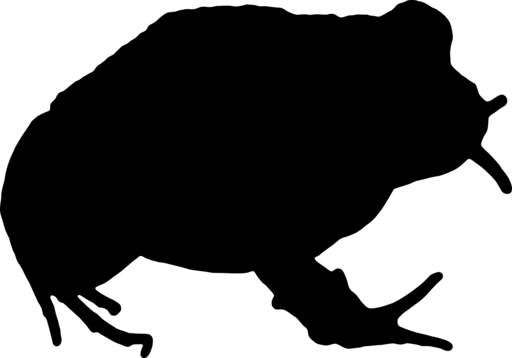
Silhouette: Jose Carlos Arenas-Monroy · PhyloPic

LCLeast ConcernNTVUENCR Endemic
Daily sighting probability ~20% · Possible
at Daintree National Park

In 3 days ~40% in a week ~70%

18 Verified sightings at Daintree National Park From 2019 to 2026
18 In 1 park
January Best month
🌙 Nocturnal When it's spotted

About the Cogger's Frog

The mottled barred frog (Mixophyes coggeri) is a species of large frog that is endemic to Australia. The specific epithet coggeri honours Professor Harold Cogger, formerly of the Australian Museum, for contributions to herpetology.

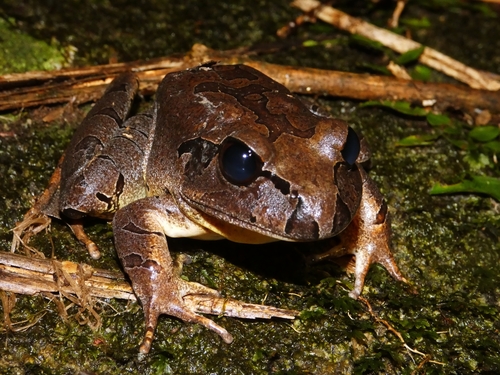
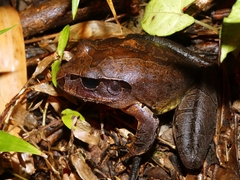
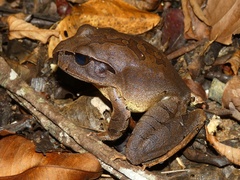
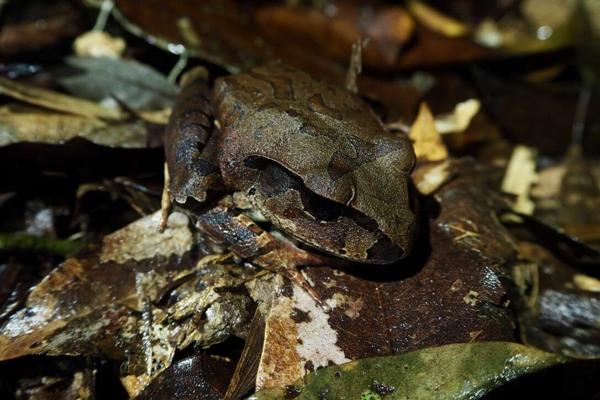
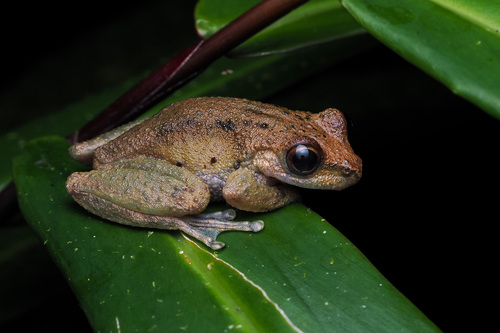
The species grows to about 105 mm in length (SVL). Colouration is brown on the back, with darker patches along the middle; the belly is yellow-white; the limbs have dark horizontal bars, with large cream blotches on the backs of the thighs. The fingers are unwebbed; the toes are webbed.

The species breeds from spring to early autumn. Eggs are laid in stream pools and are then kicked out of the water by the female to stick to solid surfaces, such as earth banks or rock faces, above the pools. The tadpoles then drop into the water after hatching.

The species occurs throughout the Wet Tropics of north-eastern Queensland. Wikipedia →

Sounds

Advertisement call1:00

Australia · 2013

© Marc Anderson · XC883157 · CC BY-NC-ND 4.0

Recording0:43

Australia · 2026

© Brendan McIntyre · iNaturalist · CC BY 4.0

Recording0:12

Australia · 2024

© Matt B · iNaturalist · CC BY 4.0

Global Distribution

Parks Where Found

# Park Country Daily sighting probability
1 Daintree National Park 🇦🇺 Australia
~20%

More parks will be added in future updates.

Before you go

What are the chances of seeing a Cogger's Frog in Daintree National Park?

Possible

About 20% of wildlife watchers report a Cogger's Frog sighting in Daintree National Park on a given day, based on 18 verified sightings from GBIF citizen-science data from 2019 to 2026. It is the 5th most-seen of the 8 amphibians we can rate there. Over three days the chance rises to about 40%, and over a week to about 70%, if each day is a fresh chance.

When is the best time to see a Cogger's Frog in Daintree National Park?

January

In that month about 40% of wildlife watchers report a Cogger's Frog in Daintree National Park on a given day, against under 5% in February–April and August, the lowest months. That is one of Daintree National Park's wettest months, with about 380 mm of rain against 50 mm in September.

What time of day is best to see a Cogger's Frog?

Between 7 and 10 pm

Across all the parks we cover, that three-hour window holds the most Cogger's Frog sightings with a recorded time, and nearly all of them come between 6 pm and 6 am: it is mostly seen at night.

Where else can you see a Cogger's Frog?

Only Daintree National Park, in our data

Daintree National Park is the only park on Wallace's Line with enough records to rate Cogger's Frog sightings: about 20% of wildlife watchers there report one on a given day.

Which relatives of the Cogger's Frog live in Daintree National Park?

Same order: Anura

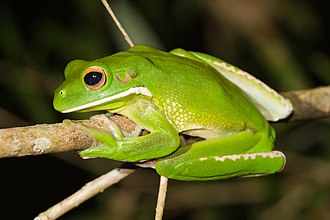
The closest relatives of the Cogger's Frog that you can see in Daintree National Park (order Anura, Frogs and Toads) are White-lipped Treefrog (about 70%), Eastern Cane Toad (about 60%) and Australian Wood Frog (about 50%), with each one's daily chance of a sighting.

Where does the Cogger's Frog sighting chance come from?

GBIF citizen-science records

It is estimated from how often the Cogger's Frog is recorded against all the amphibians logged in Daintree National Park (18 verified sightings from 2019 to 2026), calibrated against known sighting rates. Figures are rounded to the nearest 10% because citizen-science data supports honest approximations, not decimals, and months with records from fewer than five people show "—". How it works.

← Back to Daintree National Park