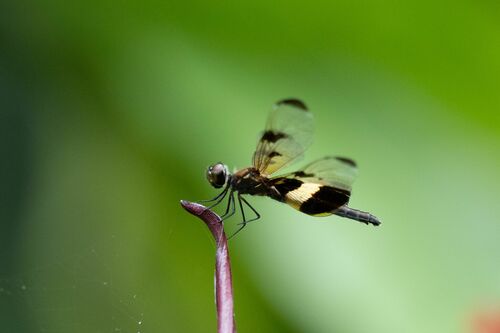
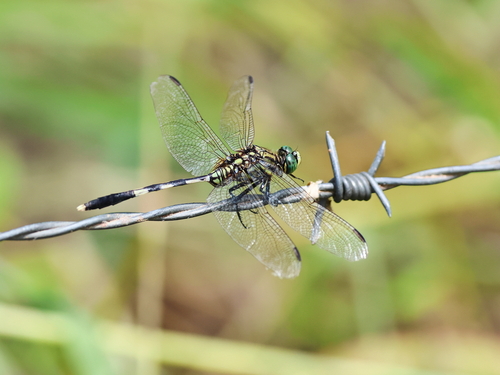
Pygmy Percher

Pygmy Percher

Nannodiplax rubra

Daily sighting probability ~10% · With luck
at Daintree National Park

In 3 days ~20% in a week ~40%

10 Verified sightings at Daintree National Park From 2019 to 2026
106 In all 4 parks
January Best month
☀️ Diurnal When it's spotted

About the Pygmy Percher

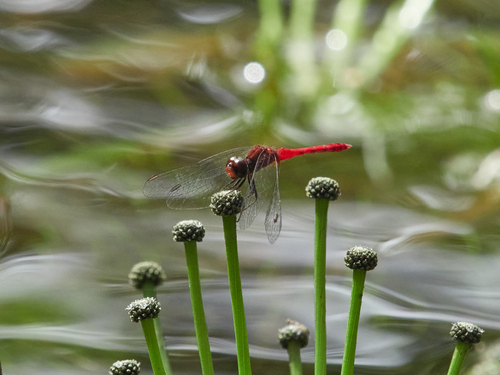
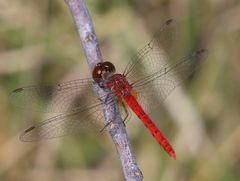
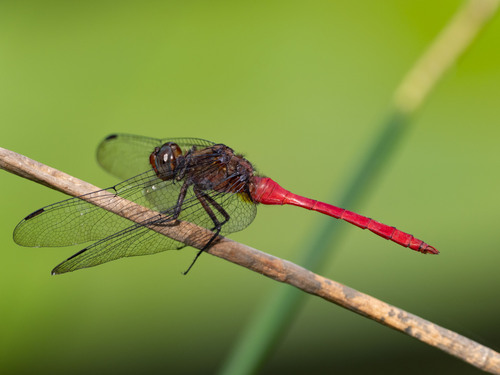
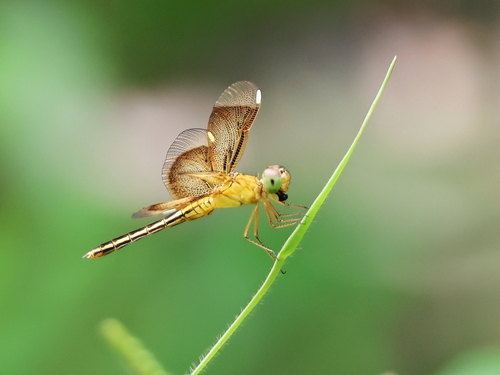
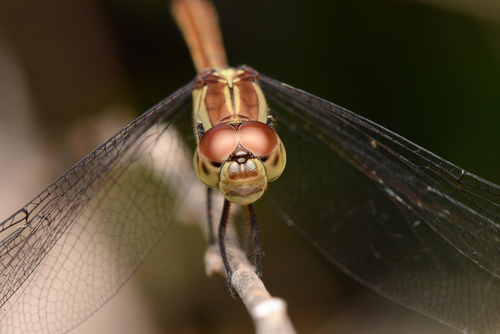
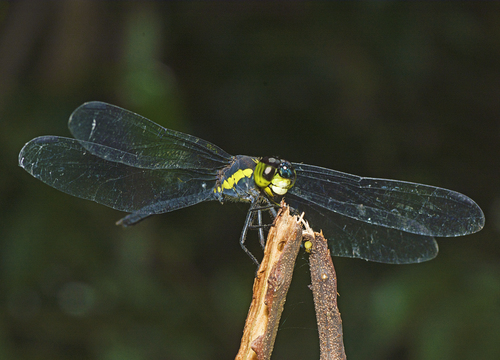
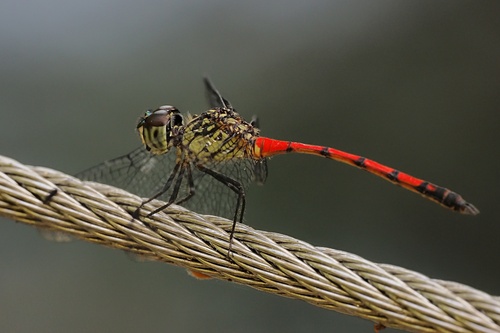
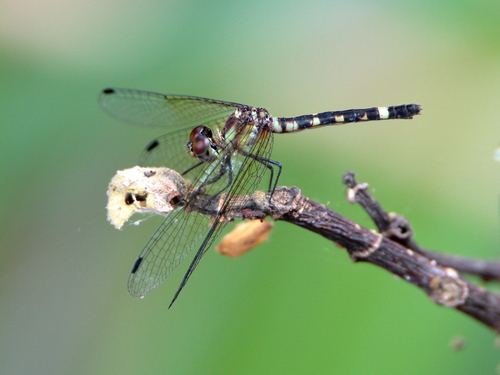
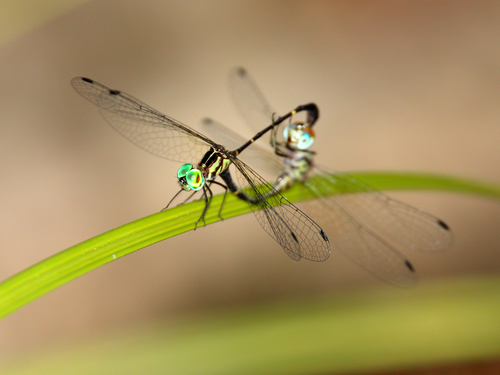
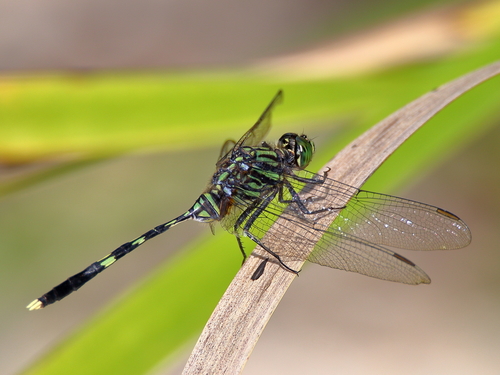
Nannodiplax rubra, commonly called the pygmy percher, is a species of dragonfly in the monotypic genus Nannodiplax. Its distribution seems to be limited to Australia and New Guinea. They are tiny dragonflies (wingspan 40 mm, length 25 mm) with a bright red abdomen and clear wings. They are found near a wide variety of rivers and streams. The Australian distribution ranges from Broome, Western Australia via the north and east to around Coffs Harbour, New South Wales. The taxon has not yet been assessed for the IUCN Red List, but it is listed in the Catalogue of Life.

The genus name Nannodiplax combines the Greek νάννος (nannos, "dwarf") with Diplax, a genus name derived from the Greek δίς (dis, "twice") and πλάξ (plax, "flat and broad"). The name probably refers to the small size of members of the genus.

The species name rubra is derived from the Latin ruber ("red"), referring to the colour of the abdomen. List of Odonata species of Australia Wikipedia →

Global Distribution

Parks Where Found

# Park Country Daily sighting probability
1 Litchfield National Park 🇦🇺 Australia
~40%
2 Kakadu National Park 🇦🇺 Australia
~30%
3 Nitmiluk National Park 🇦🇺 Australia
~30%
4 Daintree National Park 🇦🇺 Australia
~10%

Cities Where Found

# City Country Daily sighting probability
1 Brisbane 🇦🇺 Australia
~10%

Before you go

What are the chances of seeing a Pygmy Percher in Daintree National Park?

With luck

About 10% of wildlife watchers report a Pygmy Percher sighting in Daintree National Park on a given day, based on 10 verified sightings from GBIF citizen-science data from 2019 to 2026. It is the 511th most-seen of the 856 insects we can rate there. Over three days the chance rises to about 20%, and over a week to about 40%, if each day is a fresh chance.

When is the best time to see a Pygmy Percher in Daintree National Park?

January

In that month about 20% of wildlife watchers report a Pygmy Percher in Daintree National Park on a given day, against under 5% in March–April, August, October and December, the lowest months. That is one of Daintree National Park's wettest months, with about 380 mm of rain against 50 mm in September.

What time of day is best to see a Pygmy Percher?

Between noon and 3 pm

Across all the parks we cover, that three-hour window holds the most Pygmy Percher sightings with a recorded time, and about 9 in 10 of them come between 6 am and 6 pm: it is a daytime animal.

Is Daintree National Park the best place to see a Pygmy Percher?

4th of 4

Of the 4 parks where we can rate Pygmy Percher sightings, Daintree National Park ranks 4th at about 10%. The best odds are in Litchfield National Park (Australia, about 40%), Kakadu National Park (Australia, about 30%) and Nitmiluk National Park (Australia, about 30%).

Which relatives of the Pygmy Percher live in Daintree National Park?

Same family: Libellulidae

The closest relatives of the Pygmy Percher that you can see in Daintree National Park (family Libellulidae, Skimmers) are Fiery Skimmer (about 30%), Painted Grasshawk (about 30%) and Asian Blood Tail (about 20%), with each one's daily chance of a sighting.

Where does the Pygmy Percher sighting chance come from?

GBIF citizen-science records

It is estimated from how often the Pygmy Percher is recorded against all the insects logged in Daintree National Park (10 verified sightings from 2019 to 2026), calibrated against known sighting rates. Figures are rounded to the nearest 10% because citizen-science data supports honest approximations, not decimals, and months with records from fewer than five people show "—". How it works.

← Back to Daintree National Park