Spectacled Flying Fox

Spectacled Flying Fox

Pteropus conspicillatus

Silhouette: Margot Michaud · PhyloPic

LCNTVUENEndangeredCR
Daily sighting probability ~50% · Likely
at Daintree National Park

In 3 days ~90% in a week >90%

158 Verified sightings at Daintree National Park From 2019 to 2026
167 In all 2 parks
April Best month
🌅 Crepuscular When it's spotted

About the Spectacled Flying Fox

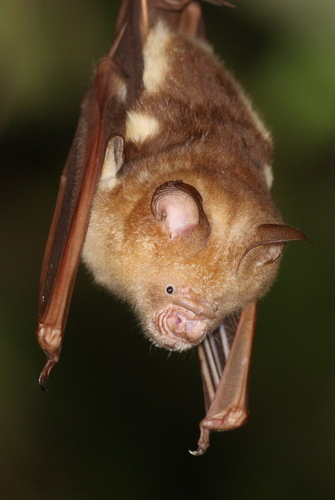
The spectacled flying fox (Pteropus conspicillatus), also known as the spectacled fruit bat, is a megabat that lives in Australia's north-eastern regions of Queensland. It is also found in New Guinea and on the offshore islands including Woodlark Island, Alcester Island, Kiriwina, and Halmahera.

The spectacled flying fox was listed as a threatened species under the Environment Protection and Biodiversity Conservation Act 1999. They were considered vulnerable due to a significant decline in numbers as a result of loss of their prime feeding habitat and secluded camp sites. It has also been reported that spectacled flying foxes skim over the surface of water to drink and are sometimes eaten by crocodiles. The species was classified as endangered by the IUCN in 2020.

In February 2019, the Australian government upgraded the threatened status from vulnerable to endangered, after almost a third of the bat population died in a severe heatwave in Queensland in late 2018. The head and body length is 22–25 cm, forearm 16–18 cm, weight 400–1000 g. A large spectacled flying fox has pale yellow or straw-colored fur around its eyes. The mantle is pale yellow and goes across the... Wikipedia →

Sounds

Recording0:07

Australia · 2025

© climate_action_now · iNaturalist · CC BY-NC 4.0

Recording0:19

Australia · 2024

© Matt B · iNaturalist · CC BY 4.0

Recording0:12

Papua New Guinea · 2026

© Gereherb Sallee · iNaturalist · CC BY-NC 4.0

Global Distribution

Parks Where Found

# Park Country Daily sighting probability
1 Daintree National Park 🇦🇺 Australia
~50%
2 Raja Ampat 🇮🇩 Indonesia
~20%

Zoos & Centres Where Found

# Zoo / Centre Country
1 Bali Zoo 🇮🇩 Indonesia In captivity
2 Wilhelma 🇩🇪 Germany In captivity
3 Birdworld Kuranda 🇦🇺 Australia In captivity
4 Kuranda Koala Gardens 🇦🇺 Australia In captivity
5 Port Moresby Nature Park 🇵🇬 Papua New Guinea In captivity
6 Wildlife Habitat Port Douglas 🇦🇺 Australia In captivity

Before you go

What are the chances of seeing a Spectacled Flying Fox in Daintree National Park?

Likely

About 50% of wildlife watchers report a Spectacled Flying Fox sighting in Daintree National Park on a given day, based on 158 verified sightings from GBIF citizen-science data from 2019 to 2026. It is the most-seen of the 19 mammals we can rate there. Over three days the chance rises to about 90%, and over a week to over 90%, if each day is a fresh chance.

When is the best time to see a Spectacled Flying Fox in Daintree National Park?

April

In that month about 70% of wildlife watchers report a Spectacled Flying Fox in Daintree National Park on a given day, against about 30% in October, the lowest month.

What time of day is best to see a Spectacled Flying Fox?

Between 4 and 7 am

Across all the parks we cover, that three-hour window holds the most Spectacled Flying Fox sightings with a recorded time, and about 6 in 10 of them come between 6 am and 6 pm: it is most active around dawn and dusk.

Is Daintree National Park the best place to see a Spectacled Flying Fox?

Yes

Of the 2 parks where we can rate Spectacled Flying Fox sightings, Daintree National Park has the highest daily chance: about 50%. Next come Raja Ampat (Indonesia, about 20%).

Where does the Spectacled Flying Fox sighting chance come from?

GBIF citizen-science records

It is estimated from how often the Spectacled Flying Fox is recorded against all the mammals logged in Daintree National Park (158 verified sightings from 2019 to 2026), calibrated against known sighting rates. Figures are rounded to the nearest 10% because citizen-science data supports honest approximations, not decimals, and months with records from fewer than five people show "—". How it works.

← Back to Daintree National Park