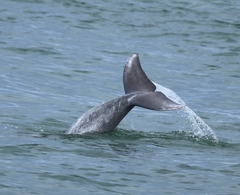
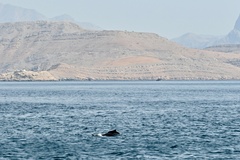
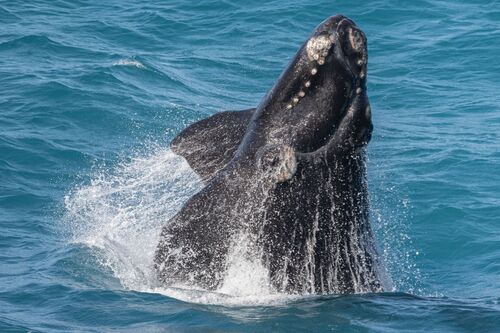
Indian Humpback Dolphin

Indian Humpback Dolphin

Sousa plumbea

Silhouette: Chris huh · PhyloPic

LCNTVUENEndangeredCR
Daily sighting probability ~10% · With luck
at De Hoop Nature Reserve

In 3 days ~30% in a week ~60%

8 Verified sightings at De Hoop Nature Reserve From 2019 to 2026
22 In all 2 parks
March Best month
☀️ Diurnal When it's spotted

About the Indian Humpback Dolphin

The Indian Ocean humpback dolphin (Sousa plumbea) is a member of the Delphinidae family occupying coastal areas ranging from Southern Africa to Western Indochina. The Indo-Pacific humpback dolphin (Sousa chinensis) was formerly included within the same species, but a 2014 study revealed them to be a separate species.

The most limiting factor to habitat-usage is water depth, with most specimens remaining in waters shallower than 20 meters. As a result, the Indian Ocean humpback dolphin's offshore range is largely dependent on the coastlines' specific physiographical characteristics. The species has been reported to inhabit nearly every type of coastal habitat, although preference and prominence of any given habitat type is highly dependent on the geographical location. Indian Ocean humpback dolphins experience extremely high rates of calf and juvenile mortality due to anthropogenic disturbances such as environmental pollution, habitat deterioration and noise pollution.

Indian Ocean humpback dolphins are social delphinids that live in groups averaging twelve individuals, although group size can be highly variable. The majority of their diet is composed of sciaenid fishes, cephalopods, and crustaceans.

The species is currently categorized as Endangered. Wikipedia →

Global Distribution

Parks Where Found

# Park Country Daily sighting probability
1 De Hoop Nature Reserve 🇿🇦 South Africa
~10%
2 Garden Route National Park 🇿🇦 South Africa
~10%

Before you go

What are the chances of seeing an Indian Humpback Dolphin in De Hoop Nature Reserve?

With luck

About 10% of wildlife watchers report an Indian Humpback Dolphin sighting in De Hoop Nature Reserve on a given day, based on 8 verified sightings from GBIF citizen-science data from 2019 to 2026. It is the 18th most-seen of the 18 mammals we can rate there. Over three days the chance rises to about 30%, and over a week to about 60%, if each day is a fresh chance.

When is the best time to see an Indian Humpback Dolphin in De Hoop Nature Reserve?

January, March–April and October

In those months about 20% of wildlife watchers report an Indian Humpback Dolphin in De Hoop Nature Reserve on a given day, against under 5% in February, May–July and November–December, the lowest months.

What time of day is best to see an Indian Humpback Dolphin?

Between 7 and 10 am

Across all the parks we cover, that three-hour window holds the most Indian Humpback Dolphin sightings with a recorded time, and about 9 in 10 of them come between 6 am and 6 pm: it is a daytime animal.

Is De Hoop Nature Reserve the best place to see an Indian Humpback Dolphin?

Yes

Of the 2 parks where we can rate Indian Humpback Dolphin sightings, De Hoop Nature Reserve has the highest daily chance: about 10%. Next come Garden Route National Park (South Africa, about 10%).

Where does the Indian Humpback Dolphin sighting chance come from?

GBIF citizen-science records

It is estimated from how often the Indian Humpback Dolphin is recorded against all the mammals logged in De Hoop Nature Reserve (8 verified sightings from 2019 to 2026), calibrated against known sighting rates. Figures are rounded to the nearest 10% because citizen-science data supports honest approximations, not decimals, and months with records from fewer than five people show "—". How it works.

← Back to De Hoop Nature Reserve