Daily sighting probability ~10% · With luck
at Iguaçu National Park

In 3 days ~30% in a week ~60%

24 Verified sightings at Iguaçu National Park From 2019 to 2026
49 In all 2 parks
June Best month
☀️ Diurnal When it's spotted

About the Synoeca cyanea

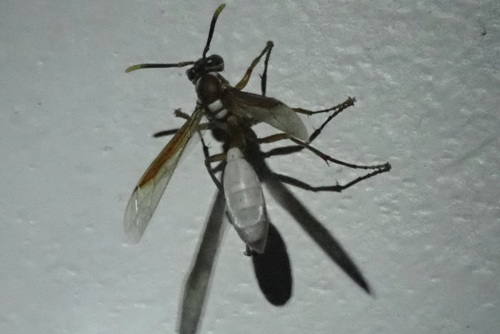
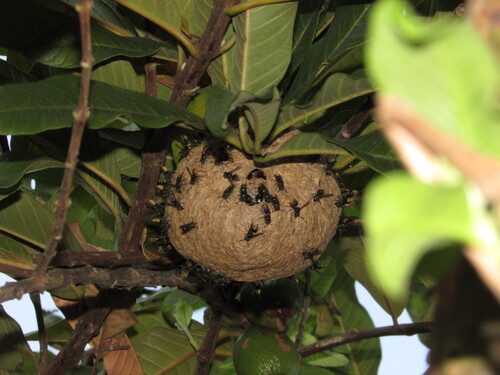
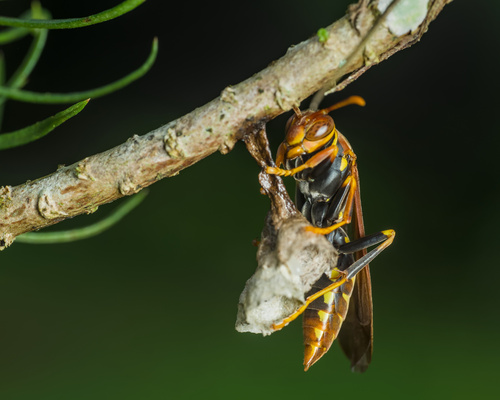
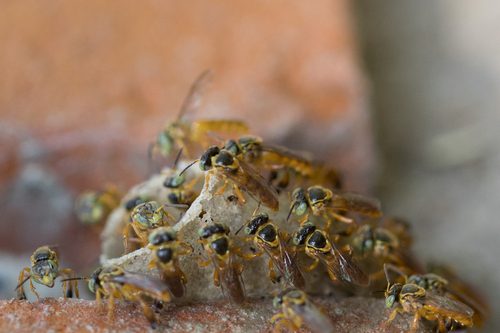
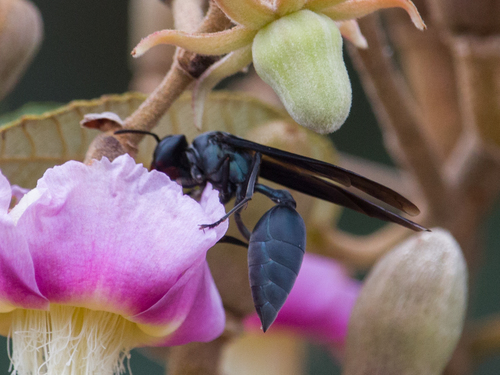
Synoeca cyanea, commonly known as the marimbondo-tatu in Brazil, is a swarm-founding eusocial wasp. Native to Brazil and Argentina, S. cyanea is one of the largest and most aggressive species of social wasps and is feared in many rural areas. It begins its colony cycle in the early spring and continues until nest abandonment. Throughout its life, S. cyanea forage sugary substances and animal carcasses for food and wood pulp for its nest. S. cyanea is also known for its strong venom, which is enough to cause haemolytic activity.

Johan Christian Fabricius, a Danish zoologist, classified S. cyanea in 1775. The genus Synoeca is a part of the paper wasp tribe Epiponini and consists of five species (S. chalibea, S. virginea, S. septentrionalis, S. surinama, and S. cyanea). Synoeca is a basal genus in the tribe. Cyanea, the adjective describing the species, translates to “dark blue,” referring to the metallic blue patches on the exterior of S. cyanea.

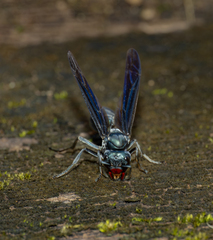
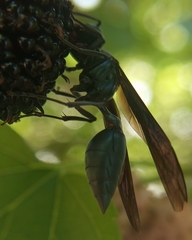
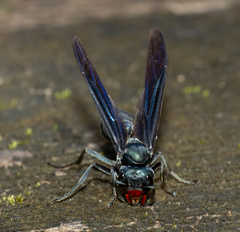
S. cyanea is black with metallic blue patches on its body. In addition, S. cyanea has a red clypeus. While other species in the genus Synoeca do not demonstrate caste differences... Wikipedia →
Global Distribution

Parks Where Found

# Park Country Daily sighting probability
1 Iguazú National Park 🇦🇷 Argentina
~10%
2 Iguaçu National Park 🇧🇷 Brazil
~10%

Cities Where Found

# City Country Daily sighting probability
1 Campinas 🇧🇷 Brazil
~10%
2 São Paulo 🇧🇷 Brazil
<5%
3 Rio de Janeiro 🇧🇷 Brazil
<5%

Before you go

What are the chances of seeing a Synoeca cyanea in Iguaçu National Park?

With luck

About 10% of wildlife watchers report a Synoeca cyanea sighting in Iguaçu National Park on a given day, based on 24 verified sightings from GBIF citizen-science data from 2019 to 2026. It is the 78th most-seen of the 279 insects we can rate there. Over three days the chance rises to about 30%, and over a week to about 60%, if each day is a fresh chance.

When is the best time to see a Synoeca cyanea in Iguaçu National Park?

June

In that month about 30% of wildlife watchers report a Synoeca cyanea in Iguaçu National Park on a given day, against about 10% in July to April, the lowest months.

What time of day is best to see a Synoeca cyanea?

Between 10 am and 1 pm

Across all the parks we cover, that three-hour window holds the most Synoeca cyanea sightings with a recorded time, and nearly all of them come between 6 am and 6 pm: it is a daytime animal.

Is Iguaçu National Park the best place to see a Synoeca cyanea?

Among the best

Of the 2 parks where we can rate Synoeca cyanea sightings, Iguaçu National Park ranks 2nd at about 10%, level with the leaders once rounded. The best odds are in Iguazú National Park (Argentina, about 10%).

Which relatives of the Synoeca cyanea live in Iguaçu National Park?

Same family: Vespidae

The closest relatives of the Synoeca cyanea that you can see in Iguaçu National Park (family Vespidae, Hornets, Paper Wasps, Potter Wasps, and Allies) are Agelaia angulata (about 20%), Agelaia pallipes (about 10%) and Apoica gelida (about 10%), with each one's daily chance of a sighting.

Where does the Synoeca cyanea sighting chance come from?

GBIF citizen-science records

It is estimated from how often the Synoeca cyanea is recorded against all the insects logged in Iguaçu National Park (24 verified sightings from 2019 to 2026), calibrated against known sighting rates. Figures are rounded to the nearest 10% because citizen-science data supports honest approximations, not decimals, and months with records from fewer than five people show "—". How it works.

← Back to Iguaçu National Park