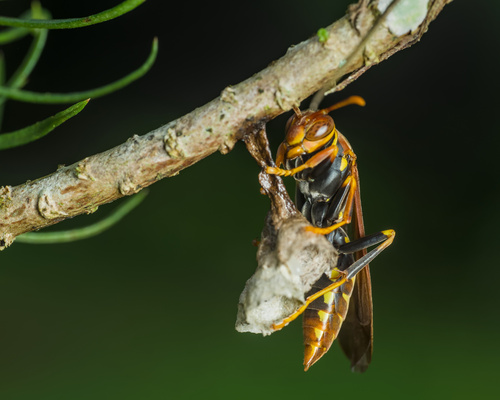
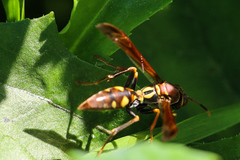
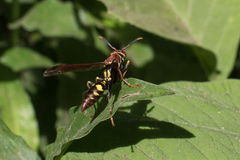
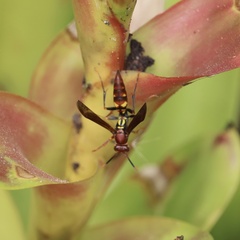
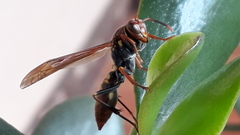
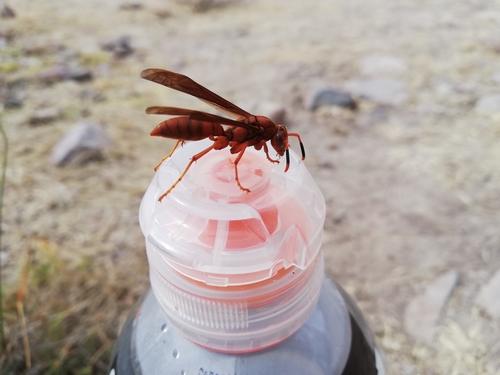
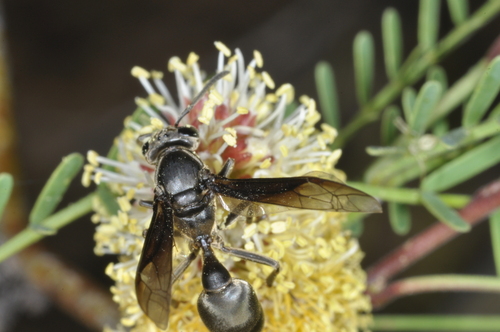
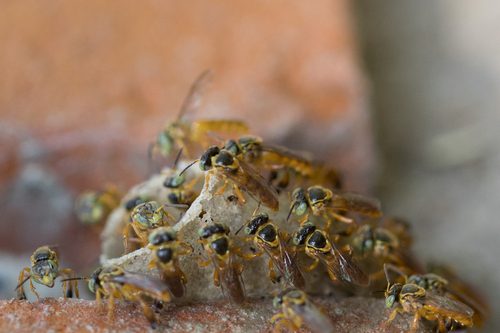
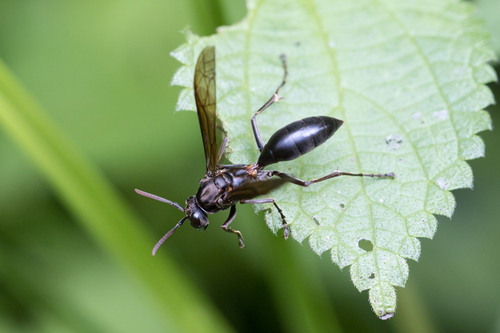
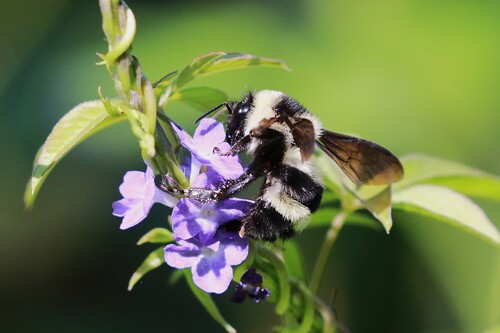
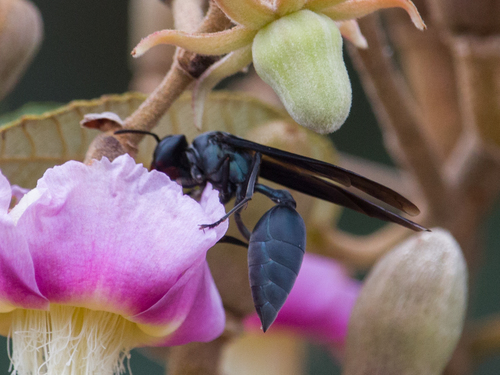
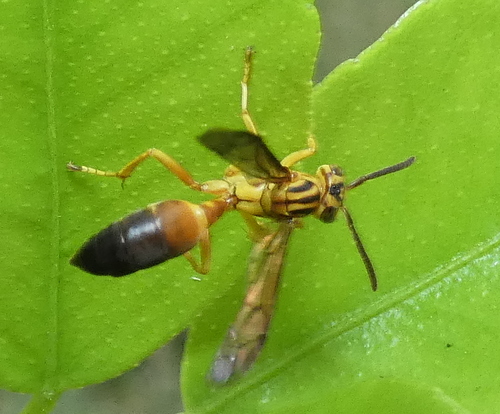
Variegated Paper Wasp

Variegated Paper Wasp

Polistes versicolor

Daily sighting probability ~20% · Possible
at Iguaçu National Park

In 3 days ~50% in a week ~80%

50 Verified sightings at Iguaçu National Park From 2019 to 2026
565 In all 6 parks
October Best month
☀️ Diurnal When it's spotted

About the Variegated Paper Wasp

Polistes versicolor, also known as the variegated paper wasp or yellow paper wasp, is a subtropical social wasp within Polistes, the most common genus of paper wasp. It is the most widely distributed of South American wasp species and is particularly common in the Southeastern Brazilian states. The P. versicolor nest, made of chewed vegetable fiber, is typically a single, uncovered comb attached to the substrate by a single petiole. The yellow wasp is frequently found in urban areas. New nests and colonies are usually founded by an association of females, sometimes in human buildings.

The P. versicolor colony cycle broadly ranges from 3 to 10 months, although there appears to be no relationship between the colony's development and the season of the year. While P. versicolor do have clear annual colony cycles, many young queens have the opportunity to hibernate during the winter, forming optional winter aggregations. Dominance hierarchies within these aggregations are characterized by physical aggression of the dominant female(s) towards the associated females, who tend to be sisters. Wagging movements are also often used as a form of communication within the colony. P. versicolor is generally predatory, capturing a wide range of insects, although it often feeds on pollen and nectar as well. Therefore, P. versicolor can be useful as a pollinator or as effective pest control. Wikipedia →

Global Distribution

Parks Where Found

# Park Country Daily sighting probability
1 Brownsberg Nature Park 🇸🇷 Suriname
~40%
2 Galápagos Islands 🇪🇨 Ecuador
~30%
3 Iguazú National Park 🇦🇷 Argentina
~20%
4 Iguaçu National Park 🇧🇷 Brazil
~20%
5 Itatiaia National Park 🇧🇷 Brazil
~10%
6 Tijuca National Park 🇧🇷 Brazil
~10%

Cities Where Found

# City Country Daily sighting probability
1 Recife 🇧🇷 Brazil
~10%
2 Curitiba 🇧🇷 Brazil
~10%
3 São Paulo 🇧🇷 Brazil
~10%
4 Niterói 🇧🇷 Brazil
~10%
5 Vitória 🇧🇷 Brazil
~10%
6 Porto Alegre 🇧🇷 Brazil
~10%
7 Medellín 🇨🇴 Colombia
~10%
8 Maceió 🇧🇷 Brazil
~10%
9 Belo Horizonte 🇧🇷 Brazil
~10%
10 Campinas 🇧🇷 Brazil
~10%

Before you go

What are the chances of seeing a Variegated Paper Wasp in Iguaçu National Park?

Possible

About 20% of wildlife watchers report a Variegated Paper Wasp sighting in Iguaçu National Park on a given day, based on 50 verified sightings from GBIF citizen-science data from 2019 to 2026. It is the 40th most-seen of the 279 insects we can rate there. Over three days the chance rises to about 50%, and over a week to about 80%, if each day is a fresh chance.

When is the best time to see a Variegated Paper Wasp in Iguaçu National Park?

March, October and December

In those months about 30% of wildlife watchers report a Variegated Paper Wasp in Iguaçu National Park on a given day, against about 10% in July and August, the lowest months.

What time of day is best to see a Variegated Paper Wasp?

Between 9 am and noon

Across all the parks we cover, that three-hour window holds the most Variegated Paper Wasp sightings with a recorded time, and about 9 in 10 of them come between 6 am and 6 pm: it is a daytime animal.

Is Iguaçu National Park the best place to see a Variegated Paper Wasp?

4th of 6

Of the 6 parks where we can rate Variegated Paper Wasp sightings, Iguaçu National Park ranks 4th at about 20%. The best odds are in Brownsberg Nature Park (Suriname, about 40%), Galápagos Islands (Ecuador, about 30%) and Iguazú National Park (Argentina, about 20%).

Where does the Variegated Paper Wasp sighting chance come from?

GBIF citizen-science records

It is estimated from how often the Variegated Paper Wasp is recorded against all the insects logged in Iguaçu National Park (50 verified sightings from 2019 to 2026), calibrated against known sighting rates. Figures are rounded to the nearest 10% because citizen-science data supports honest approximations, not decimals, and months with records from fewer than five people show "—". How it works.

← Back to Iguaçu National Park