Alpine Chough

Alpine Chough

Pyrrhocorax graculus

Silhouette: L. Shyamal · PhyloPic

LCLeast ConcernNTVUENCR
Daily sighting probability ~40% · Likely
at Ecrins National Park

In 3 days ~80% in a week >90%

157 Verified sightings at Ecrins National Park From 2019 to 2026
3,300 In all 12 parks
February Best month
☀️ Diurnal When it's spotted

About the Alpine Chough

The Alpine chough (chuf) or yellow-billed chough (Pyrrhocorax graculus) is a bird in the crow family, one of only two species in the genus Pyrrhocorax. Its two subspecies breed in high mountains from Spain eastwards through southern Europe and North Africa to Central Asia and Nepal, and it may nest at a higher altitude than any other bird. Its eggs have adaptations to the thin atmosphere that improve oxygen take-up and reduce water loss.

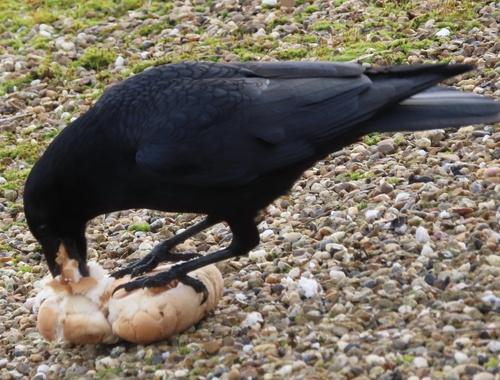
This bird has glossy black plumage, a yellow beak, red legs, and distinctive calls. It has a buoyant acrobatic flight with widely spread flight feathers. The Alpine chough pairs for life and displays fidelity to its breeding site, which is usually a cave or crevice in a cliff face. It builds a lined stick nest and lays three to five brown-blotched whitish eggs. It feeds, usually in flocks, on short grazed grassland, taking mainly invertebrate prey in summer and fruit in winter; it will readily approach tourist sites to find supplementary food.

Although it is subject to predation and parasitism, and changes in agricultural practices have caused local population declines, this widespread and abundant species is not threatened globally. Climate change may present a long-term threat, by shifting the necessary Alpine habitat to higher altitudes. Wikipedia →

Sounds

Call0:14

France · 2026

© Filippo Ceccolini · XC1156722 · CC BY-NC-SA 4.0

Flight call0:43

France · 2024

© Corentin Rivière · XC903713 · CC BY-NC-SA 4.0

Song0:17

Morocco · 2022

© Frank Lambert · XC769201 · CC BY-NC-ND 4.0

Global Distribution

Parks Where Found

# Park Country Daily sighting probability
1 Vanoise National Park 🇫🇷 France
~70%
2 Picos de Europa National Park 🇪🇸 Spain
~50%
3 Ecrins National Park 🇫🇷 France
~40%
4 Ordesa y Monte Perdido National Park 🇪🇸 Spain
~40%
5 Mercantour National Park 🇫🇷 France
~30%
6 Hohe Tauern National Park 🇦🇹 Austria
~30%
7 Hemis National Park 🇮🇳 India
~20%
8 Langtang National Park 🇳🇵 Nepal
~20%
9 Pyrénées National Park 🇫🇷 France
~20%
10 Aigüestortes National Park 🇪🇸 Spain
~20%
11 Triglav National Park 🇸🇮 Slovenia
~20%
12 Jiuzhaigou National Park 🇨🇳 China
~10%

Cities Where Found

# City Country Daily sighting probability
1 Almaty 🇰🇿 Kazakhstan
<5%

Zoos & Centres Where Found

# Zoo / Centre Country
1 Alpenzoo Innsbruck 🇦🇹 Austria In captivity

Before you go

What are the chances of seeing an Alpine Chough in Ecrins National Park?

Likely

About 40% of wildlife watchers report an Alpine Chough sighting in Ecrins National Park on a given day, based on 157 verified sightings from GBIF citizen-science data from 2019 to 2026. It is the 11th most-seen of the 76 birds we can rate there. Over three days the chance rises to about 80%, and over a week to over 90%, if each day is a fresh chance.

When is the best time to see an Alpine Chough in Ecrins National Park?

February and April

In those months about 60% of wildlife watchers report an Alpine Chough in Ecrins National Park on a given day, against about 30% in May and October, the lowest months. November and December have too few records to rate.

What time of day is best to see an Alpine Chough?

Between 11 am and 2 pm

Across all the parks we cover, that three-hour window holds the most Alpine Chough sightings with a recorded time, and about 9 in 10 of them come between 6 am and 6 pm: it is a daytime animal.

Where does the Alpine Chough sighting chance come from?

GBIF citizen-science records

It is estimated from how often the Alpine Chough is recorded against all the birds logged in Ecrins National Park (157 verified sightings from 2019 to 2026), calibrated against known sighting rates. Figures are rounded to the nearest 10% because citizen-science data supports honest approximations, not decimals, and months with records from fewer than five people show "—". How it works.

← Back to Ecrins National Park