About the Araliad Plume
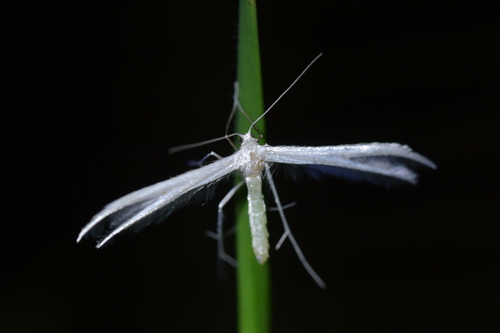
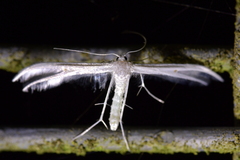
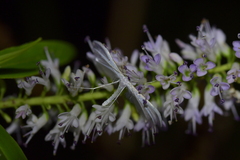
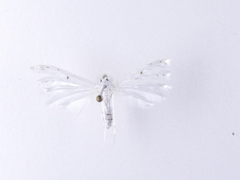
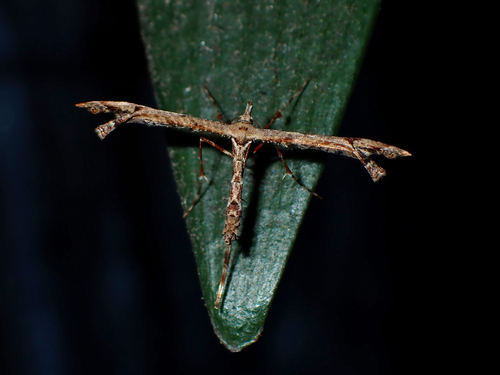
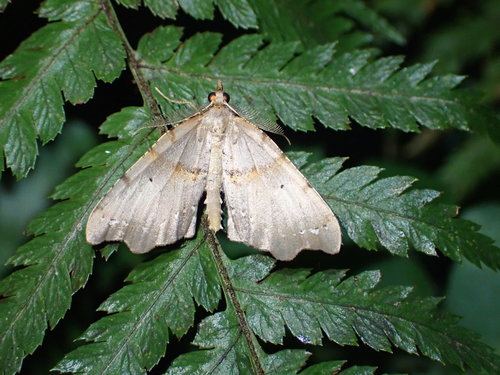
Pterophorus monospilalis, the white plume moth, is a moth of the family Pterophoridae. It is endemic to New Zealand and occurs throughout the country. It inhabits native forest, parks and domestic gardens. Larvae are active during the day, are slow moving, and feed exposed. They feed on Araliaceae species as well as on Hedera helix, Meryta sinclairii, and Schefflera digitata. There are several broods in a year. Adult moths are on the wing from November until May and are attracted to light.
This species was first described by Francis Walker in 1864 and named Aciptilus monospilalis. In 1875 Cajetan von Felder and Alois Friedrich Rogenhofer, thinking they were describing a new species, named it Aciptilia patruelis. In 1885 Meyrick synonymised A. patruelis with A. monospilalis. In the same publication Meyrick, thinking he was describing a new species, also named this species as Aciptilia lycosema. Merick described both A. monospilalis and the newly named A. lycosema in greater detail in a later 1885 publication. In 1913 Meyrick placed both A. monospilalis and A. lycosema into the genus Alucita. This placement was followed by George Hudson in his 1928 book The butterflies... Wikipedia →