About the White-striped Warbler
The white-striped warbler (Myiothlypis leucophrys) is a species of bird in the family Parulidae, the New World warblers. It is endemic to Brazil. The white-striped warbler was formally described in 1868 as Basileuterus leucophrys. By 2012 the IOC had reassigned it to its present genus Myiothlypis. BirdLife International's Handbook of the Birds of the World (HBW) did so in 2016.
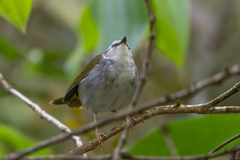
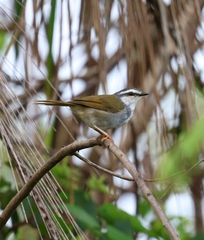
The white-striped warbler is monotypic. The white-striped warbler is 14 cm (5.5 in) long and weighs 15 to 22 g (0.53 to 0.78 oz). The sexes have the same plumage. Adults have a gray central crown with thin blackish stripes bordering it, a long and wide white supercilium, a blackish stripe through the eye, white cheeks, and pale buff ear coverts. Their nape and the sides of their neck are gray and their upperparts, wings, and tail brownish olive. Their throat and underparts are mostly white with gray sides on the breast, grayish buff rear flanks, and yellowish buff undertail coverts. They have a dark iris, a blackish bill, and yellowish pink legs and feet.
The white-striped warbler is found in south-central Brazil in a rough triangle... Wikipedia →