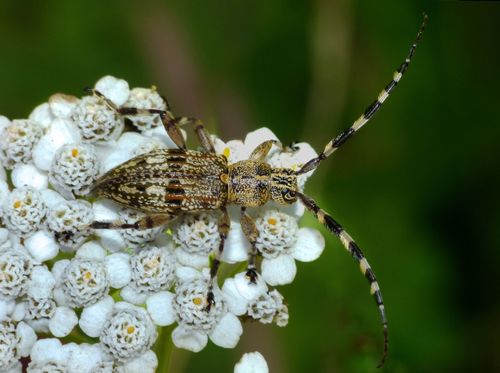
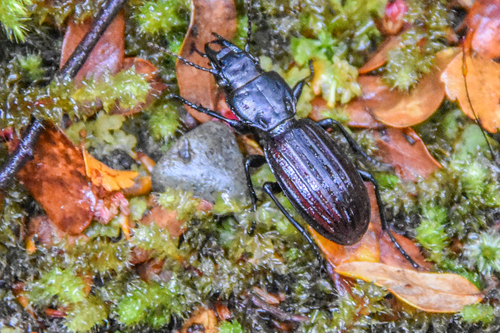
Elephant Weevil

Elephant Weevil

Rhynchodes ursus

Endemic
Daily sighting probability ~10% · With luck
at Fiordland National Park

In 3 days ~30% in a week ~50%

13 Verified sightings at Fiordland National Park From 2019 to 2026
26 In all 3 parks
November Best month
☀️ Diurnal When it's spotted

About the Elephant Weevil

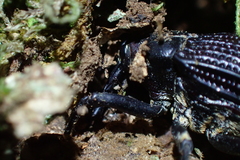
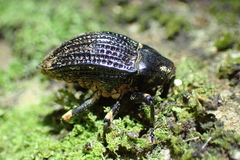
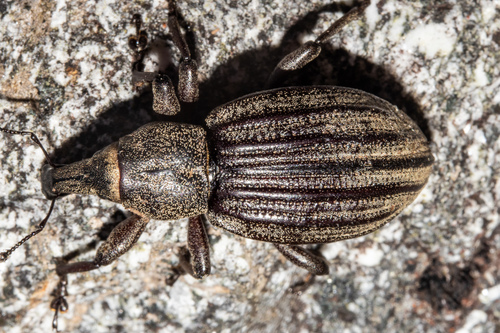
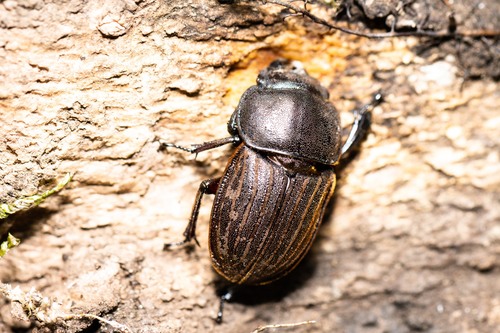
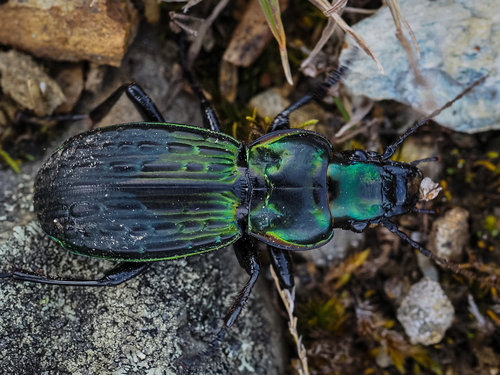
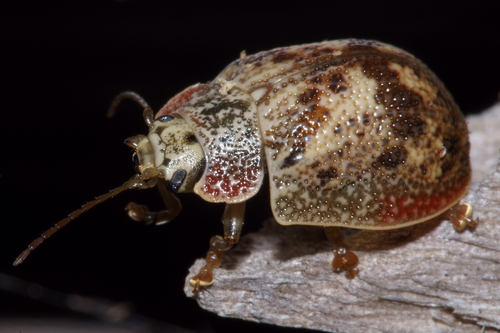
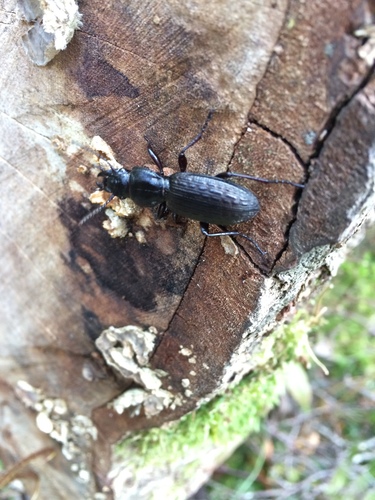
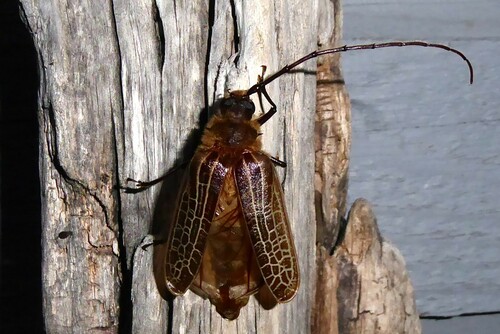
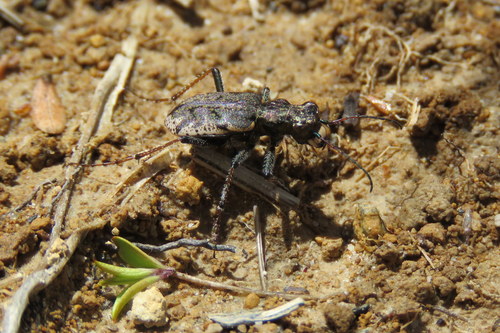
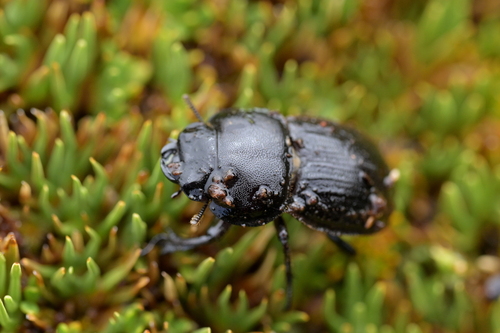
Rhynchodes ursus, also known as the elephant weevil, is a weevil in the Curculionidae family. It is endemic to New Zealand. It is a wood-boring weevil found throughout New Zealand. This species was first described by Adam White in 1846.

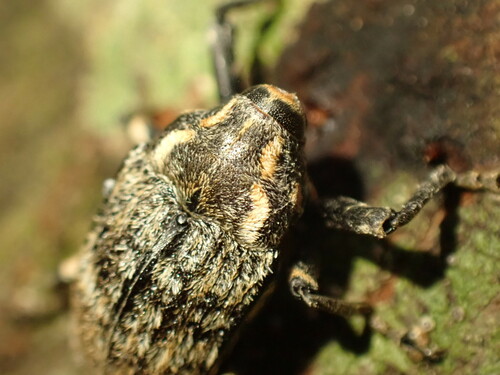
The adults of this species were originally described by White as follows: Deep brown; the thorax with two longitudinal bands of a lighter colour near the side; elytra above with five rows of hairs, on each side of which is a row of very deep punctures, between every two of which is a smoothish ridge; across the elytra are two obscure, dark brown bands; legs black, femora above at the end with a spot of yellowish brown hairs; abdomen beneath with the last segment having two tufts of hair.

Length, 101⁄2 lines. This large weevil has a deep brown colour with two lighter bands near the side of its thorax. It has black legs with a spot of yellowish-brown hairs on each femur. It has dense scales on its body, which can be hair-like. In female specimens the antennae are inserted halfway along the rostrum and nearer the front in males. This species varies greatly in size, colour, and in the amount and nature of its hair-like... Wikipedia →
Global Distribution

Parks Where Found

# Park Country Daily sighting probability
1 Rakiura National Park 🇳🇿 New Zealand
~10%
2 Arthur's Pass National Park 🇳🇿 New Zealand
~10%
3 Fiordland National Park 🇳🇿 New Zealand
~10%

Before you go

What are the chances of seeing an Elephant Weevil in Fiordland National Park?

With luck

About 10% of wildlife watchers report an Elephant Weevil sighting in Fiordland National Park on a given day, based on 13 verified sightings from GBIF citizen-science data from 2019 to 2026. It is the 56th most-seen of the 201 insects we can rate there. Over three days the chance rises to about 30%, and over a week to about 50%, if each day is a fresh chance.

When is the best time to see an Elephant Weevil in Fiordland National Park?

October and November

In those months about 20% of wildlife watchers report an Elephant Weevil in Fiordland National Park on a given day, against under 5% in February and April–September, the lowest months.

What time of day is best to see an Elephant Weevil?

Between 10 am and 1 pm

Across all the parks we cover, that three-hour window holds the most Elephant Weevil sightings with a recorded time, and about 7 in 10 of them come between 6 am and 6 pm: it is a daytime animal.

Is Fiordland National Park the best place to see an Elephant Weevil?

Among the best

Of the 3 parks where we can rate Elephant Weevil sightings, Fiordland National Park ranks 3rd at about 10%, level with the leaders once rounded. The best odds are in Rakiura National Park (New Zealand, about 10%) and Arthur's Pass National Park (New Zealand, about 10%).

Where does the Elephant Weevil sighting chance come from?

GBIF citizen-science records

It is estimated from how often the Elephant Weevil is recorded against all the insects logged in Fiordland National Park (13 verified sightings from 2019 to 2026), calibrated against known sighting rates. Figures are rounded to the nearest 10% because citizen-science data supports honest approximations, not decimals, and months with records from fewer than five people show "—". How it works.

← Back to Fiordland National Park