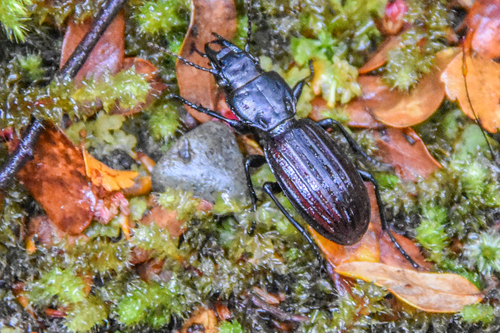
Huhu

Huhu

Prionoplus reticularis

Endemic
Daily sighting probability ~10% · With luck
at Fiordland National Park

In 3 days ~30% in a week ~50%

11 Verified sightings at Fiordland National Park From 2019 to 2026
60 In all 4 parks
March Best month
☀️🌙 Day & Night When it's spotted

About the Huhu

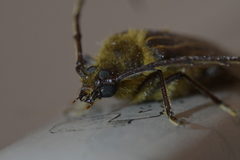
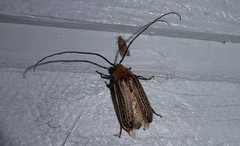
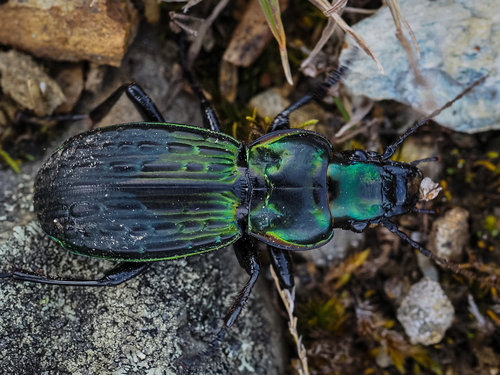
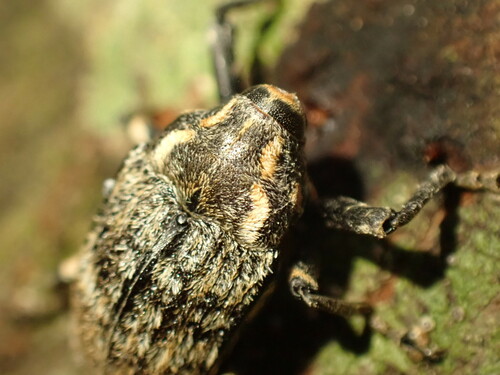
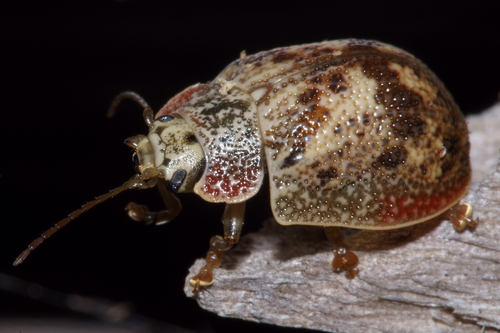
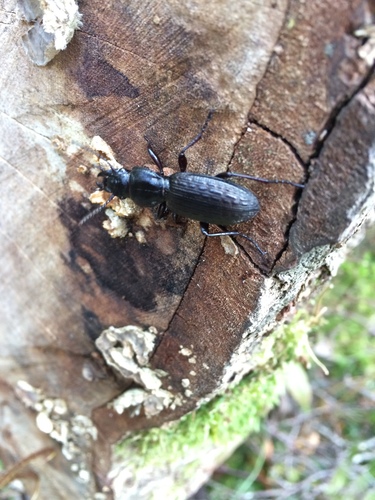
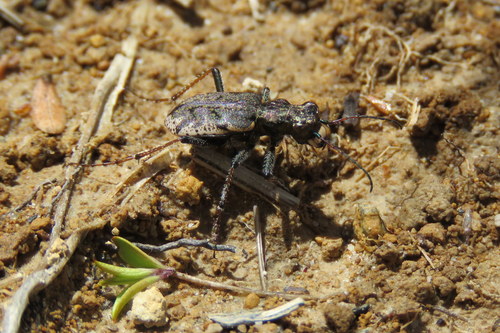
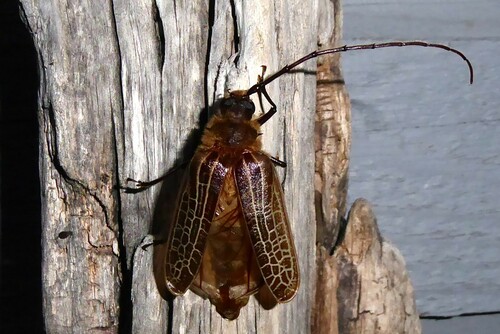
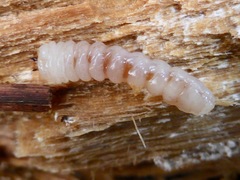
The huhu beetle (Prionoplus reticularis) is a longhorn beetle endemic to New Zealand. It is a large, visually distinctive species whose adults reach up to five cm (2 in) in length. It is widespread throughout New Zealand, occurring up to 1,400 m (4,600 ft) at altitude. Although the adult is unable to eat, the larva feeds and burrows in the dead wood of trees, almost entirely feeding on gymnosperms such as rimu and Monterey pine. As a larva, it can grow to sizes of 50–70 mm (2.0–2.8 in) and has a cylindrical appearance with a creamy colour. During this stage, in which the insect is high in protein and fat, it is edible and has been described as tasting similar to peanut butter. It has a history of consumption by the Māori, with the larva being consumed either raw or traditionally cooked in a hāngī.

The adult lives for roughly two weeks. It is nocturnal and is strongly attracted to light, such as that produced by human habitation. The female appears to produce olfactory cues to attract the male. During its larval stage, the beetle can potentially take one to two years to reach maturity, although this has been achieved more quickly in laboratory conditions. The intestinal tract of the larva hosts a diverse range of microorganisms that may assist in digestion of wood. Because the larva burrows into logs, New Zealand has to treat logs before exporting them to prevent the beetle spreading to other countries. This is done by fumigating or heating the logs, which is done by government-approved third parties. Many predators such as native birds and introduced mammals are known to prey upon the beetle. Prionaphes depressus, a species of fairy wasp exclusively parasitises the beetle's eggs. The beetle was first described in taxonomic literature in 1843 by Scottish zoologist Adam White from a specimen collected in the Bay of Islands. Wikipedia →
Global Distribution

Parks Where Found

# Park Country Daily sighting probability
1 Rakiura National Park 🇳🇿 New Zealand
~20%
2 Abel Tasman National Park 🇳🇿 New Zealand
~20%
3 Egmont National Park 🇳🇿 New Zealand
~10%
4 Fiordland National Park 🇳🇿 New Zealand
~10%

Cities Where Found

# City Country Daily sighting probability
1 Auckland 🇳🇿 New Zealand
~10%

Before you go

What are the chances of seeing a Huhu in Fiordland National Park?

With luck

About 10% of wildlife watchers report a Huhu sighting in Fiordland National Park on a given day, based on 11 verified sightings from GBIF citizen-science data from 2019 to 2026. It is the 74th most-seen of the 201 insects we can rate there. Over three days the chance rises to about 30%, and over a week to about 50%, if each day is a fresh chance.

When is the best time to see a Huhu in Fiordland National Park?

December to March

In those months about 10% of wildlife watchers report a Huhu in Fiordland National Park on a given day, against under 5% in April to November, the lowest months.

What time of day is best to see a Huhu?

Between 9 pm and midnight

Across all the parks we cover, that three-hour window holds the most Huhu sightings with a recorded time, and about 6 in 10 of them come between 6 am and 6 pm: it is seen both by day and at night.

Is Fiordland National Park the best place to see a Huhu?

4th of 4

Of the 4 parks where we can rate Huhu sightings, Fiordland National Park ranks 4th at about 10%. The best odds are in Rakiura National Park (New Zealand, about 20%), Abel Tasman National Park (New Zealand, about 20%) and Egmont National Park (New Zealand, about 10%).

Where does the Huhu sighting chance come from?

GBIF citizen-science records

It is estimated from how often the Huhu is recorded against all the insects logged in Fiordland National Park (11 verified sightings from 2019 to 2026), calibrated against known sighting rates. Figures are rounded to the nearest 10% because citizen-science data supports honest approximations, not decimals, and months with records from fewer than five people show "—". How it works.

← Back to Fiordland National Park