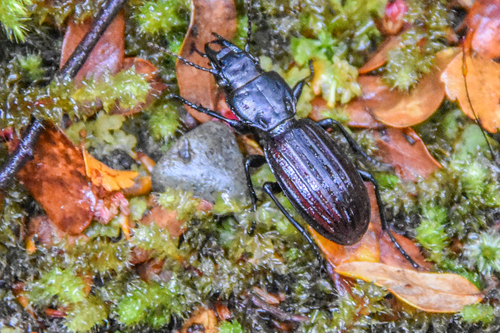

Squeaking Longhorn

Squeaking Longhorn

Hexatricha pulverulenta

Endemic
Daily sighting probability ~10% · With luck
at Fiordland National Park

In 3 days ~20% in a week ~40%

5 Verified sightings at Fiordland National Park From 2019 to 2026
13 In all 2 parks
October Best month
☀️ Diurnal When it's spotted

About the Squeaking Longhorn

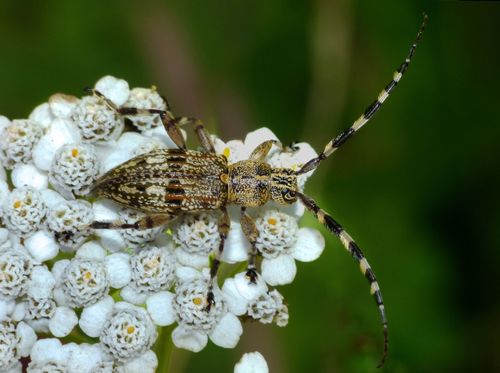
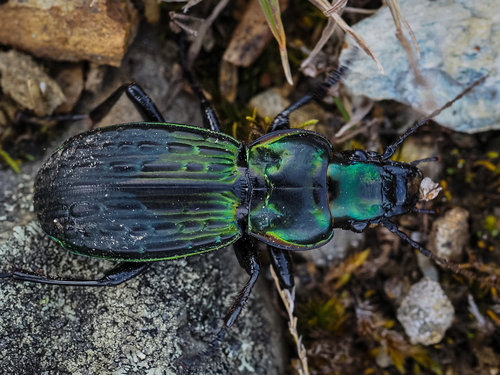
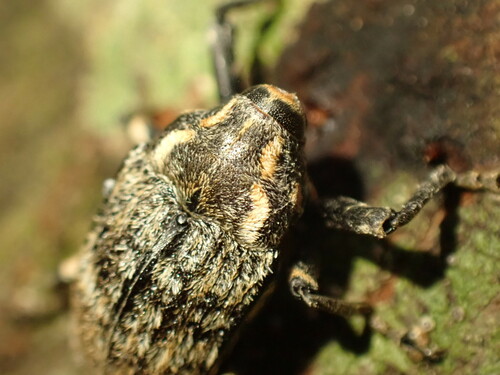
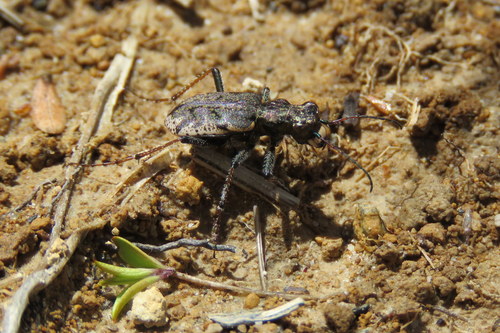
Hexatricha pulverulenta, commonly known as the squeaking longhorn, is a beetle in the family Cerambycidae, the only species in the monotypic genus Hexatricha. It is endemic to New Zealand. It was first described by John O. Westwood in 1843 as Lamia pulverulenta, and later moved into the genus Hexatricha (sometimes incorrectly spelled Hexathrica).

The squeaking longhorn is so called for the noise it makes, by stridulation, when handled. Female beetles lay an egg under the bark of dead or dying trees, especially Pinus radiata or New Zealand beech (Nothofagus). These hatch in 10–19 days, and larvae live under, and feed off, wood for perhaps two or three years. They pupate for 30 days, hatching from spring to autumn (August to April) into adult beetles which live for up to three months. Adults are reluctant fliers. Wikipedia →

Global Distribution

Parks Where Found

# Park Country Daily sighting probability
1 Rakiura National Park 🇳🇿 New Zealand
~10%
2 Fiordland National Park 🇳🇿 New Zealand
~10%

Before you go

What are the chances of seeing a Squeaking Longhorn in Fiordland National Park?

With luck

About 10% of wildlife watchers report a Squeaking Longhorn sighting in Fiordland National Park on a given day, based on 5 verified sightings from GBIF citizen-science data from 2019 to 2026. It is the 171st most-seen of the 201 insects we can rate there. Over three days the chance rises to about 20%, and over a week to about 40%, if each day is a fresh chance.

When is the best time to see a Squeaking Longhorn in Fiordland National Park?

February–March, October and December

In those months about 10% of wildlife watchers report a Squeaking Longhorn in Fiordland National Park on a given day, against under 5% in January, April–September and November, the lowest months.

What time of day is best to see a Squeaking Longhorn?

Between 2 and 5 pm

Across all the parks we cover, that three-hour window holds the most Squeaking Longhorn sightings with a recorded time, and about 9 in 10 of them come between 6 am and 6 pm: it is a daytime animal.

Is Fiordland National Park the best place to see a Squeaking Longhorn?

Among the best

Of the 2 parks where we can rate Squeaking Longhorn sightings, Fiordland National Park ranks 2nd at about 10%, level with the leaders once rounded. The best odds are in Rakiura National Park (New Zealand, about 10%).

Where does the Squeaking Longhorn sighting chance come from?

GBIF citizen-science records

It is estimated from how often the Squeaking Longhorn is recorded against all the insects logged in Fiordland National Park (5 verified sightings from 2019 to 2026), calibrated against known sighting rates. Figures are rounded to the nearest 10% because citizen-science data supports honest approximations, not decimals, and months with records from fewer than five people show "—". How it works.

← Back to Fiordland National Park