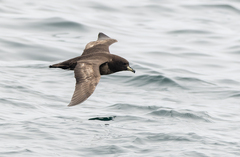
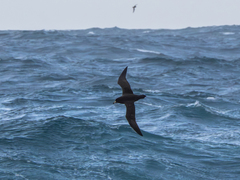
Westland Petrel

Westland Petrel

Procellaria westlandica

Silhouette: Alexandre Vong · PhyloPic

LCNTVUENEndangeredCR
Daily sighting probability <5% · Rare
at Fiordland National Park

In 3 days <5%

10 Verified sightings at Fiordland National Park From 2019 to 2026
21 In all 2 parks
August Best month
☀️ Diurnal When it's spotted

About the Westland Petrel

The Westland petrel (Procellaria westlandica), (Māori: tāiko), also known as the Westland black petrel, is a moderately large seabird in the petrel family Procellariidae, that is endemic to New Zealand. Described by Robert Falla in 1946, it is a stocky bird weighing approximately 1,100 grams (39 oz), and is one of the largest of the burrowing petrels. It is a dark blackish-brown colour with black legs and feet. It has a pale yellow bill with a dark tip.

This species spends most of its life at sea but returns to land to breed. When at sea, it ranges across areas of the Pacific and Tasman seas around the subtropical convergence and migrates east to South American waters during the non-breeding season. They feed on fish, squid and crustaceans. This species is also known to be an opportunistic feeder, scavenging fish waste discarded by hoki fishers.

The only known breeding colonies of the Westland petrel are in New Zealand, in a small area of forest-covered coastal foothills between Barrytown and Punakaiki on the South Island's West Coast. The birds nest in burrows excavated into hillsides and slopes, and exhibit natal philopatry, that is they return to their natal colony to breed. The loss of a breeding colony can therefore have severe consequences for the population. The total area of all breeding colonies combined is only about 16 hectares (40 acres). In 2014, the breeding colony areas suffered extensive damage from landslips and tree fall during the tail-end of Cyclone Ita. Other significant potential threats to the breeding colonies are predation by feral pigs and vagrant dogs from nearby settlements.

As of 2021, the International Union for Conservation of Nature classified this species as endangered, and the New Zealand Department of Conservation classified this species as "At Risk: Naturally Uncommon" under the New Zealand Threat Classification System. Wikipedia →

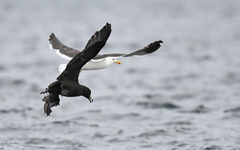
Sounds

Recording0:19

New Zealand · 2020

John Barkla · iNaturalist · CC0

Global Distribution

Parks Where Found

# Park Country Daily sighting probability
1 Rakiura National Park 🇳🇿 New Zealand
<5%
2 Fiordland National Park 🇳🇿 New Zealand
<5%

Before you go

What are the chances of seeing a Westland Petrel in Fiordland National Park?

Rare

Under 5% of wildlife watchers report a Westland Petrel sighting in Fiordland National Park on a given day, based on 10 verified sightings from GBIF citizen-science data from 2019 to 2026. It is the 87th most-seen of the 94 birds we can rate there. Over three days the chance rises to under 5%, if each day is a fresh chance.

When is the best time to see a Westland Petrel in Fiordland National Park?

Any time of year

In every month with enough records, under 5% of wildlife watchers report a Westland Petrel in Fiordland National Park on a given day, so our monthly data shows no clear season.

What time of day is best to see a Westland Petrel?

Between 9 am and noon

Across all the parks we cover, that three-hour window holds the most Westland Petrel sightings with a recorded time, and about 9 in 10 of them come between 6 am and 6 pm: it is a daytime animal.

Is Fiordland National Park the best place to see a Westland Petrel?

Among the best

Of the 2 parks where we can rate Westland Petrel sightings, Fiordland National Park ranks 2nd at under 5%, level with the leaders once rounded. The best odds are in Rakiura National Park (New Zealand, under 5%).

Where does the Westland Petrel sighting chance come from?

GBIF citizen-science records

It is estimated from how often the Westland Petrel is recorded against all the birds logged in Fiordland National Park (10 verified sightings from 2019 to 2026), calibrated against known sighting rates. Figures are rounded to the nearest 10% because citizen-science data supports honest approximations, not decimals, and months with records from fewer than five people show "—". How it works.

← Back to Fiordland National Park