Royal Albatross

Royal Albatross

Diomedea epomophora

Silhouette: Kimberly Haddrell · PhyloPic

LCNTVUVulnerableENCR
Daily sighting probability <5% · Rare
at Fiordland National Park

In 3 days ~10%

60 Verified sightings at Fiordland National Park From 2019 to 2026
107 In all 3 parks
December Best month
☀️ Diurnal When it's spotted

About the Royal Albatross

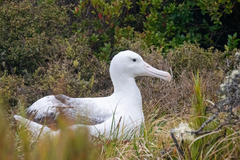
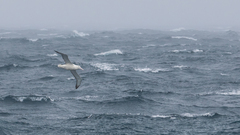
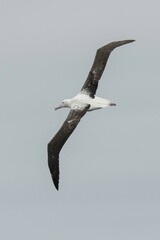
The southern royal albatross or toroa (Diomedea epomophora) is a large seabird in the albatross family. With an average wingspan of more than 3 m (9.8 ft), it is one of the two largest species of albatross, together with the wandering albatross. Recent studies indicate that the southern royal albatross may, on average, be somewhat larger than the wandering albatross in mass and have a similar wingspan, although other sources indicate roughly similar size for the two species and the wandering species may have a larger average (and maximum) wingspan in some colonies.

Albatrosses belong to family Diomedeidae of the order Procellariiformes, along with shearwaters, fulmars, storm petrels, and diving petrels. They share certain identifying features. First, they have nasal passages that attach to the upper bill called naricorns; the nostrils of the albatross are on the sides of the bill. The bills of Procellariiformes are also unique in that they are split into between seven and nine horny plates. Finally, they produce a stomach oil made up of wax esters and triglycerides that is stored in the proventriculus. This is used against predators as well as being an energy rich food... Wikipedia →

Sounds

Display1:13

New Zealand · 2017

© Sander Lagerveld · XC395983 · CC BY-NC-SA 4.0

Call0:12

New Zealand · 2000

© Frank Lambert · XC34747 · CC BY-NC-ND 4.0

Global Distribution

Parks Where Found

# Park Country Daily sighting probability
1 Fiordland National Park 🇳🇿 New Zealand
<5%
2 Rakiura National Park 🇳🇿 New Zealand
<5%
3 Table Mountain National Park 🇿🇦 South Africa
<5%

Before you go

What are the chances of seeing a Royal Albatross in Fiordland National Park?

Rare

Under 5% of wildlife watchers report a Royal Albatross sighting in Fiordland National Park on a given day, based on 60 verified sightings from GBIF citizen-science data from 2019 to 2026. It is the 74th most-seen of the 94 birds we can rate there. Over three days the chance rises to about 10%, if each day is a fresh chance.

When is the best time to see a Royal Albatross in Fiordland National Park?

Any time of year

In every month with enough records, under 5% of wildlife watchers report a Royal Albatross in Fiordland National Park on a given day, so our monthly data shows no clear season.

What time of day is best to see a Royal Albatross?

Between 9 am and noon

Across all the parks we cover, that three-hour window holds the most Royal Albatross sightings with a recorded time, and about 9 in 10 of them come between 6 am and 6 pm: it is a daytime animal.

Is Fiordland National Park the best place to see a Royal Albatross?

Yes

Of the 3 parks where we can rate Royal Albatross sightings, Fiordland National Park has the highest daily chance: under 5%. Next come Rakiura National Park (New Zealand, under 5%) and Table Mountain National Park (South Africa, under 5%).

Where does the Royal Albatross sighting chance come from?

GBIF citizen-science records

It is estimated from how often the Royal Albatross is recorded against all the birds logged in Fiordland National Park (60 verified sightings from 2019 to 2026), calibrated against known sighting rates. Figures are rounded to the nearest 10% because citizen-science data supports honest approximations, not decimals, and months with records from fewer than five people show "—". How it works.

← Back to Fiordland National Park