Tammar Wallaby

Tammar Wallaby

Macropus eugenii

Silhouette: Pascal Abel · PhyloPic

LCLeast ConcernNTVUENCR
Daily sighting probability ~60% · Likely
at Flinders Chase

In 3 days ~90% in a week >90%

55 Verified sightings at Flinders Chase From 2019 to 2026
55 In 1 park
August Best month
☀️🌙 Day & Night When it's spotted

About the Tammar Wallaby

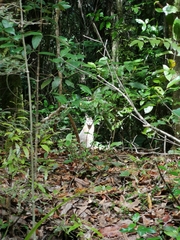
The tammar wallaby (Notamacropus eugenii), also known as the dama wallaby or darma wallaby, is a small macropod native to South and Western Australia. Though its geographical range has been severely reduced since European colonisation, the tammar wallaby remains common within its reduced range and is listed as "Least Concern" by the International Union for Conservation of Nature (IUCN). It has been introduced to New Zealand and reintroduced to some areas of Australia where it had been previously extirpated. Skull variations differentiate between tammar wallabies from Western Australia, Kangaroo Island, and mainland South Australia, making them distinct population groups.

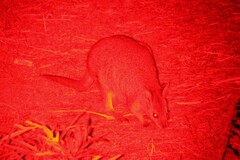
The tammar wallaby is among the smallest of the wallabies in the genus Notamacropus. Its coat colour is largely grey. The tammar wallaby has several notable adaptations, including the ability to retain energy while hopping, colour vision, and the ability to drink seawater. A nocturnal species, it spends the nighttime in grassland habitat and the daytime in shrubland. It is also very gregarious and has a seasonal, promiscuous mating pattern. A female tammar wallaby can nurse a joey in her pouch while keeping an embryo in her uterus. The tammar wallaby is a model species for research on marsupials, and on mammals in general. Its genome was sequenced in 2011. Wikipedia →

Global Distribution

Parks Where Found

# Park Country Daily sighting probability
1 Flinders Chase 🇦🇺 Australia
~60%

More parks will be added in future updates.

Zoos & Centres Where Found

# Zoo / Centre Country
1 Disney's Animal Kingdom 🇺🇸 United States In captivity
2 Busch Gardens Tampa 🇺🇸 United States In captivity
3 Werribee Open Range Zoo 🇦🇺 Australia In captivity
4 Sedgwick County Zoo 🇺🇸 United States In captivity
5 Omaha’s Henry Doorly Zoo and Aquarium 🇺🇸 United States In captivity
6 Los Angeles Zoo 🇺🇸 United States In captivity
7 Dakota Zoo 🇺🇸 United States In captivity
8 Taronga Zoo 🇦🇺 Australia In captivity
9 Cleland Wildlife Park 🇦🇺 Australia In captivity
10 Currumbin Wildlife Sanctuary 🇦🇺 Australia In captivity
11 Melbourne Zoo 🇦🇺 Australia In captivity
12 Parndana Wildlife Park 🇦🇺 Australia In captivity
13 Perth Zoo 🇦🇺 Australia In captivity
14 Philadelphia Zoo 🇺🇸 United States In captivity
15 Zoologischer Garten Magdeburg 🇩🇪 Germany In captivity
16 Fresno Chaffee Zoo 🇺🇸 United States In captivity
17 Phillip Island Wildlife Park 🇦🇺 Australia In captivity
18 Riverbanks Zoo 🇺🇸 United States In captivity
19 Aquazoo Friesland 🇳🇱 Netherlands In captivity
20 Kangaroo Creek Farm 🇨🇦 Canada In captivity
21 Moonlit Sanctuary Wildlife Conservation Park 🇦🇺 Australia In captivity
22 Lehigh Valley Zoo 🇺🇸 United States In captivity
23 Sydney Zoo 🇦🇺 Australia In captivity
24 Adelaide Zoo 🇦🇺 Australia In captivity
25 Drusillas Zoo Park 🇬🇧 United Kingdom In captivity
26 Paradise Valley Springs 🇳🇿 New Zealand In captivity
27 Gorge Wildlife Park 🇦🇺 Australia In captivity
28 Featherdale Sydney Wildlife Park 🇦🇺 Australia In captivity
29 African Safari World 🇦🇺 Australia In captivity
30 Caversham Wildlife Park 🇦🇺 Australia In captivity
31 Warrawong Wildlife Sanctuary 🇦🇺 Australia In captivity

Before you go

What are the chances of seeing a Tammar Wallaby in Flinders Chase?

Likely

About 60% of wildlife watchers report a Tammar Wallaby sighting in Flinders Chase on a given day, based on 55 verified sightings from GBIF citizen-science data from 2019 to 2026. It is the 3rd most-seen of the 9 mammals we can rate there. Over three days the chance rises to about 90%, and over a week to over 90%, if each day is a fresh chance.

When is the best time to see a Tammar Wallaby in Flinders Chase?

April, June, August and November–February

In those months about 70% of wildlife watchers report a Tammar Wallaby in Flinders Chase on a given day, against about 40% in October, the lowest month.

What time of day is best to see a Tammar Wallaby?

Between 4 and 7 pm

Across all the parks we cover, that three-hour window holds the most Tammar Wallaby sightings with a recorded time, and about 6 in 10 of them come between 6 am and 6 pm: it is seen both by day and at night.

Where else can you see a Tammar Wallaby?

Only Flinders Chase, in our data

Flinders Chase is the only park on Wallace's Line with enough records to rate Tammar Wallaby sightings: about 60% of wildlife watchers there report one on a given day.

Where does the Tammar Wallaby sighting chance come from?

GBIF citizen-science records

It is estimated from how often the Tammar Wallaby is recorded against all the mammals logged in Flinders Chase (55 verified sightings from 2019 to 2026), calibrated against known sighting rates. Figures are rounded to the nearest 10% because citizen-science data supports honest approximations, not decimals, and months with records from fewer than five people show "—". How it works.

← Back to Flinders Chase