


Completed

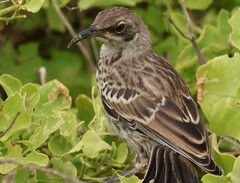
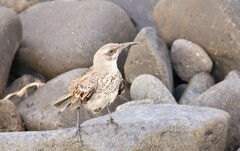
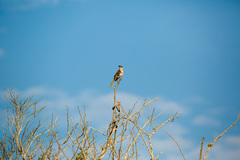
Española Mockingbird
Mimus macdonaldi
Silhouette: Andy Wilson · PhyloPic
- KingdomAnimalia (Animals)
- PhylumChordata (Chordates)
- ClassAves (Birds)
- OrderPasseriformes (Perching Birds)
- FamilyMimidae (Mockingbirds and Thrashers)
- GenusMimus (Typical Mockingbirds)
- SpeciesMimus macdonaldi (Española Mockingbird)
In 3 days ~20% in a week ~40%
1,199 Verified sightings at Galápagos Islands From 2019 to 2026
1,199 In 1 park
October Best month
☀️ Diurnal When it's spotted
About the Española Mockingbird
The Española mockingbird (Mimus macdonaldi), also known as the Hood mockingbird, is a species of bird in the family Mimidae. It is endemic to Española Island in the Galápagos Islands, Ecuador, and it is one of four closely related mockingbird species endemic to the Galápagos archipelago. It is found in dry forests and is omnivorous, though it primarily is a carnivore or scavenger. The species has a highly territorial social structure and has no fear of humans. It is the only species of Galápagos mockingbird that Charles Darwin did not see or collect on the voyage of HMS Beagle.
The Española mockingbird was formally described in 1890 by the American ornithologist Robert Ridgway based on a specimen collected by naturalists on the USS Albatross on the island of Española in the Galápagos Islands. Ridgway coined the binomial name Nesomimus macdonaldi where the specific epithet was chosen to honour Marshall McDonald who was the United States Commissioner of Fisheries. The Española mockingbird is now one of 14 species placed in the genus Mimus that was introduced in 1826 by the German zoologist Friedrich Boie. The species is monotypic: no subspecies are recognised. Wikipedia →
Recent sightings of Española Mockingbird in Galápagos Islands
LIVEiNaturalistGlobal Distribution
Parks Where Found
| # | Park | Country | Daily sighting probability |
|---|---|---|---|
| 1 | Galápagos Islands | 🇪🇨 Ecuador |
More parks will be added in future updates.
Closest Relatives at Galápagos Islands






Before you go
What are the chances of seeing an Española Mockingbird in Galápagos Islands?
With luck
About 10% of wildlife watchers report an Española Mockingbird sighting in Galápagos Islands on a given day, based on 1,199 verified sightings from GBIF citizen-science data from 2019 to 2026. It is the 56th most-seen of the 114 birds we can rate there. Over three days the chance rises to about 20%, and over a week to about 40%, if each day is a fresh chance.
When is the best time to see an Española Mockingbird in Galápagos Islands?
February and April–December
In those months about 10% of wildlife watchers report an Española Mockingbird in Galápagos Islands on a given day, against under 5% in January and March, the lowest months.
What time of day is best to see an Española Mockingbird?
Between 8 and 11 am
Across all the parks we cover, that three-hour window holds the most Española Mockingbird sightings with a recorded time, and about 9 in 10 of them come between 6 am and 6 pm: it is a daytime animal.
Where else can you see an Española Mockingbird?
Only Galápagos Islands, in our data
Galápagos Islands is the only park on Wallace's Line with enough records to rate Española Mockingbird sightings: about 10% of wildlife watchers there report one on a given day.
Which relatives of the Española Mockingbird live in Galápagos Islands?
Same genus: Mimus
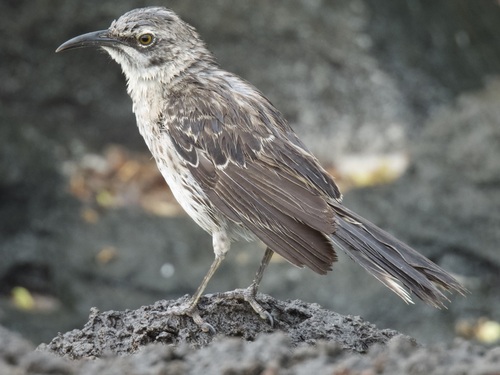
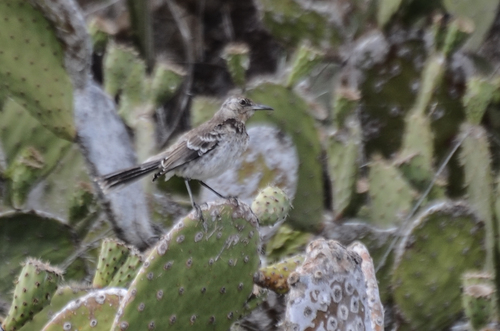
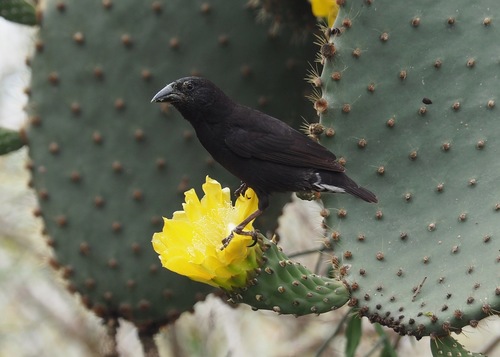
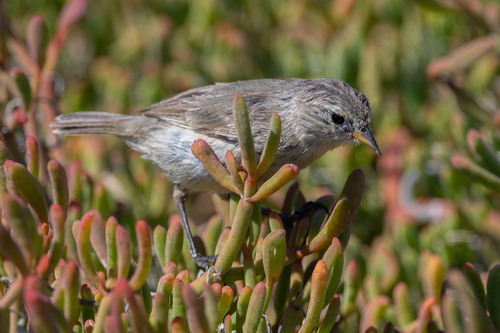
The closest relatives of the Española Mockingbird that you can see in Galápagos Islands (genus Mimus, Typical Mockingbirds) are Galápagos Mockingbird (about 50%) and San Cristobal Mockingbird (about 10%), with each one's daily chance of a sighting.
Where does the Española Mockingbird sighting chance come from?
GBIF citizen-science records
It is estimated from how often the Española Mockingbird is recorded against all the birds logged in Galápagos Islands (1,199 verified sightings from 2019 to 2026), calibrated against known sighting rates. Figures are rounded to the nearest 10% because citizen-science data supports honest approximations, not decimals, and months with records from fewer than five people show "—". How it works.
