


Completed
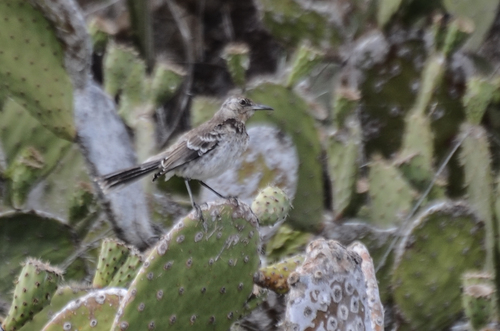
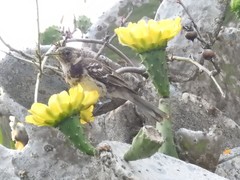
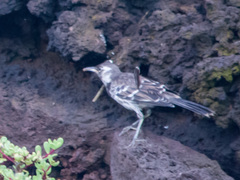
Floreana Mockingbird
Mimus trifasciatus
Silhouette: Andy Wilson · PhyloPic
- KingdomAnimalia (Animals)
- PhylumChordata (Chordates)
- ClassAves (Birds)
- OrderPasseriformes (Perching Birds)
- FamilyMimidae (Mockingbirds and Thrashers)
- GenusMimus (Typical Mockingbirds)
- SpeciesMimus trifasciatus (Floreana Mockingbird)
In 3 days ~10% in a week ~20%
296 Verified sightings at Galápagos Islands From 2019 to 2026
296 In 1 park
June Best month
☀️ Diurnal When it's spotted
About the Floreana Mockingbird
The Floreana mockingbird (Mimus trifasciatus) or the Charles Island mockingbird, is a species of bird in the family Mimidae. It was endemic to Floreana, one of the Galápagos Islands, but now is found only on two nearby islets, Campeón and Gardner-near-Floreana. The Floreana mockingbird is also known as Darwin's mockingbird, as it was the arguable inspiration for Charles Darwin's work on the origins of species; he noticed distinct differences between them and previous species he had encountered and consequently established the existence of other variants on neighboring islands.
The Floreana mockingbird, Galapagos mockingbird (Mimus parvulus), Espanola mockingbird (M. macdonaldi), and San Cristobal mockingbird (M. melanotis) were previously placed in genus Nesomimus and were considered conspecific. They now form a superspecies. The Floreana mockingbird is monotypic.
The Floreana mockingbird is 25 to 26 cm (9.8 to 10.2 in) long. Males weigh an average of 65.7 g (2.32 oz) and females 59.8 g (2.11 oz). Adults have a pied appearance. They have a pale supercilium, a black patch in front of the eye, a darkish one below it, and white cheeks. Their... Wikipedia →
Sounds
Call0:16
Ecuador · 2008
© Scott Olmstead · XC24274 · CC BY-NC-ND 2.5
Recent sightings of Floreana Mockingbird in Galápagos Islands
LIVEiNaturalistGlobal Distribution
Parks Where Found
| # | Park | Country | Daily sighting probability |
|---|---|---|---|
| 1 | Galápagos Islands | 🇪🇨 Ecuador |
More parks will be added in future updates.
Closest Relatives at Galápagos Islands


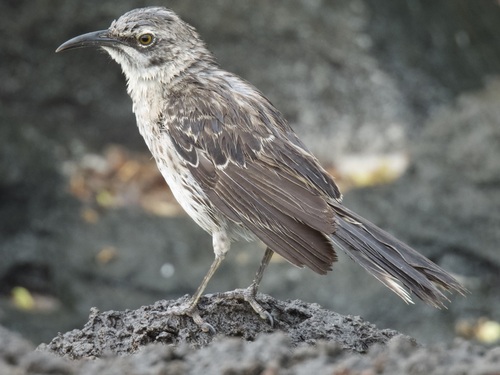


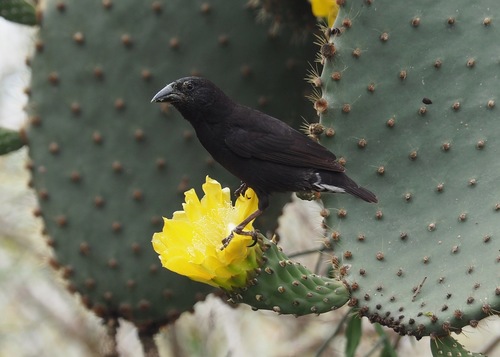

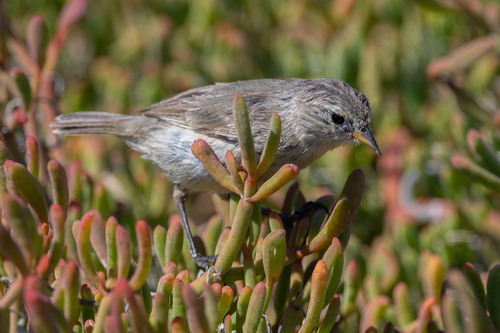

Before you go
What are the chances of seeing a Floreana Mockingbird in Galápagos Islands?
Rare
Under 5% of wildlife watchers report a Floreana Mockingbird sighting in Galápagos Islands on a given day, based on 296 verified sightings from GBIF citizen-science data from 2019 to 2026. It is the 68th most-seen of the 114 birds we can rate there. Over three days the chance rises to about 10%, and over a week to about 20%, if each day is a fresh chance.
When is the best time to see a Floreana Mockingbird in Galápagos Islands?
June and July
In those months about 10% of wildlife watchers report a Floreana Mockingbird in Galápagos Islands on a given day, against under 5% in August to May, the lowest months. Those are among Galápagos Islands's driest months, with almost no rain against 50 mm in March.
What time of day is best to see a Floreana Mockingbird?
Between 8 and 11 am
Across all the parks we cover, that three-hour window holds the most Floreana Mockingbird sightings with a recorded time, and about 8 in 10 of them come between 6 am and 6 pm: it is a daytime animal.
Where else can you see a Floreana Mockingbird?
Only Galápagos Islands, in our data
Galápagos Islands is the only park on Wallace's Line with enough records to rate Floreana Mockingbird sightings: under 5% of wildlife watchers there report one on a given day.
Which relatives of the Floreana Mockingbird live in Galápagos Islands?
Same genus: Mimus
The closest relatives of the Floreana Mockingbird that you can see in Galápagos Islands (genus Mimus, Typical Mockingbirds) are Galápagos Mockingbird (about 50%), San Cristobal Mockingbird (about 10%) and Española Mockingbird (about 10%), with each one's daily chance of a sighting.
Where does the Floreana Mockingbird sighting chance come from?
GBIF citizen-science records
It is estimated from how often the Floreana Mockingbird is recorded against all the birds logged in Galápagos Islands (296 verified sightings from 2019 to 2026), calibrated against known sighting rates. Figures are rounded to the nearest 10% because citizen-science data supports honest approximations, not decimals, and months with records from fewer than five people show "—". How it works.
