Galápagos Fur Seal

Galápagos Fur Seal

Arctocephalus galapagoensis

Silhouette: PhyloPic

LCNTVUENEndangeredCR Endemic
Daily sighting probability ~30% · Possible
at Galápagos Islands

In 3 days ~60% in a week ~90%

333 Verified sightings at Galápagos Islands From 2019 to 2026
333 In 1 park
August Best month
☀️ Diurnal When it's spotted

About the Galápagos Fur Seal

The Galápagos fur seal (Arctocephalus galapagoensis) is one of eight seals in the genus Arctocephalus. It is the smallest of all eared seals. It is endemic to the Galápagos Islands in the eastern Pacific. The total estimated population as of 1970 was said to be about 30,000, although the population has been said to be on the decline since the 1980s due to environmental factors such as pollution, disease, invasive species, and their limited territory. Due to the population having been historically vulnerable to hunting, the Galápagos fur seal has been protected by the Ecuadorian government since 1934.

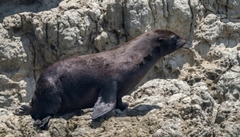
Galápagos fur seals are the smallest otariids. They are born with a black natal coat that they molt to reveal a lighter brown coat before becoming adults. Of the otariids, Galápagos fur seals display the least amount of sexual dimorphism. The males are up to two times heavier than the females and 1–1.3 times longer. Males grow to be 1.5 m (5 feet) on average and weigh about 64 kg (140 lb). Females grow to be 1.25 m (4 ft 1 in) on average and weigh 27 kg (60 lb). They also have large eyes which allow them to hunt at night. The Galápagos fur seals look very similar to the... Wikipedia →

Global Distribution

Parks Where Found

# Park Country Daily sighting probability
1 Galápagos Islands 🇪🇨 Ecuador
~30%

More parks will be added in future updates.

Before you go

What are the chances of seeing a Galápagos Fur Seal in Galápagos Islands?

Possible

About 30% of wildlife watchers report a Galápagos Fur Seal sighting in Galápagos Islands on a given day, based on 333 verified sightings from GBIF citizen-science data from 2019 to 2026. It is the 2nd most-seen of the 12 mammals we can rate there. Over three days the chance rises to about 60%, and over a week to about 90%, if each day is a fresh chance.

When is the best time to see a Galápagos Fur Seal in Galápagos Islands?

August

In that month about 40% of wildlife watchers report a Galápagos Fur Seal in Galápagos Islands on a given day, against about 20% in February, July and October, the lowest months. That is one of Galápagos Islands's driest months, with almost no rain against 50 mm in March.

What time of day is best to see a Galápagos Fur Seal?

Between 7 and 10 am

Across all the parks we cover, that three-hour window holds the most Galápagos Fur Seal sightings with a recorded time, and about 9 in 10 of them come between 6 am and 6 pm: it is a daytime animal.

Where else can you see a Galápagos Fur Seal?

Only Galápagos Islands, in our data

Galápagos Islands is the only park on Wallace's Line with enough records to rate Galápagos Fur Seal sightings: about 30% of wildlife watchers there report one on a given day.

Where does the Galápagos Fur Seal sighting chance come from?

GBIF citizen-science records

It is estimated from how often the Galápagos Fur Seal is recorded against all the mammals logged in Galápagos Islands (333 verified sightings from 2019 to 2026), calibrated against known sighting rates. Figures are rounded to the nearest 10% because citizen-science data supports honest approximations, not decimals, and months with records from fewer than five people show "—". How it works.

← Back to Galápagos Islands