Ghost Ant

Ghost Ant

Tapinoma melanocephalum

Daily sighting probability ~10% · With luck
at Galápagos Islands

In 3 days ~20% in a week ~40%

23 Verified sightings at Galápagos Islands From 2019 to 2026
61 In all 5 parks
November Best month
☀️ Diurnal When it's spotted

About the Ghost Ant

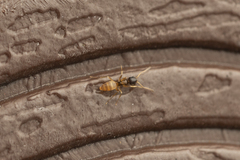
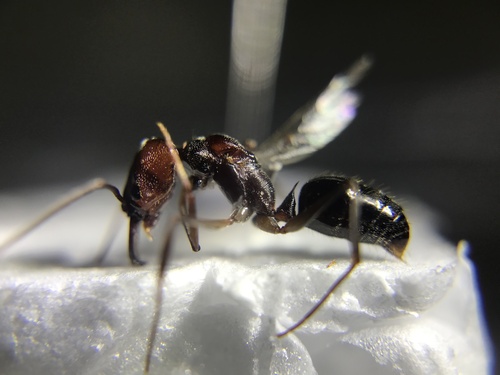
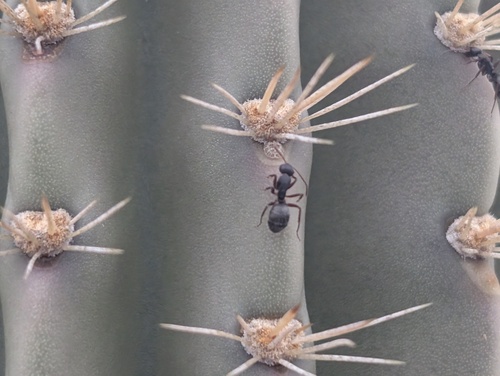
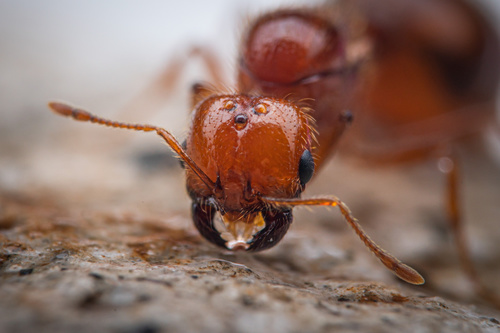
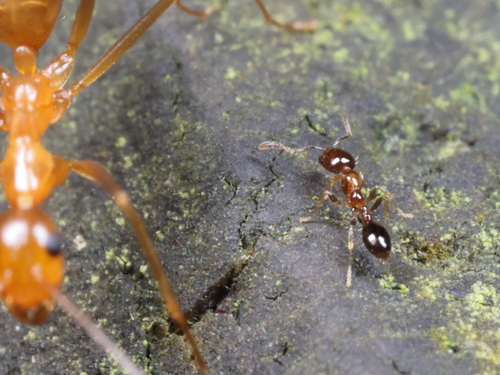
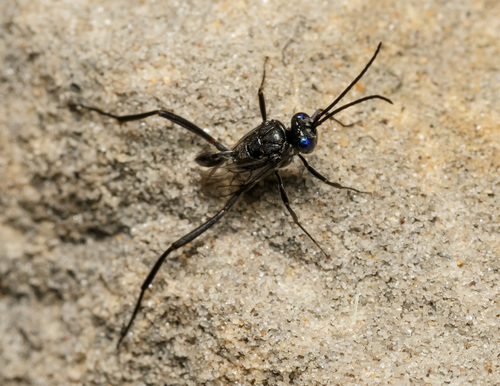
Tapinoma melanocephalum is a species of ant that goes by the common name ghost ant. They are recognised by their dark head and pale or translucent legs and gaster (abdomen). This colouring makes this tiny ant seem even smaller.

The ghost ant is small, with average worker lengths ranging between 1.3 to 2.0 millimetres (0.051 to 0.079 in). The antennae is composed of 12 segments that thicken towards the tip. The male's head and dorsum is dark in color, while the gaster is light. It may contain several dark marks. The antennal scapes exceeds the occipital border. The head and thorax is a dark brown color while the gaster, legs and antennae are a milky white color. Due to its small size and light colour, the ghost ant is difficult to see. Ghost ants are monomorphic and the thorax is spineless. The gaster is hairless, and has a back opening that is similar to a slit-like opening. The abdominal pedicel is formed from a single segment that is usually not visible due to the gaster. The species does not contain a stinger. During development, this species undergoes three larval instars, which are all naked and fusiform, with reduced mouthparts.

Queens are similar in appearance... Wikipedia →

Global Distribution

Parks Where Found

# Park Country Daily sighting probability
1 Galápagos Islands 🇪🇨 Ecuador
~10%
2 Everglades National Park 🇺🇸 United States
~10%
3 Daintree National Park 🇦🇺 Australia
~10%
4 Soberanía National Park 🇵🇦 Panama
~10%
5 Parque Natural Metropolitano 🇵🇦 Panama
<5%

Cities Where Found

# City Country Daily sighting probability
1 Zhuhai [Macau] 🇨🇳 China
~20%
2 Yogyakarta 🇮🇩 Indonesia
~20%
3 Prayagraj 🇮🇳 India
~20%
4 Manila 🇵🇭 Philippines
~10%
5 Ho Chi Minh City 🇻🇳 Vietnam
~10%
6 Hyderabad 🇮🇳 India
~10%
7 Guatemala City 🇬🇹 Guatemala
~10%
8 Chennai 🇮🇳 India
~10%
9 Colombo [Sri Jayawardenepura Kotte] 🇱🇰 Sri Lanka
~10%
10 Miami 🇺🇸 United States
~10%

Before you go

What are the chances of seeing a Ghost Ant in Galápagos Islands?

With luck

About 10% of wildlife watchers report a Ghost Ant sighting in Galápagos Islands on a given day, based on 23 verified sightings from GBIF citizen-science data from 2019 to 2026. It is the 35th most-seen of the 83 insects we can rate there. Over three days the chance rises to about 20%, and over a week to about 40%, if each day is a fresh chance.

When is the best time to see a Ghost Ant in Galápagos Islands?

January–February, May, July–August and October–November

In those months about 10% of wildlife watchers report a Ghost Ant in Galápagos Islands on a given day, against under 5% in March–April, June, September and December, the lowest months.

What time of day is best to see a Ghost Ant?

Between 10 am and 1 pm

Across all the parks we cover, that three-hour window holds the most Ghost Ant sightings with a recorded time, and about 9 in 10 of them come between 6 am and 6 pm: it is a daytime animal.

Is Galápagos Islands the best place to see a Ghost Ant?

Yes

Of the 5 parks where we can rate Ghost Ant sightings, Galápagos Islands has the highest daily chance: about 10%. Next come Everglades National Park (United States, about 10%) and Daintree National Park (Australia, about 10%).

Which relatives of the Ghost Ant live in Galápagos Islands?

Same family: Formicidae

The closest relatives of the Ghost Ant that you can see in Galápagos Islands (family Formicidae, Ants) are Longhorn Crazy Ant (about 10%), Odontomachus bauri (about 10%) and Camponotus planus (about 10%), with each one's daily chance of a sighting.

Where does the Ghost Ant sighting chance come from?

GBIF citizen-science records

It is estimated from how often the Ghost Ant is recorded against all the insects logged in Galápagos Islands (23 verified sightings from 2019 to 2026), calibrated against known sighting rates. Figures are rounded to the nearest 10% because citizen-science data supports honest approximations, not decimals, and months with records from fewer than five people show "—". How it works.
← Back to Galápagos Islands