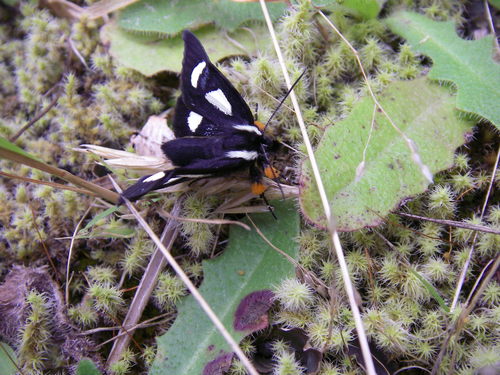
Knapweed Root Moth

Knapweed Root Moth

Agapeta zoegana

Daily sighting probability ~10% · With luck
at Glacier National Park

In 3 days ~20% in a week ~40%

14 Verified sightings at Glacier National Park From 2019 to 2026
45 In all 3 parks
August Best month
☀️🌙 Day & Night When it's spotted

About the Knapweed Root Moth

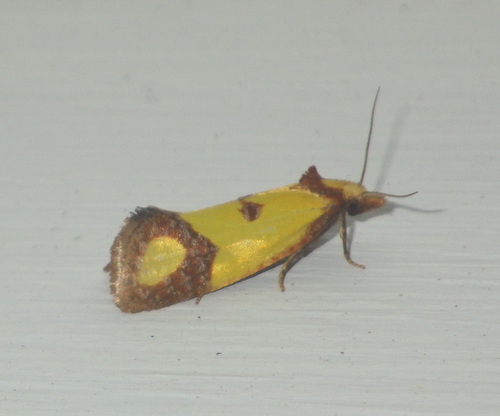
Agapeta zoegana is a species of moth known as the sulphur knapweed moth and the yellow-winged knapweed root moth. It is used as an agent of biological pest control against noxious knapweeds, particularly spotted knapweed (Centaurea maculosa) and diffuse knapweed (Centaurea diffusa).

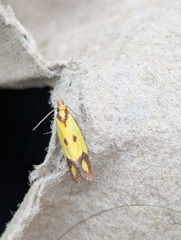
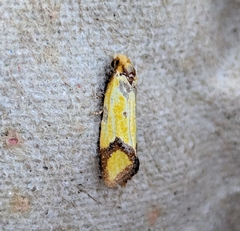
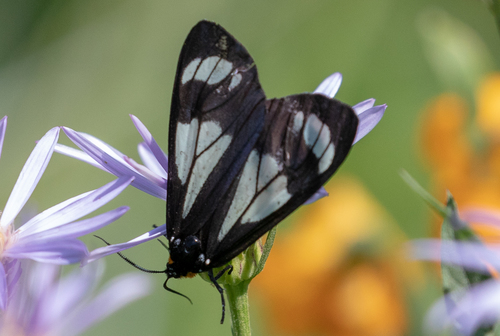
The adult moth is bright yellow with areas of brown on its wings. It is about 11 millimeters long. Meyrick describes it -The forewing with costa moderately arched; bright yellow or yellowish-ferruginous; costal edge, a small subdorsal spot before middle, and a large terminal blotch with angulated edge including a spot of ground-colour ferruginous-fuscous. Hindwings are dark grey. Julius von Kennel provides a full description.

The adult lives for only a few days, during which time the female lays eggs on stems and leaves. The larva, a root miner, moves to the root of the plant and tunnels through the cortex as it feeds. This causes moderate damage to the plant.

This moth is native to Eurasia. It was introduced to the western and west-central United States starting in the 1980s and it is now established in knapweed populations. It reduces the spread of the plants in areas where mechanical and chemical control is not practical. It lives on spotted and diffuse knapweed and has not been found to damage other plants.

Flight is from May to August from dusk, and is attracted to light. Wikipedia →
Global Distribution

Parks Where Found

# Park Country Daily sighting probability
1 Glacier National Park 🇺🇸 United States
~10%
2 Pyrénées National Park 🇫🇷 France
~10%
3 Bavarian Forest National Park 🇩🇪 Germany
~10%

Cities Where Found

# City Country Daily sighting probability
1 London 🇬🇧 United Kingdom
<5%
2 Munich 🇩🇪 Germany
<5%
3 Paris 🇫🇷 France
<5%
4 Prague 🇨🇿 Czechia
<5%
5 Berlin 🇩🇪 Germany
<5%
6 Vienna 🇦🇹 Austria
<5%
7 Moscow 🇷🇺 Russia
<5%

Before you go

What are the chances of seeing a Knapweed Root Moth in Glacier National Park?

With luck

About 10% of wildlife watchers report a Knapweed Root Moth sighting in Glacier National Park on a given day, based on 14 verified sightings from GBIF citizen-science data from 2019 to 2026. It is the 68th most-seen of the 147 insects we can rate there. Over three days the chance rises to about 20%, and over a week to about 40%, if each day is a fresh chance.

When is the best time to see a Knapweed Root Moth in Glacier National Park?

July and August

In those months about 10% of wildlife watchers report a Knapweed Root Moth in Glacier National Park on a given day, against under 5% in September to June, the lowest months. Those are among Glacier National Park's driest months, with about 30 mm of rain a month against 80 mm in February.

What time of day is best to see a Knapweed Root Moth?

Between 9 pm and midnight

Across all the parks we cover, that three-hour window holds the most Knapweed Root Moth sightings with a recorded time, and about 7 in 10 of them come between 6 pm and 6 am: it is seen both by day and at night.

Is Glacier National Park the best place to see a Knapweed Root Moth?

Yes

Of the 3 parks where we can rate Knapweed Root Moth sightings, Glacier National Park has the highest daily chance: about 10%. Next come Pyrénées National Park (France, about 10%) and Bavarian Forest National Park (Germany, about 10%).

Where does the Knapweed Root Moth sighting chance come from?

GBIF citizen-science records

It is estimated from how often the Knapweed Root Moth is recorded against all the insects logged in Glacier National Park (14 verified sightings from 2019 to 2026), calibrated against known sighting rates. Figures are rounded to the nearest 10% because citizen-science data supports honest approximations, not decimals, and months with records from fewer than five people show "—". How it works.

← Back to Glacier National Park