Indiscriminate Cuckoo Bumble Bee

Indiscriminate Cuckoo Bumble Bee

Bombus insularis

Daily sighting probability <5% · Rare
at Great Bear Rainforest

In 3 days ~10% in a week ~30%

5 Verified sightings at Great Bear Rainforest From 2019 to 2026
159 In all 10 parks
August Best month
☀️ Diurnal When it's spotted

About the Indiscriminate Cuckoo Bumble Bee

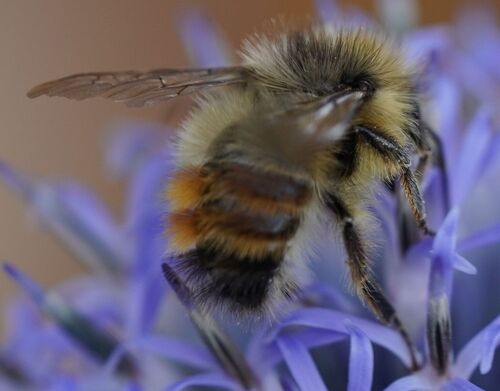
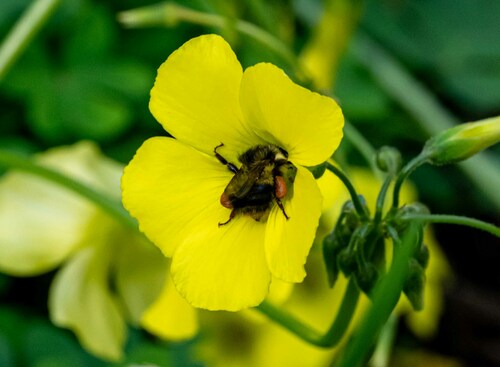
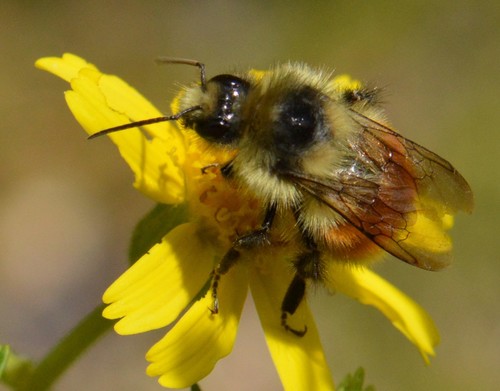
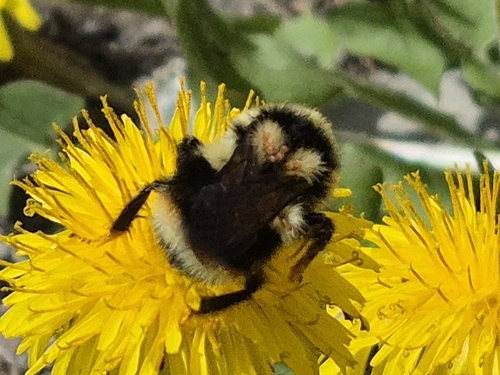
Bombus insularis is a species of bumblebee in the subgenus Psithyrus, the cuckoo bumblebees. It is native to northern and western North America, where it occurs throughout Canada, Alaska, the northern United States, and some western states. It is known commonly as the indiscriminate cuckoo bumblebee.

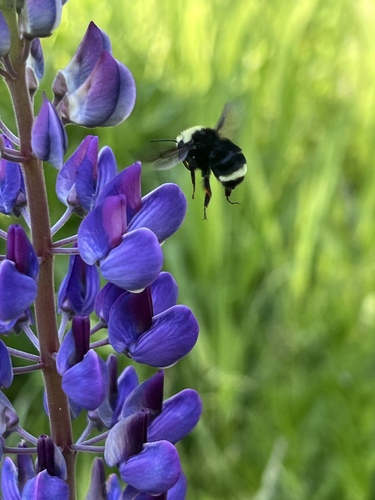
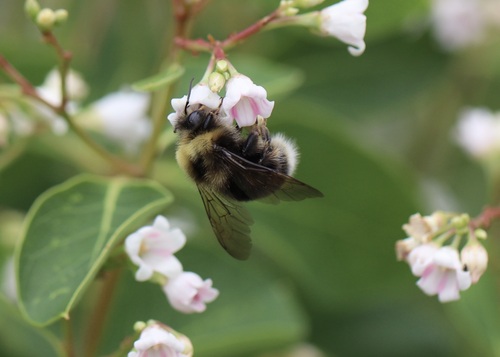
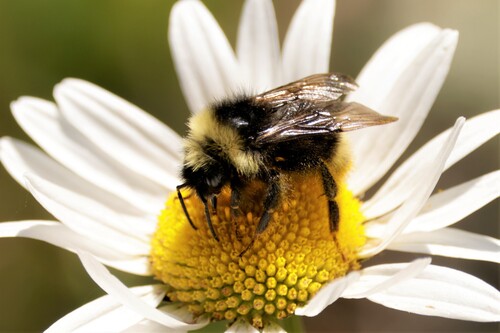
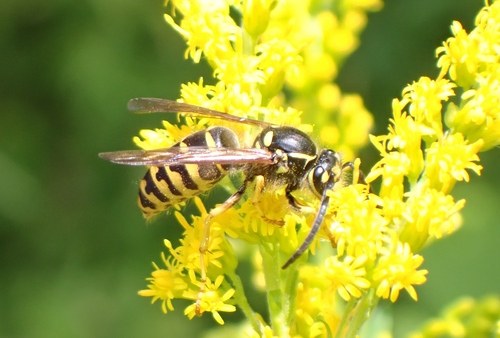
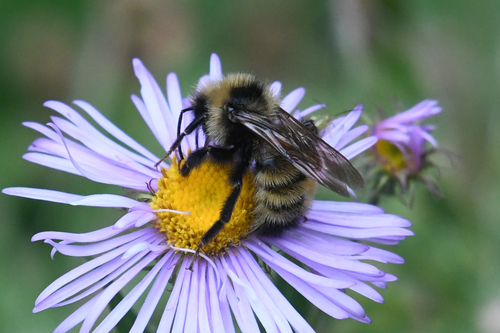
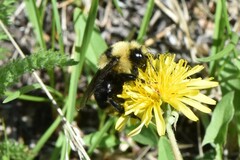
The female of the species is 1.6 to 1.9 centimeters long and just under a centimeter wide. The head is black with tufts of yellow hairs and the thorax is coated in long pale yellow hairs. The legs are hairy black. The abdomen has is black with yellow along the sides. The male is smaller, about half a centimeter wide at the abdomen. The head has long black hairs with small patches of yellow and the abdomen has strips of yellow and black hairs.

This species lives in tundra and taiga, western mountain ranges, and some maritime regions. As in other cuckoo bees, the queen of this species enters the nest of a host species, kills the resident queen, and lives and breeds in the nest tended by the host workers. Host species of this bee include the white-shouldered bumblebee (B. appositus), yellow bumblebee (B. fervidus), yellow-fronted bumblebee (B. flavifrons), Nevada bumblebee (B. nevadensis), and orange-belted bumblebee (B. ternarius).

This bee is still common and widespread, though it has declined in some areas and disappeared from a few parts of its historical range. Some of its host species have faced more significant declines. Potential threats include habitat loss, pesticides, pathogens from domesticated pollinators, competition from introduced bees, and climate change. Wikipedia →
Global Distribution

Parks Where Found

# Park Country Daily sighting probability
1 Wrangell-St. Elias National Park 🇺🇸 United States
~30%
2 Sequoia and Kings Canyon National Parks 🇺🇸 United States
~10%
3 Grand Teton National Park 🇺🇸 United States
~10%
4 Glacier National Park 🇺🇸 United States
~10%
5 Riding Mountain National Park 🇨🇦 Canada
~10%
6 Yellowstone National Park 🇺🇸 United States
~10%
7 Yosemite National Park 🇺🇸 United States
~10%
8 Rocky Mountain National Park 🇺🇸 United States
~10%
9 Banff National Park 🇨🇦 Canada
~10%
10 Great Bear Rainforest 🇨🇦 Canada
<5%

Cities Where Found

# City Country Daily sighting probability
1 Anchorage 🇺🇸 United States
~10%
2 Calgary 🇨🇦 Canada
~10%
3 Salt Lake City 🇺🇸 United States
<5%
4 Vancouver 🇨🇦 Canada
<5%
5 Minneapolis [Saint Paul] 🇺🇸 United States
<5%
6 Denver 🇺🇸 United States
<5%

Before you go

What are the chances of seeing an Indiscriminate Cuckoo Bumble Bee in Great Bear Rainforest?

Rare

Under 5% of wildlife watchers report an Indiscriminate Cuckoo Bumble Bee sighting in Great Bear Rainforest on a given day, based on 5 verified sightings from GBIF citizen-science data from 2019 to 2026. It is the 200th most-seen of the 235 insects we can rate there. Over three days the chance rises to about 10%, and over a week to about 30%, if each day is a fresh chance.

When is the best time to see an Indiscriminate Cuckoo Bumble Bee in Great Bear Rainforest?

August

In that month about 10% of wildlife watchers report an Indiscriminate Cuckoo Bumble Bee in Great Bear Rainforest on a given day, against under 5% in September to July, the lowest months.

What time of day is best to see an Indiscriminate Cuckoo Bumble Bee?

Between 10 am and 1 pm

Across all the parks we cover, that three-hour window holds the most Indiscriminate Cuckoo Bumble Bee sightings with a recorded time, and about 9 in 10 of them come between 6 am and 6 pm: it is a daytime animal.

Which relatives of the Indiscriminate Cuckoo Bumble Bee live in Great Bear Rainforest?

Same genus: Bombus

The closest relatives of the Indiscriminate Cuckoo Bumble Bee that you can see in Great Bear Rainforest (genus Bombus, Bumble Bees) are Yellow-Fronted Bumble Bee (about 30%), Sitka Bumble Bee (about 20%) and Black-Tailed Bumble Bee (about 20%), with each one's daily chance of a sighting.

Where does the Indiscriminate Cuckoo Bumble Bee sighting chance come from?

GBIF citizen-science records

It is estimated from how often the Indiscriminate Cuckoo Bumble Bee is recorded against all the insects logged in Great Bear Rainforest (5 verified sightings from 2019 to 2026), calibrated against known sighting rates. Figures are rounded to the nearest 10% because citizen-science data supports honest approximations, not decimals, and months with records from fewer than five people show "—". How it works.

← Back to Great Bear Rainforest