Western Tiger Swallowtail

Western Tiger Swallowtail

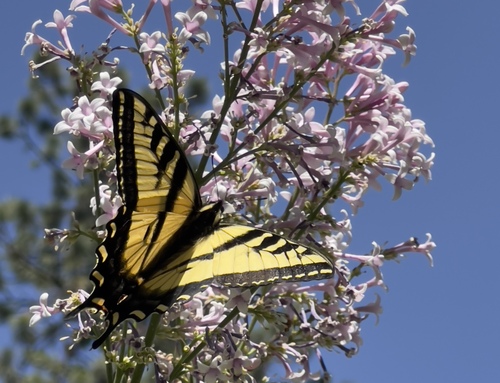
Papilio rutulus

Daily sighting probability ~10% · With luck
at Great Bear Rainforest

In 3 days ~20% in a week ~30%

10 Verified sightings at Great Bear Rainforest From 2019 to 2026
392 In all 12 parks
July Best month
☀️ Diurnal When it's spotted

About the Western Tiger Swallowtail

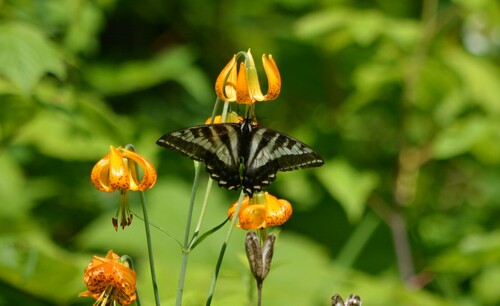
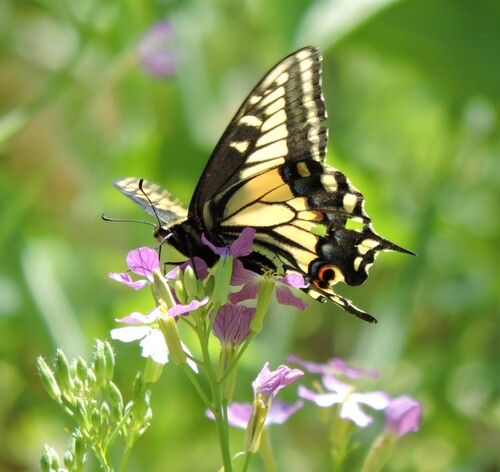
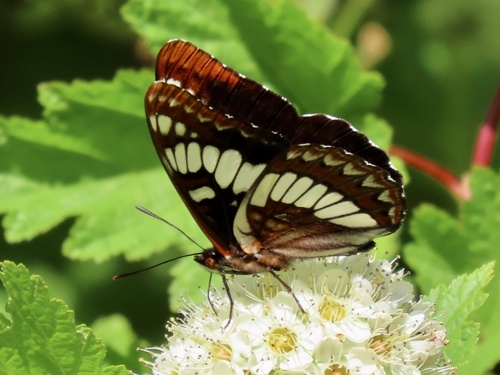
Papilio rutulus, the western tiger swallowtail, is a swallowtail butterfly belonging to the Papilionidae family. The species was first described by Hippolyte Lucas in 1852. Like the other tiger swallowtails, the western tiger swallowtail was formerly classified in genus Pterourus, but modern classifications all agree in placing them within Papilio.

The western tiger swallowtail butterfly is an abundant species native to a large portion of North America's northernmost and southernmost west coast. These butterflies are frequently observed from northwestern regions of Canada down to the southern tip of Baja California and extends eastward through states like the Dakotas, Colorado, and New Mexico. Although they primarily inhabit the west coast, it is not unusual for this species to be observed as far east as central Nebraska, even

Oklahoma. These occurrences are typically rare strays outside of its usual habitat. These butterflies are frequently seen in urban parks and gardens, as well as in rural woodlands and riparian areas. These butterflies can be found throughout Western North America, from South California to Southern British Columbia and Alberta... Wikipedia →
Global Distribution

Parks Where Found

# Park Country Daily sighting probability
1 Grand Teton National Park 🇺🇸 United States
~20%
2 Rocky Mountain National Park 🇺🇸 United States
~20%
3 Sequoia and Kings Canyon National Parks 🇺🇸 United States
~20%
4 Yosemite National Park 🇺🇸 United States
~20%
5 Glacier National Park 🇺🇸 United States
~10%
6 Grand Canyon National Park 🇺🇸 United States
~10%
7 Olympic National Park 🇺🇸 United States
~10%
8 Redwood National Park 🇺🇸 United States
~10%
9 Channel Islands National Park 🇺🇸 United States
~10%
10 Pacific Rim National Park Reserve 🇨🇦 Canada
~10%
11 Great Bear Rainforest 🇨🇦 Canada
~10%
12 Yellowstone National Park 🇺🇸 United States
<5%

Cities Where Found

# City Country Daily sighting probability
1 Sacramento 🇺🇸 United States
~20%
2 Vancouver 🇨🇦 Canada
~20%
3 Portland 🇺🇸 United States
~20%
4 Seattle 🇺🇸 United States
~20%
5 San Francisco 🇺🇸 United States
~10%
6 Los Angeles 🇺🇸 United States
~10%
7 Salt Lake City 🇺🇸 United States
~10%
8 San Diego 🇺🇸 United States
~10%
9 Denver 🇺🇸 United States
~10%

Before you go

What are the chances of seeing a Western Tiger Swallowtail in Great Bear Rainforest?

With luck

About 10% of wildlife watchers report a Western Tiger Swallowtail sighting in Great Bear Rainforest on a given day, based on 10 verified sightings from GBIF citizen-science data from 2019 to 2026. It is the 124th most-seen of the 235 insects we can rate there. Over three days the chance rises to about 20%, and over a week to about 30%, if each day is a fresh chance.

When is the best time to see a Western Tiger Swallowtail in Great Bear Rainforest?

May to July

In those months about 10% of wildlife watchers report a Western Tiger Swallowtail in Great Bear Rainforest on a given day, against under 5% in August to April, the lowest months. Those are among Great Bear Rainforest's driest months, with about 130 mm of rain a month against 480 mm in November.

What time of day is best to see a Western Tiger Swallowtail?

Between 10 am and 1 pm

Across all the parks we cover, that three-hour window holds the most Western Tiger Swallowtail sightings with a recorded time, and nearly all of them come between 6 am and 6 pm: it is a daytime animal.

Which relatives of the Western Tiger Swallowtail live in Great Bear Rainforest?

Same genus: Papilio

The closest relatives of the Western Tiger Swallowtail that you can see in Great Bear Rainforest (genus Papilio, Common Swallowtails) are Pale Swallowtail (about 10%) and Anise Swallowtail (about 10%), with each one's daily chance of a sighting.

Where does the Western Tiger Swallowtail sighting chance come from?

GBIF citizen-science records

It is estimated from how often the Western Tiger Swallowtail is recorded against all the insects logged in Great Bear Rainforest (10 verified sightings from 2019 to 2026), calibrated against known sighting rates. Figures are rounded to the nearest 10% because citizen-science data supports honest approximations, not decimals, and months with records from fewer than five people show "—". How it works.

← Back to Great Bear Rainforest