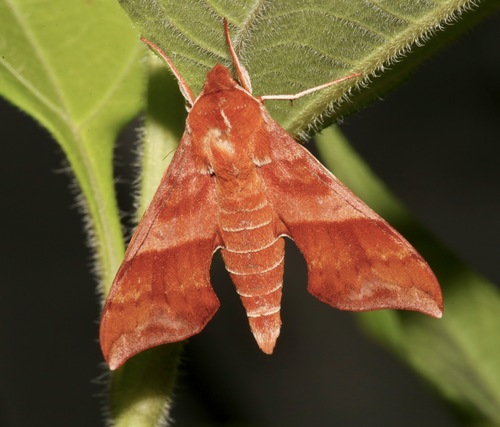
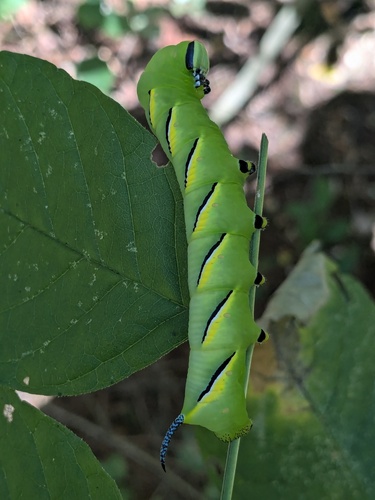
Elm Sphinx

Elm Sphinx

Ceratomia amyntor

Daily sighting probability ~10% · With luck
at Great Smoky Mountains National Park

In 3 days ~20% in a week ~40%

24 Verified sightings at Great Smoky Mountains National Park From 2019 to 2026
31 In all 2 parks
June Best month
☀️🌙 Day & Night When it's spotted

About the Elm Sphinx

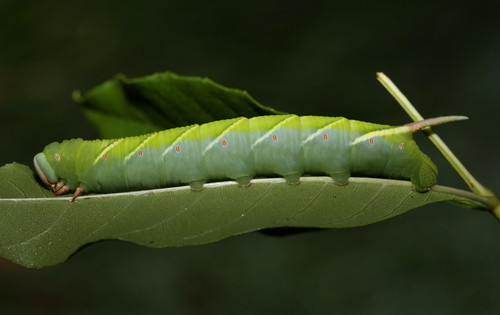
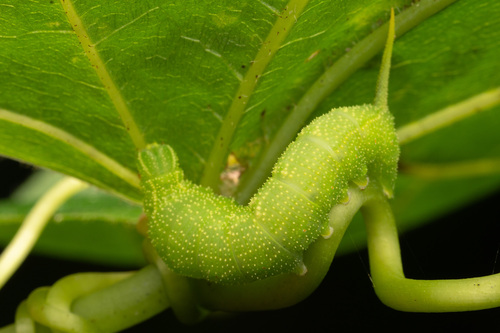
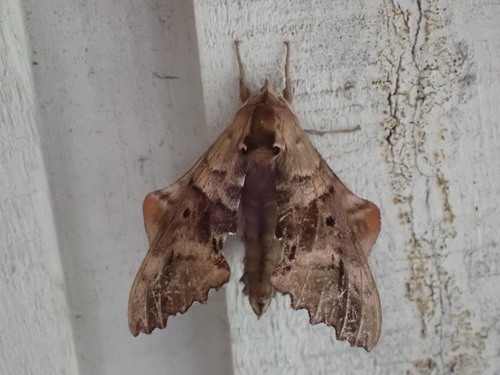
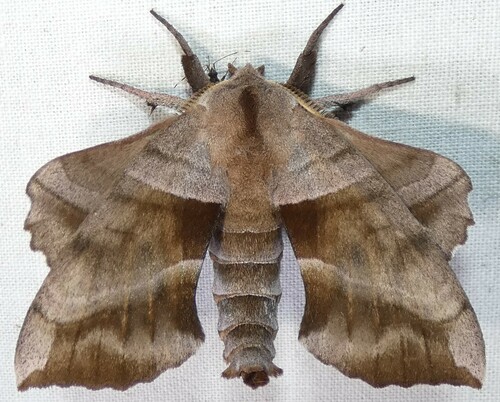
Ceratomia amyntor, the elm sphinx or four-horned sphinx, is a North American moth in the family Sphingidae. The species was first described by Carl Geyer in 1835. It has a wingspan of 3+1⁄4-4+1⁄2 inches (8.2 - 11.5 cm). As the name suggests, the larvae (caterpillars) feed on elm trees (Ulmus), but they can also be found feeding on birch (Betula), basswood (Tilia), and cherry (Prunus). When the caterpillars are ready, they crawl to the bottom of the host tree, where they crawl underneath the soil and pupate and may overwinter underground if late enough into the year.

C. amyntor can be found from Nova Scotia west to Alberta and western North Dakota and Colorado; south Florida reaching into the Gulf Coast, Georgia, Texas, Louisiana and New Mexico. The species is not threatened. C. amyntor adults fly as a single brood in the northern portions of their range from June to July. There are two broods further south, flying later into the year, and five broods have been confirmed in Louisiana from March to October.

Tiny, translucent, lime-green eggs deposited on the underside of host leaves. The shells are transparent and pearly after hatching... Wikipedia →
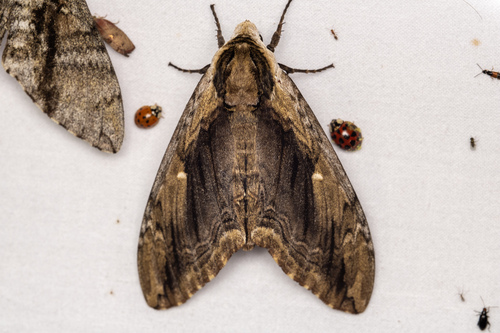
Global Distribution

Parks Where Found

# Park Country Daily sighting probability
1 Great Smoky Mountains National Park 🇺🇸 United States
~10%
2 Shenandoah National Park 🇺🇸 United States
<5%

Cities Where Found

# City Country Daily sighting probability
1 Chicago 🇺🇸 United States
<5%
2 Minneapolis [Saint Paul] 🇺🇸 United States
<5%
3 Boston 🇺🇸 United States
<5%
4 Montreal 🇨🇦 Canada
<5%
5 Austin 🇺🇸 United States
<5%
6 Baltimore 🇺🇸 United States
<5%
7 Dallas 🇺🇸 United States
<5%
8 New York City 🇺🇸 United States
<5%
9 Philadelphia 🇺🇸 United States
<5%
10 Washington 🇺🇸 United States
<5%

Before you go

What are the chances of seeing an Elm Sphinx in Great Smoky Mountains National Park?

With luck

About 10% of wildlife watchers report an Elm Sphinx sighting in Great Smoky Mountains National Park on a given day, based on 24 verified sightings from GBIF citizen-science data from 2019 to 2026. It is the 217th most-seen of the 822 insects we can rate there. Over three days the chance rises to about 20%, and over a week to about 40%, if each day is a fresh chance.

When is the best time to see an Elm Sphinx in Great Smoky Mountains National Park?

June–July and September

In those months about 10% of wildlife watchers report an Elm Sphinx in Great Smoky Mountains National Park on a given day, against under 5% in August and October–May, the lowest months.

What time of day is best to see an Elm Sphinx?

Between 9 pm and midnight

Across all the parks we cover, that three-hour window holds the most Elm Sphinx sightings with a recorded time, and about half of them come between 6 am and 6 pm: it is seen both by day and at night.

Is Great Smoky Mountains National Park the best place to see an Elm Sphinx?

Yes

Of the 2 parks where we can rate Elm Sphinx sightings, Great Smoky Mountains National Park has the highest daily chance: about 10%. Next come Shenandoah National Park (United States, under 5%).

Where does the Elm Sphinx sighting chance come from?

GBIF citizen-science records

It is estimated from how often the Elm Sphinx is recorded against all the insects logged in Great Smoky Mountains National Park (24 verified sightings from 2019 to 2026), calibrated against known sighting rates. Figures are rounded to the nearest 10% because citizen-science data supports honest approximations, not decimals, and months with records from fewer than five people show "—". How it works.

← Back to Great Smoky Mountains National Park