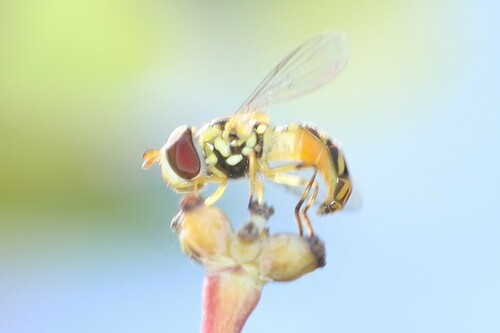
Swift Feather-Legged Fly

Swift Feather-Legged Fly

Trichopoda pennipes

Daily sighting probability <5% · Rare
at Great Smoky Mountains National Park

In 3 days ~10% in a week ~30%

7 Verified sightings at Great Smoky Mountains National Park From 2019 to 2026
12 In all 2 parks
October Best month
☀️ Diurnal When it's spotted

About the Swift Feather-Legged Fly

Trichopoda pennipes is a species of feather-legged fly in the dipteran family Tachinidae. This species is native to North America (United States, Mexico), Hawaiian Islands and South America and has been introduced into southern Europe (France, Italy and Spain).

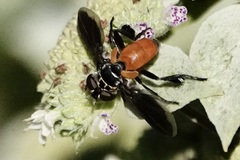
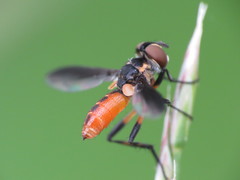
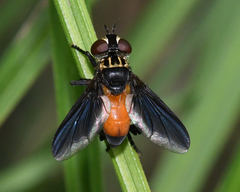
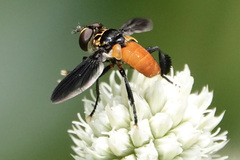
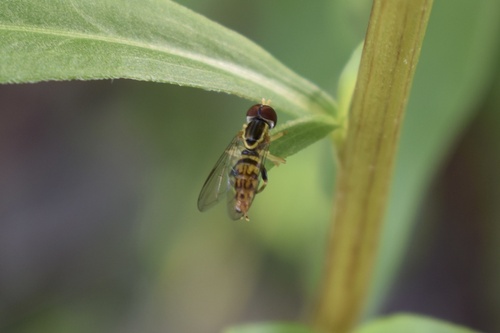
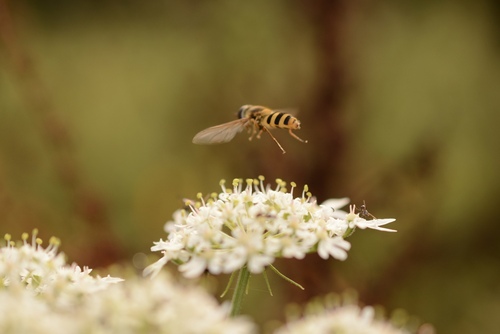
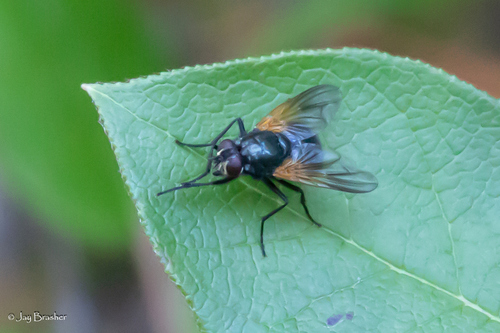
This species inhabits grasslands, hedge rows and crops where its key hosts are present. Trichopoda pennipes can reach a length of 10.5 millimetres (0.41 in), about the size of a large housefly. These medium-sized flies have a velvety, black head. The black or brown thorax shows a few yellow stripes. Eyes are large, brown with yellow between. The color of the slender abdomen varies from bright orange to completely black. Females usually have a dark-tipped abdomen, while males have a dark orange apex. Wings are transparent, smoky with prominent veins. In the females they are evenly dusky, with the posterior margin sub-hyaline. Male flies have a ferrugineous marking on the wings. This fly has huge halteres. Legs are black, with yellow feet. The hind legs bear a prominent feather-like fringe of flattened hairs.

Trichopoda pennipes first appears in the late spring... Wikipedia →
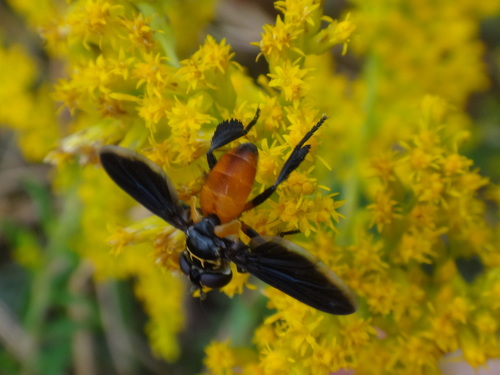
Global Distribution

Parks Where Found

# Park Country Daily sighting probability
1 Shenandoah National Park 🇺🇸 United States
<5%
2 Great Smoky Mountains National Park 🇺🇸 United States
<5%

Cities Where Found

# City Country Daily sighting probability
1 Boston 🇺🇸 United States
~10%
2 Washington 🇺🇸 United States
<5%
3 Philadelphia 🇺🇸 United States
<5%
4 Baltimore 🇺🇸 United States
<5%
5 Toronto 🇨🇦 Canada
<5%
6 Dallas 🇺🇸 United States
<5%
7 Buenos Aires 🇦🇷 Argentina
<5%
8 New York City 🇺🇸 United States
<5%
9 Minneapolis [Saint Paul] 🇺🇸 United States
<5%
10 Austin 🇺🇸 United States
<5%

Before you go

What are the chances of seeing a Swift Feather-Legged Fly in Great Smoky Mountains National Park?

Rare

Under 5% of wildlife watchers report a Swift Feather-Legged Fly sighting in Great Smoky Mountains National Park on a given day, based on 7 verified sightings from GBIF citizen-science data from 2019 to 2026. It is the 513th most-seen of the 822 insects we can rate there. Over three days the chance rises to about 10%, and over a week to about 30%, if each day is a fresh chance.

When is the best time to see a Swift Feather-Legged Fly in Great Smoky Mountains National Park?

June and September–October

In those months about 10% of wildlife watchers report a Swift Feather-Legged Fly in Great Smoky Mountains National Park on a given day, against under 5% in July–August and November–May, the lowest months.

What time of day is best to see a Swift Feather-Legged Fly?

Between 2 and 5 pm

Across all the parks we cover, that three-hour window holds the most Swift Feather-Legged Fly sightings with a recorded time, and about 9 in 10 of them come between 6 am and 6 pm: it is a daytime animal.

Is Great Smoky Mountains National Park the best place to see a Swift Feather-Legged Fly?

Among the best

Of the 2 parks where we can rate Swift Feather-Legged Fly sightings, Great Smoky Mountains National Park ranks 2nd at under 5%, level with the leaders once rounded. The best odds are in Shenandoah National Park (United States, under 5%).

Which relatives of the Swift Feather-Legged Fly live in Great Smoky Mountains National Park?

Same order: Diptera

The closest relatives of the Swift Feather-Legged Fly that you can see in Great Smoky Mountains National Park (order Diptera, Flies) are Eastern Calligrapher (about 20%), Margined Calligrapher (about 10%) and Ocellate Gall Midge (about 10%), with each one's daily chance of a sighting.

Where does the Swift Feather-Legged Fly sighting chance come from?

GBIF citizen-science records

It is estimated from how often the Swift Feather-Legged Fly is recorded against all the insects logged in Great Smoky Mountains National Park (7 verified sightings from 2019 to 2026), calibrated against known sighting rates. Figures are rounded to the nearest 10% because citizen-science data supports honest approximations, not decimals, and months with records from fewer than five people show "—". How it works.

← Back to Great Smoky Mountains National Park