Half-Black Bumble Bee

Half-Black Bumble Bee

Bombus vagans

Daily sighting probability ~20% · Possible
at Gros Morne National Park

In 3 days ~60% in a week ~90%

32 Verified sightings at Gros Morne National Park From 2019 to 2026
83 In all 6 parks
August Best month
☀️ Diurnal When it's spotted

About the Half-Black Bumble Bee

The half-black bumblebee (Bombus vagans) is a small bumblebee with a wide distribution in North America, its range extending from Ontario to Nova Scotia and southward to Georgia. An endemic subspecies of this bee, known as Bolster's bumblebee (B. vagans ssp. bolsteri), occurs on the eastern Canadian island of Newfoundland.

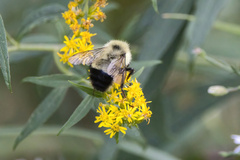
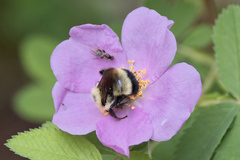
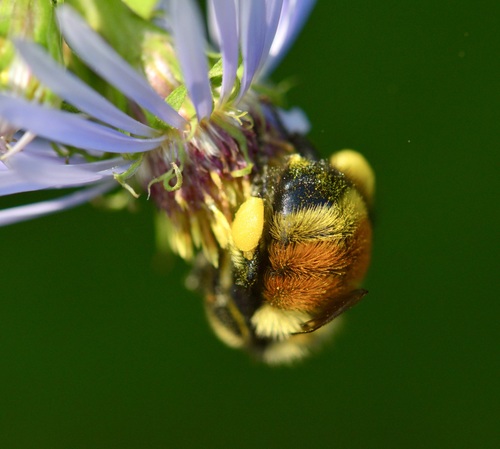
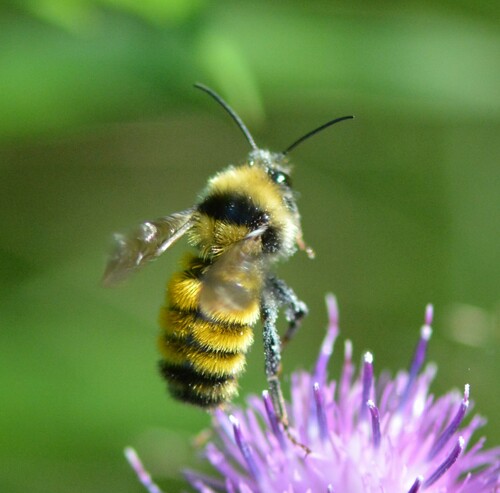
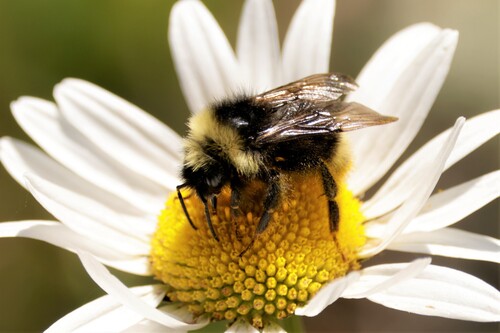
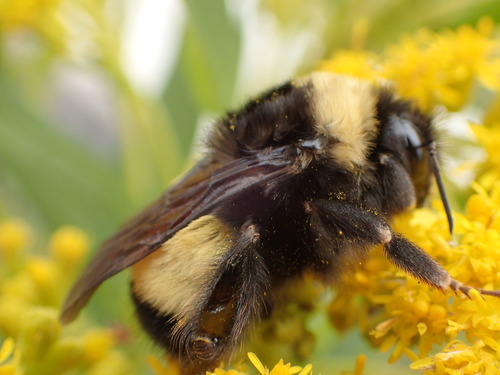
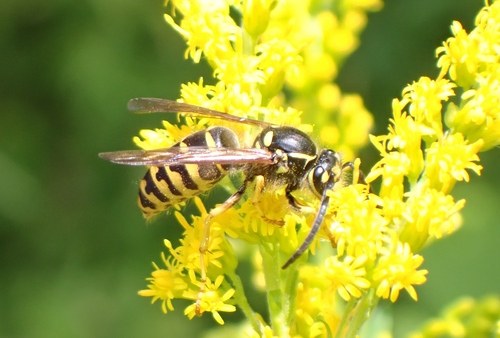
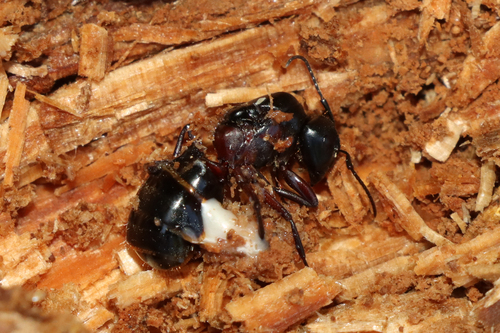
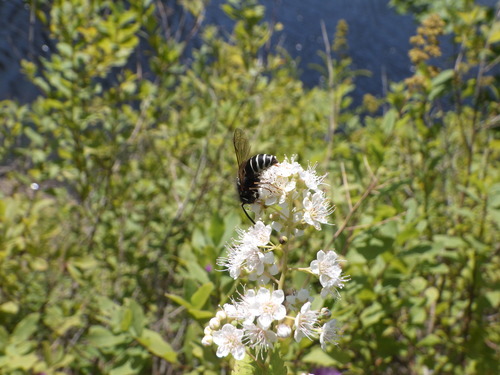
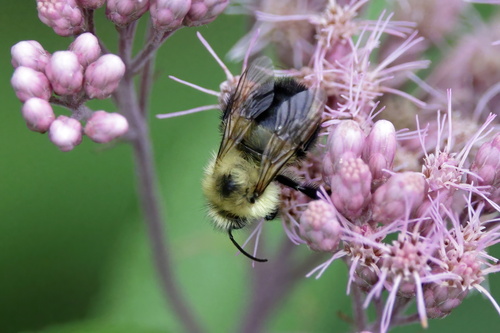
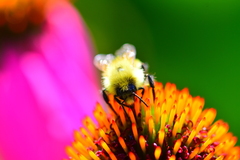
Bombus vagans is a common species of bumblebee with a medium-length tongue. The head, thorax and first two segments of the abdomen are yellow, while the rest of the abdomen is black. The face has a mixture of yellow and black hair,s and the thorax is densely clad in shaggy yellow hair except for a smooth central portion which is bare and shiny. The first two abdominal segments bear yellow hairs, and the remainder of the abdomen is clad in black hairs. The underside of this bee and the legs are black. Similar species with which it can be confused include Bombus sandersoni (which is slightly smaller), Bombus perplexus, Bombus impatiens and Bombus affinis.

This bee comes out from hibernation quite late in the year, with the first queens being seen in early May in Maine, and workers being on the wing from June to August. but in more southerly... Wikipedia →
Global Distribution

Parks Where Found

# Park Country Daily sighting probability
1 Gros Morne National Park 🇨🇦 Canada
~20%
2 Elk Island National Park 🇨🇦 Canada
~10%
3 Riding Mountain National Park 🇨🇦 Canada
~10%
4 Glacier National Park 🇺🇸 United States
~10%
5 Acadia National Park 🇺🇸 United States
~10%
6 Great Smoky Mountains National Park 🇺🇸 United States
<5%

Cities Where Found

# City Country Daily sighting probability
1 Minneapolis [Saint Paul] 🇺🇸 United States
~10%
2 Edmonton 🇨🇦 Canada
<5%
3 Calgary 🇨🇦 Canada
<5%
4 Boston 🇺🇸 United States
<5%
5 Toronto 🇨🇦 Canada
<5%

Before you go

What are the chances of seeing a Half-Black Bumble Bee in Gros Morne National Park?

Possible

About 20% of wildlife watchers report a Half-Black Bumble Bee sighting in Gros Morne National Park on a given day, based on 32 verified sightings from GBIF citizen-science data from 2019 to 2026. It is the 13th most-seen of the 83 insects we can rate there. Over three days the chance rises to about 60%, and over a week to about 90%, if each day is a fresh chance.

When is the best time to see a Half-Black Bumble Bee in Gros Morne National Park?

August

In that month about 40% of wildlife watchers report a Half-Black Bumble Bee in Gros Morne National Park on a given day, against under 5% in March–April and October–November, the lowest months.

What time of day is best to see a Half-Black Bumble Bee?

Between 10 am and 1 pm

Across all the parks we cover, that three-hour window holds the most Half-Black Bumble Bee sightings with a recorded time, and about 9 in 10 of them come between 6 am and 6 pm: it is a daytime animal.

Is Gros Morne National Park the best place to see a Half-Black Bumble Bee?

Yes

Of the 6 parks where we can rate Half-Black Bumble Bee sightings, Gros Morne National Park has the highest daily chance: about 20%. Next come Elk Island National Park (Canada, about 10%) and Riding Mountain National Park (Canada, about 10%).

Where does the Half-Black Bumble Bee sighting chance come from?

GBIF citizen-science records

It is estimated from how often the Half-Black Bumble Bee is recorded against all the insects logged in Gros Morne National Park (32 verified sightings from 2019 to 2026), calibrated against known sighting rates. Figures are rounded to the nearest 10% because citizen-science data supports honest approximations, not decimals, and months with records from fewer than five people show "—". How it works.

← Back to Gros Morne National Park