Thomas’s Langur

Thomas’s Langur

Presbytis thomasi

Silhouette: PhyloPic

LCNTVUVulnerableENCR Endemic
Daily sighting probability ~80% · Very likely
at Gunung Leuser National Park

In 3 days >90%

263 Verified sightings at Gunung Leuser National Park From 2019 to 2026
263 In 1 park
May Best month
☀️ Diurnal When it's spotted

About the Thomas’s Langur

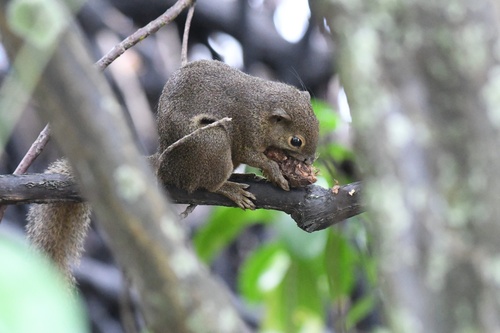
Thomas's langur (Presbytis thomasi), also known as the North Sumatran leaf monkey or Thomas's leaf monkey, is a species of primate in the family Cercopithecidae. It is endemic to northern Sumatra, Indonesia, not living to the south and east of Lake Toba and the Alas and Wampu rivers. Its natural habitat is subtropical or tropical dry forests. It is threatened by habitat loss. Its native names are reungkah in Acehnese and kedih in Alas. It can be found in Gunung Leuser National Park, where substantial populations exist in Ketambe and Bukit Lawang.

Although primarily folivorous, Thomas's langur also eats fruit, flowers, and occasionally toadstools and snails. Like other members of the genus Presbytis, this species has evolved to digest cellulose, and microbes in the gut extract nutrients from leaves. Reflected in this diet of leaves is the extent to which they do consume fruit, which is usually unripe and with high pH levels to avoid killing the microbes they need to digest leaves. Thomas's langur also drinks from holes in trees where water collects or from small pools.

The hair on the top of the head rises in a crown, resembling a mohawk; this crown is white... Wikipedia →

Global Distribution

Parks Where Found

# Park Country Daily sighting probability
1 Gunung Leuser National Park 🇮🇩 Indonesia
~80%

More parks will be added in future updates.

Before you go

What are the chances of seeing a Thomas’s Langur in Gunung Leuser National Park?

Very likely

About 80% of wildlife watchers report a Thomas’s Langur sighting in Gunung Leuser National Park on a given day, based on 263 verified sightings from GBIF citizen-science data from 2019 to 2026. It is the 2nd most-seen of the 19 mammals we can rate there. Over three days the chance rises to over 90%, if each day is a fresh chance.

When is the best time to see a Thomas’s Langur in Gunung Leuser National Park?

May

In that month about 90% of wildlife watchers report a Thomas’s Langur in Gunung Leuser National Park on a given day, against about 70% in October, the lowest month.

What time of day is best to see a Thomas’s Langur?

Between 9 am and noon

Across all the parks we cover, that three-hour window holds the most Thomas’s Langur sightings with a recorded time, and about 8 in 10 of them come between 6 am and 6 pm: it is a daytime animal.

Where else can you see a Thomas’s Langur?

Only Gunung Leuser National Park, in our data

Gunung Leuser National Park is the only park on Wallace's Line with enough records to rate Thomas’s Langur sightings: about 80% of wildlife watchers there report one on a given day.

Where does the Thomas’s Langur sighting chance come from?

GBIF citizen-science records

It is estimated from how often the Thomas’s Langur is recorded against all the mammals logged in Gunung Leuser National Park (263 verified sightings from 2019 to 2026), calibrated against known sighting rates. Figures are rounded to the nearest 10% because citizen-science data supports honest approximations, not decimals, and months with records from fewer than five people show "—". How it works.

← Back to Gunung Leuser National Park