


Completed



Prevost's Squirrel
Callosciurus prevostii
Silhouette: Kai Caspar · PhyloPic
- KingdomAnimalia (Animals)
- PhylumChordata (Chordates)
- ClassMammalia (Mammals)
- OrderRodentia (Rodents)
- FamilySciuridae (Squirrels)
- GenusCallosciurus (Beautiful Squirrels)
- SpeciesCallosciurus prevostii (Prevost's Squirrel)
In 3 days ~50% in a week ~80%
11 Verified sightings at Gunung Leuser National Park From 2019 to 2026
474 In all 7 parks
June Best month
🌅 Crepuscular When it's spotted
About the Prevost's Squirrel
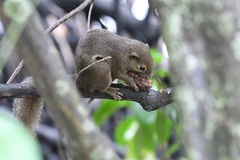
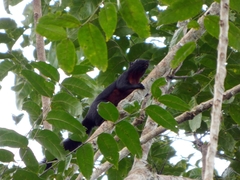
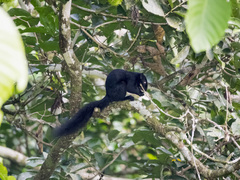
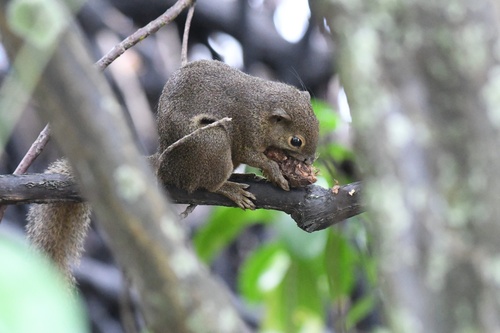
Prevost's squirrel or Asian tri-coloured squirrel (Callosciurus prevostii) is a colourful species of rodent in the family Sciuridae. It is found in forests in the Thai-Malay Peninsula, Sumatra, Borneo and nearby smaller islands, with an introduced population in northern Sulawesi. Although the Prevost's squirrel is declining in some regions because of habitat loss and hunting, the species is not considered threatened since it generally remains common and widespread. It can live in somewhat disturbed habitats and often visits plantations or gardens. It mostly feeds on plant material, especially fruits, but also takes insects.
The Prevost's squirrel is a medium-sized squirrel, but one of the larger species in its range, although clearly surpassed by the giant squirrels and giant flying squirrels of the region. The head-and-body of the Prevost's squirrel typically is 20–27 cm (8–11 in) long and the tail length is about the same; it weighs 250–500 g (9–18 oz). Individuals from small islands tend to be smaller in size than those from medium-small islands, but on large islands this pattern is reversed.
In general, the subspecies of the Prevost's squirrel have... Wikipedia →
Recent sightings of Prevost's Squirrel in Gunung Leuser National Park
LIVEiNaturalistGlobal Distribution
Parks Where Found
| # | Park | Country | Daily sighting probability |
|---|---|---|---|
| 1 | Sepilok | 🇲🇾 Malaysia | |
| 2 | Taman Negara National Park | 🇲🇾 Malaysia | |
| 3 | Danum Valley Conservation Area | 🇲🇾 Malaysia | |
| 4 | Way Kambas National Park | 🇮🇩 Indonesia | |
| 5 | Kinabatangan Wildlife Sanctuary | 🇲🇾 Malaysia | |
| 6 | Kinabalu Park | 🇲🇾 Malaysia | |
| 7 | Gunung Leuser National Park | 🇮🇩 Indonesia |
Cities Where Found
| # | City | Country | Daily sighting probability |
|---|---|---|---|
| 1 | Kuala Lumpur | 🇲🇾 Malaysia |
Zoos & Centres Where Found
| # | Zoo / Centre | Country | |
|---|---|---|---|
| 1 | National Zoological Park | 🇺🇸 United States | |
| 2 | Denver Zoo | 🇺🇸 United States | |
| 3 | Dresden Zoo | 🇩🇪 Germany | |
| 4 | Kansas City Zoo | 🇺🇸 United States | |
| 5 | Brookfield Zoo | 🇺🇸 United States | |
| 6 | Chester Zoo | 🇬🇧 United Kingdom | |
| 7 | Milwaukee County Zoo | 🇺🇸 United States | |
| 8 | Cotswold Wildlife Park | 🇬🇧 United Kingdom | |
| 9 | Los Angeles Zoo | 🇺🇸 United States | |
| 10 | Birmingham Zoo | 🇺🇸 United States | |
| 11 | Berlin Zoological Garden | 🇩🇪 Germany | |
| 12 | Edinburgh Zoo | 🇬🇧 United Kingdom | |
| 13 | Diergaarde Blijdorp | 🇳🇱 Netherlands | |
| 14 | Moody Gardens | 🇺🇸 United States | |
| 15 | Night Safari | 🇸🇬 Singapore | |
| 16 | Singapore Zoo | 🇸🇬 Singapore | |
| 17 | Houston Zoo | 🇺🇸 United States | |
| 18 | Gembira Loka Zoo | 🇮🇩 Indonesia | |
| 19 | Mesker Park Zoo and Botanic Garden | 🇺🇸 United States | |
| 20 | Bird Paradise | 🇸🇬 Singapore | |
| 21 | El Paso Zoo | 🇺🇸 United States | |
| 22 | Palić Zoo | 🇷🇸 Serbia | |
| 23 | Tier- und Freizeitpark Thüle | 🇩🇪 Germany | |
| 24 | Rainforest Wild Asia | 🇸🇬 Singapore | |
| 25 | Paphos Zoo | 🇨🇾 Cyprus | |
| 26 | River Wonders | 🇸🇬 Singapore | |
| 27 | Santa Barbara Zoo | 🇺🇸 United States | |
| 28 | Ueno Zoological Gardens (West Garden) | 🇯🇵 Japan | |
| 29 | Zoopark Chelyabinsk | 🇷🇺 Russia | |
| 30 | Erlebniswelt Seeteufel | 🇨🇭 Switzerland | |
| 31 | Leningrad Zoo | 🇷🇺 Russia | |
| 32 | Pyrénées Animal Park | 🇫🇷 France | |
| 33 | Leesburg Animal Park | 🇺🇸 United States | |
| 34 | Drayton Manor Theme Park | 🇬🇧 United Kingdom | |
| 35 | Greenville Zoo | 🇺🇸 United States | |
| 36 | Newquay Zoo | 🇬🇧 United Kingdom | |
| 37 | KrazyWorld Zoo | 🇵🇹 Portugal | |
| 38 | St. Augustine Alligator Farm Zoological Park | 🇺🇸 United States | |
| 39 | Bioparc Fuengirola | 🇪🇸 Spain | |
| 40 | Auffangstation für Wildtiere und Exoten "Das Nest" | 🇩🇪 Germany | |
| 41 | Oceanium | 🇳🇱 Netherlands | |
| 42 | Aquarium Berlin | 🇩🇪 Germany | |
| 43 | Sobela Ocean Aquarium | 🇺🇸 United States | |
| 44 | Bangkok Aquarium | 🇹🇭 Thailand | |
| 45 | Jakarta Aquarium | 🇮🇩 Indonesia | |
| 46 | Snakeroom Serpentarium | 🇪🇸 Spain |
Closest Relatives at Gunung Leuser National Park




Before you go
What are the chances of seeing a Prevost's Squirrel in Gunung Leuser National Park?
Possible
About 20% of wildlife watchers report a Prevost's Squirrel sighting in Gunung Leuser National Park on a given day, based on 11 verified sightings from GBIF citizen-science data from 2019 to 2026. It is the 10th most-seen of the 19 mammals we can rate there. Over three days the chance rises to about 50%, and over a week to about 80%, if each day is a fresh chance.
When is the best time to see a Prevost's Squirrel in Gunung Leuser National Park?
June
In that month about 40% of wildlife watchers report a Prevost's Squirrel in Gunung Leuser National Park on a given day, against under 5% in January, August and October–November, the lowest months.
What time of day is best to see a Prevost's Squirrel?
Between 1 and 4 am
Across all the parks we cover, that three-hour window holds the most Prevost's Squirrel sightings with a recorded time, and about 6 in 10 of them come between 6 pm and 6 am: it is most active around dawn and dusk.
Is Gunung Leuser National Park the best place to see a Prevost's Squirrel?
7th of 7
Of the 7 parks where we can rate Prevost's Squirrel sightings, Gunung Leuser National Park ranks 7th at about 20%. The best odds are in Sepilok (Malaysia, about 70%), Taman Negara National Park (Malaysia, about 40%) and Danum Valley Conservation Area (Malaysia, about 40%). All parks ranked.
Where does the Prevost's Squirrel sighting chance come from?
GBIF citizen-science records
It is estimated from how often the Prevost's Squirrel is recorded against all the mammals logged in Gunung Leuser National Park (11 verified sightings from 2019 to 2026), calibrated against known sighting rates. Figures are rounded to the nearest 10% because citizen-science data supports honest approximations, not decimals, and months with records from fewer than five people show "—". How it works.
