














a-z-animals.com Web excerpt · 2026
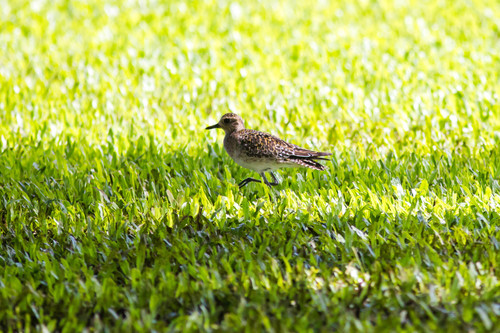
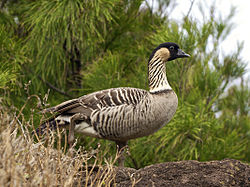
“You have a great chance of spotting a Hawaiian goose on your visit. ©Wunson/Shutterstock.com The nēnē is Hawai’i’s state bird, a native goose that’s unique to the islands.”
🇺🇸 United States
Hawaiʻi Volcanoes National Park is a national park of the United States, located on the island of Hawaiʻi in the state of Hawaii. The park encompasses two active volcanoes: Kīlauea, one of the world's most active volcanoes, and Mauna Loa, the world's largest shield volcano. The park provides scientists with insight into the development of the Hawaiian Islands and access for studies of volcanism. For visitors, the park offers dramatic volcanic landscapes, glimpses of rare flora and fauna, and a view into the traditional Hawaiian culture connected to these landscapes. The indigenous people of the park, Kanaka Maoli, believed in living a life that did not take up resources. Volcanic eruptions are seen as sacred.
The park was originally established on August 1, 1916, as Hawaii National Park, which was then split into this park and Haleakalā National Park. In recognition of its outstanding natural values, Hawaiʻi Volcanoes National Park was designated as an International Biosphere Reserve in 1980 and a World Heritage Site in 1987. In 2012, the park was depicted on the 14th quarter of the America the Beautiful Quarters series.
Portions of the park, including the visitor center, reopened to the public on September 22, 2018. As of 2026, most of the park is open; however, some road segments and trails are still closed to visitors. The Jaggar Museum and buildings of Hawaiian Volcano Observatory were too damaged by the 2018 events to be used further and were torn down in 2024. Eruptive activity, ground collapses and explosions in the park ceased in early August 2018, and the lull in eruptive activity at Kīlauea continued until an eruption on December 20, 2020, at the Halemaʻumaʻu crater. Since then, the crater has been intermittently eruptive with lava fountains and flows, though the activity has not been on the scale of the 2018 events.
19.340° N 155.643° W

Warmer areas are where all species together are recorded most often.
How rich is the wildlife?
How likely to see animals?
How easy and pleasant is the visit?
Your review
“You have a great chance of spotting a Hawaiian goose on your visit. ©Wunson/Shutterstock.com The nēnē is Hawai’i’s state bird, a native goose that’s unique to the islands.”
234 species
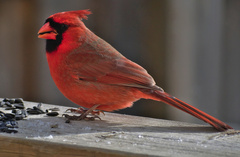
Hawaii Volcanoes National Park has 234 recorded vertebrate species. The ones wildlife watchers report most often on a given day are ʻApapane (over 90%), Warbling White-eye (about 90%), Kalij Pheasant (about 80%), Hawaii 'Amakihi (about 70%) and Northern Cardinal (about 70%). Among mammals, the most-seen is Mongoose (about 30%); among reptiles, Jackson's Chameleon (about 50%); among amphibians, Common Coqui (about 50%).
May–July and October
In those months the park's 12 most-seen species average about 70% on a given day, against about 60% in August–September and November–April.
Yes
About 30% of wildlife watchers report a Hawaiian Goose sighting in Hawaii Volcanoes National Park on a given day, based on 822 verified sightings from GBIF citizen-science data from 2019 to 2026. The best time is January, August and October–November (about 50%).
Yes
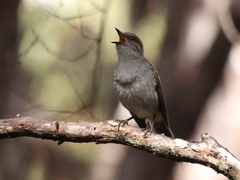
Over 90% of wildlife watchers report a ʻApapane sighting in Hawaii Volcanoes National Park on a given day, based on 1,973 verified sightings from GBIF citizen-science data from 2019 to 2026. The best time is April–June and September–February (over 90%).
Yes
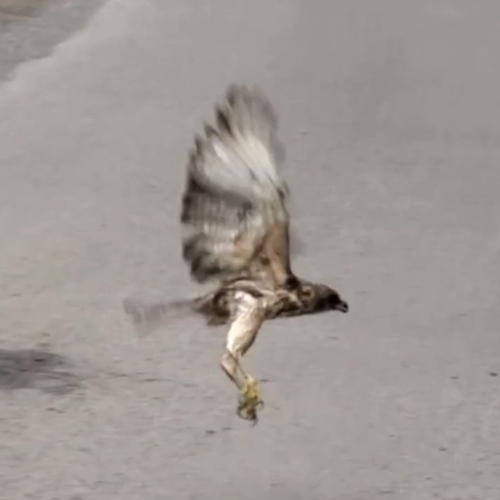
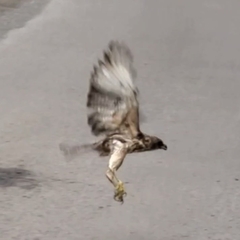
About 30% of wildlife watchers report a Hawaiian Hawk sighting in Hawaii Volcanoes National Park on a given day, based on 317 verified sightings from GBIF citizen-science data from 2019 to 2026. The best time is April and September (about 40%).
Yes
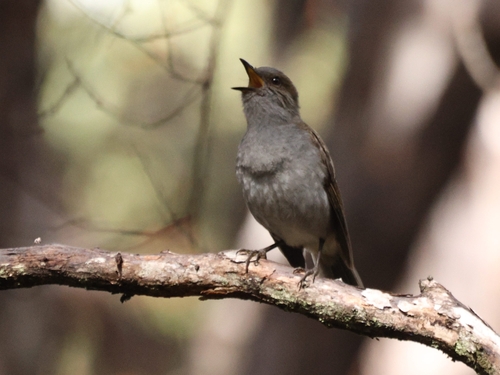
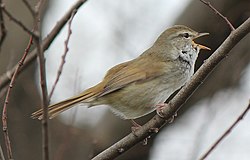
About 50% of wildlife watchers report a 'Oma'o sighting in Hawaii Volcanoes National Park on a given day, based on 464 verified sightings from GBIF citizen-science data from 2019 to 2026. The best time is October (about 70%).
Around Kilauea Iki 2
The richest sighting zone is around Kilauea Iki 2, followed by Kilauea Military Camp Welcome Center and Kīpuka Puaulu Trail, ranked by how many of the park's headline animals visitors can expect to see in each. See the zones on the map.
2.5 out of 5
On the Wallace's Line Score, Hawaii Volcanoes National Park rates 2.5/5: 336th of 340 parks worldwide and 58th in North America. 16 of its species are reported by about 40% or more of wildlife watchers on a given day.