Marble-faced Delma

Marble-faced Delma

Delma australis

Silhouette: SeismicShrimp · PhyloPic

LCLeast ConcernNTVUENCR Endemic
Daily sighting probability ~20% · Possible
at Hattah-Kulkyne National Park

In 3 days ~40% in a week ~70%

6 Verified sightings at Hattah-Kulkyne National Park From 2019 to 2026
6 In 1 park
November Best month
☀️🌙 Day & Night When it's spotted

About the Marble-faced Delma

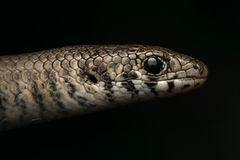
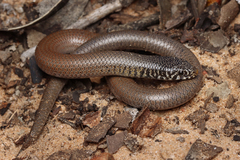
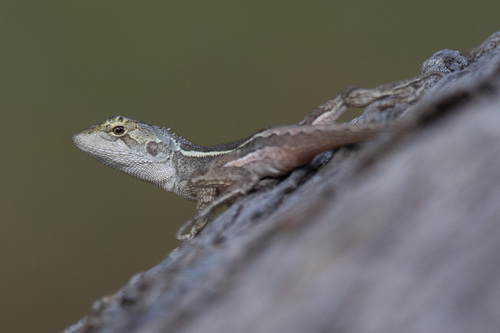
The Delma australis is often known as the southern legless lizard, or the marble-faced delma. This terrestrial lizard falls into the category of slender Pygopodidae, a legless lizard. There are 21 known species in the Pygopdidae family in Australia. Marble-faced delmas are endemic to Australia.

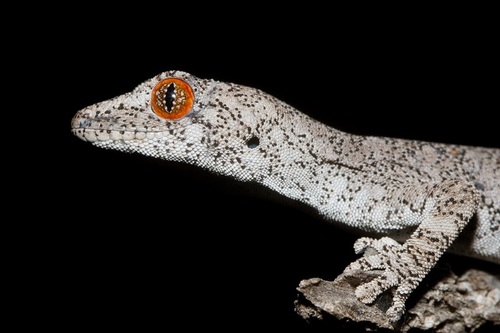
Delma australis was first described by Kluge in 1974. D. australis is a brown to reddish brown colour with a greyish undersurface and greyish lips. Their common name, marble-faced delma, comes from their grey-marble appearance. Distinctive features include ventral black bars on the top and sides of head with a short and rounded snout, and a tail twice the length of their body. Geographical variation have been observed in marble-faced delma populations, the intensity of head patterning and head form can vary between populations in different areas. There has been suggestions that there are a number of sub-species of D. australis, variation was discovered in Western Australia but further sampling is needed to determine if these differences were taxonomically significant.

Marble-faced delmas are classified as diurnal, however, have been observed in active states... Wikipedia →

Global Distribution

Parks Where Found

# Park Country Daily sighting probability
1 Hattah-Kulkyne National Park 🇦🇺 Australia
~20%

More parks will be added in future updates.

Before you go

What are the chances of seeing a Marble-faced Delma in Hattah-Kulkyne National Park?

Possible

About 20% of wildlife watchers report a Marble-faced Delma sighting in Hattah-Kulkyne National Park on a given day, based on 6 verified sightings from GBIF citizen-science data from 2019 to 2026. It is the 15th most-seen of the 19 reptiles we can rate there. Over three days the chance rises to about 40%, and over a week to about 70%, if each day is a fresh chance.

When is the best time to see a Marble-faced Delma in Hattah-Kulkyne National Park?

November

In that month about 40% of wildlife watchers report a Marble-faced Delma in Hattah-Kulkyne National Park on a given day, against under 5% in February–August, October and December, the lowest months. That is one of Hattah-Kulkyne National Park's wettest months, with about 40 mm of rain against 5 mm in February.

What time of day is best to see a Marble-faced Delma?

Between 8 and 11 am

Across all the parks we cover, that three-hour window holds the most Marble-faced Delma sightings with a recorded time, and about 7 in 10 of them come between 6 am and 6 pm: it is seen both by day and at night.

Where else can you see a Marble-faced Delma?

Only Hattah-Kulkyne National Park, in our data

Hattah-Kulkyne National Park is the only park on Wallace's Line with enough records to rate Marble-faced Delma sightings: about 20% of wildlife watchers there report one on a given day.

Where does the Marble-faced Delma sighting chance come from?

GBIF citizen-science records

It is estimated from how often the Marble-faced Delma is recorded against all the reptiles logged in Hattah-Kulkyne National Park (6 verified sightings from 2019 to 2026), calibrated against known sighting rates. Figures are rounded to the nearest 10% because citizen-science data supports honest approximations, not decimals, and months with records from fewer than five people show "—". How it works.

← Back to Hattah-Kulkyne National Park