Cranberry Blue

Cranberry Blue

Vacciniina optilete

Daily sighting probability ~20% · Possible
at Hohe Tauern National Park

In 3 days ~50% in a week ~80%

17 Verified sightings at Hohe Tauern National Park From 2019 to 2026
48 In all 4 parks
July Best month
☀️ Diurnal When it's spotted

About the Cranberry Blue

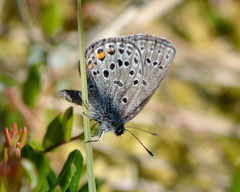
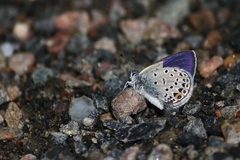
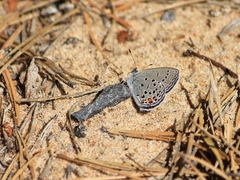
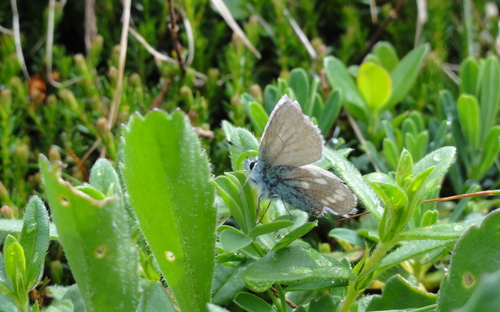
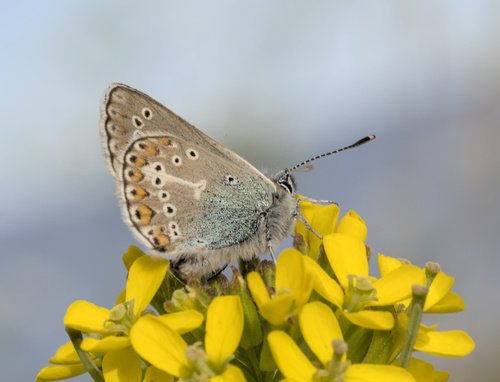
Agriades optilete, the cranberry blue, is a butterfly of the family Lycaenidae. It is found in north eastern Europe, the Alps, North Asia, Japan, Korea and north western North America. The length of the forewings is about 14 mm. The butterfly flies from June to August depending on the location.

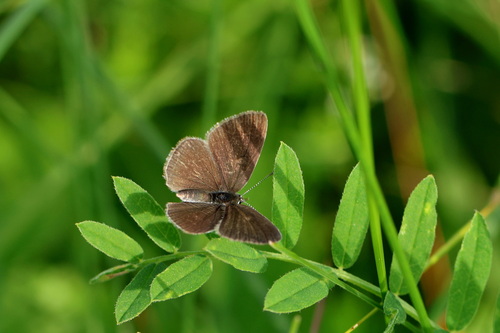
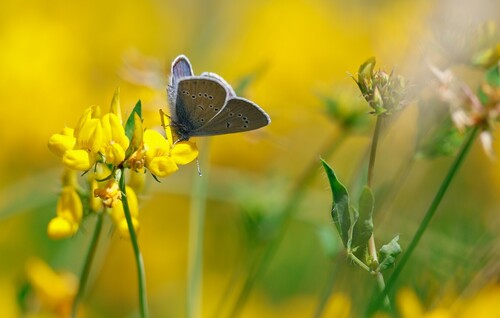
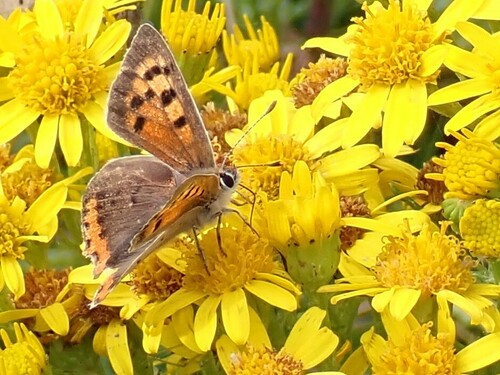
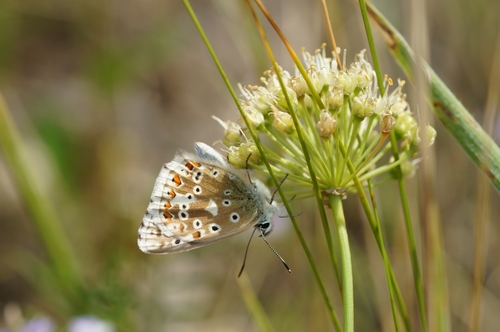
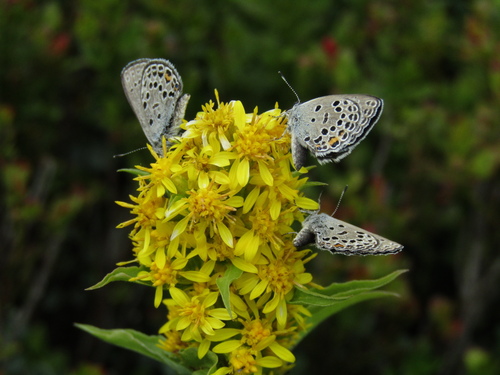
The larvae feed on Vaccinium oxycoccos, Empetrum nigrum, bilberry and other cranberry and Empetrum species. L. optilete Knoch (79 b). This species is quite out of place in the present group of Lycaena in characters as well as habits, and would be much better placed in a later group than here where it stands in Staudinger-Rebel's Catalogue. Both wings very broad and their outer margins strongly rounded. Male above very dull dark violet-blue, sometimes with a broader black margin, sometimes without black margin. In the female only the basal half of the upperside is dusted with glossy blue scales. Underside dirty dust-grey, the ocelli very large, often distorted; only the anal area of the hindwing beneath bears orange spots before the margin, from which they are separated by two large round dots with metallic centres. More in the North, in Central and North Europe as... Wikipedia →
Global Distribution

Parks Where Found

# Park Country Daily sighting probability
1 Hohe Tauern National Park 🇦🇹 Austria
~20%
2 Denali National Park 🇺🇸 United States
~10%
3 Vanoise National Park 🇫🇷 France
~10%
4 Bavarian Forest National Park 🇩🇪 Germany
<5%

Before you go

What are the chances of seeing a Cranberry Blue in Hohe Tauern National Park?

Possible

About 20% of wildlife watchers report a Cranberry Blue sighting in Hohe Tauern National Park on a given day, based on 17 verified sightings from GBIF citizen-science data from 2019 to 2026. It is the 40th most-seen of the 165 insects we can rate there. Over three days the chance rises to about 50%, and over a week to about 80%, if each day is a fresh chance.

When is the best time to see a Cranberry Blue in Hohe Tauern National Park?

July

In that month about 30% of wildlife watchers report a Cranberry Blue in Hohe Tauern National Park on a given day, against under 5% in February–May and September–October, the lowest months. December has too few records to rate.

What time of day is best to see a Cranberry Blue?

Between noon and 3 pm

Across all the parks we cover, that three-hour window holds the most Cranberry Blue sightings with a recorded time, and about 9 in 10 of them come between 6 am and 6 pm: it is a daytime animal.

Is Hohe Tauern National Park the best place to see a Cranberry Blue?

Yes

Of the 4 parks where we can rate Cranberry Blue sightings, Hohe Tauern National Park has the highest daily chance: about 20%. Next come Denali National Park (United States, about 10%) and Vanoise National Park (France, about 10%).

Which relatives of the Cranberry Blue live in Hohe Tauern National Park?

Same family: Lycaenidae

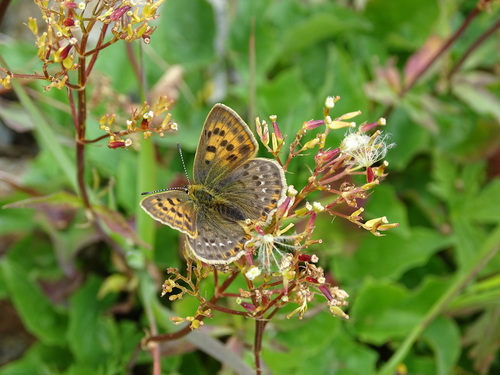
The closest relatives of the Cranberry Blue that you can see in Hohe Tauern National Park (family Lycaenidae, Gossamer-winged Butterflies) are Scarce Copper (about 50%), Small Blue (about 30%) and Mazarine Blue (about 30%), with each one's daily chance of a sighting.

Where does the Cranberry Blue sighting chance come from?

GBIF citizen-science records

It is estimated from how often the Cranberry Blue is recorded against all the insects logged in Hohe Tauern National Park (17 verified sightings from 2019 to 2026), calibrated against known sighting rates. Figures are rounded to the nearest 10% because citizen-science data supports honest approximations, not decimals, and months with records from fewer than five people show "—". How it works.

← Back to Hohe Tauern National Park