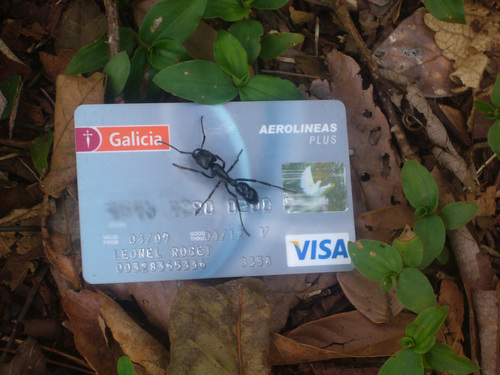
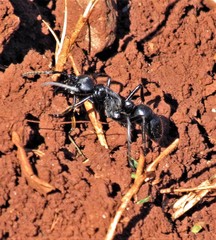
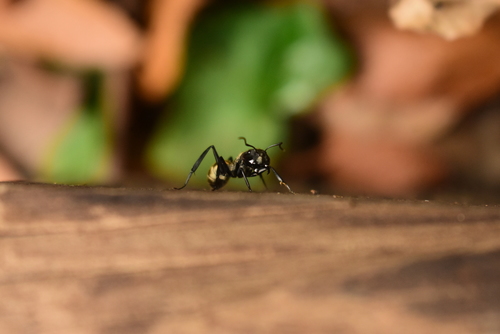
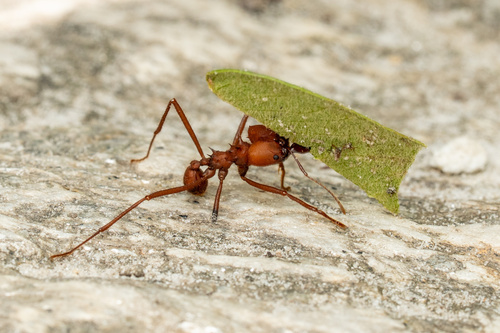
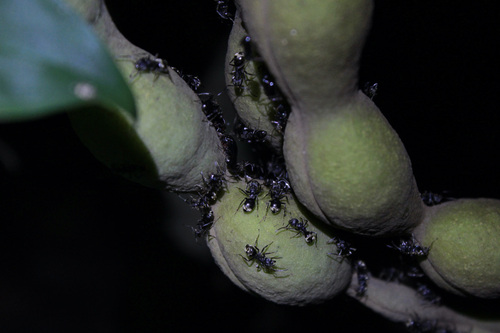
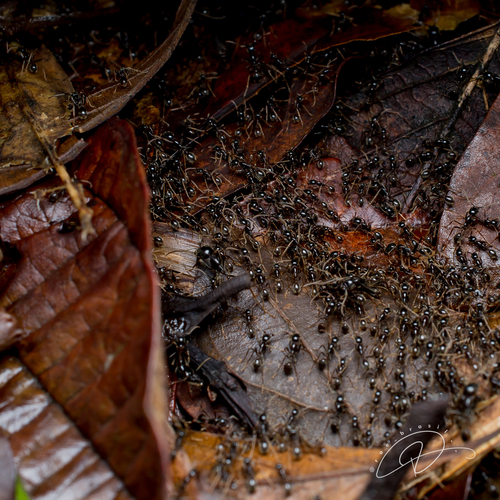
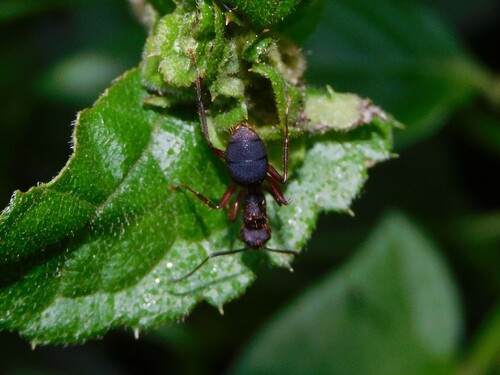
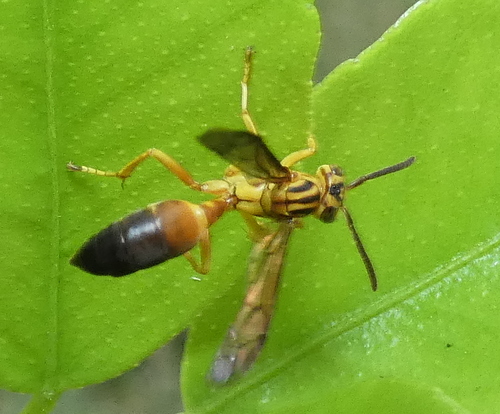
Dinoponera grandis
Daily sighting probability ~10% · With luck
at Iguazú National Park

In 3 days ~20% in a week ~40%

8 Verified sightings at Iguazú National Park From 2019 to 2026
18 In all 2 parks
September Best month
☀️ Diurnal When it's spotted

About the Dinoponera grandis

Dinoponera grandis is a species of ant notable for its lack of distinct queen caste. The species Dinoponera australis was synonymised under Dinoponera grandis. Dinoponera grandis is synonymised with D. australis' three subspecies:

Dinoponera australis has been found to exhibit marked differences in the degree of polyploidy across its tissues, ranging from 2 to 64 copies of the nuclear genome. Dinoponera australis has the widest known range of the Dinoponera. This species is found in the department of Santa Cruz in Bolivia, southern Brazil in the states of Mato Grosso, Goiás, Minas Gerais, São Paulo, Mato Grosso do Sul, Paraná, Santa Catarina and Rio Grande do Sul, eastern Paraguay in the departments of Itapúa, Alto Paraná and Guairá, as well as the province of Misiones in Argentina. Wikipedia →

Global Distribution

Parks Where Found

# Park Country Daily sighting probability
1 Iguaçu National Park 🇧🇷 Brazil
~10%
2 Iguazú National Park 🇦🇷 Argentina
~10%

Before you go

What are the chances of seeing a Dinoponera grandis in Iguazú National Park?

With luck

About 10% of wildlife watchers report a Dinoponera grandis sighting in Iguazú National Park on a given day, based on 8 verified sightings from GBIF citizen-science data from 2019 to 2026. It is the 226th most-seen of the 306 insects we can rate there. Over three days the chance rises to about 20%, and over a week to about 40%, if each day is a fresh chance.

When is the best time to see a Dinoponera grandis in Iguazú National Park?

September

In that month about 20% of wildlife watchers report a Dinoponera grandis in Iguazú National Park on a given day, against under 5% in February–July and November, the lowest months.

What time of day is best to see a Dinoponera grandis?

Between 11 am and 2 pm

Across all the parks we cover, that three-hour window holds the most Dinoponera grandis sightings with a recorded time, and about 9 in 10 of them come between 6 am and 6 pm: it is a daytime animal.

Is Iguazú National Park the best place to see a Dinoponera grandis?

Among the best

Of the 2 parks where we can rate Dinoponera grandis sightings, Iguazú National Park ranks 2nd at about 10%, level with the leaders once rounded. The best odds are in Iguaçu National Park (Brazil, about 10%).

Which relatives of the Dinoponera grandis live in Iguazú National Park?

Same family: Formicidae

The closest relatives of the Dinoponera grandis that you can see in Iguazú National Park (family Formicidae, Ants) are Shimmering Golden Sugar Ant (about 40%), Atta sexdens (about 20%) and Dolichoderus bispinosus (about 10%), with each one's daily chance of a sighting.

Where does the Dinoponera grandis sighting chance come from?

GBIF citizen-science records

It is estimated from how often the Dinoponera grandis is recorded against all the insects logged in Iguazú National Park (8 verified sightings from 2019 to 2026), calibrated against known sighting rates. Figures are rounded to the nearest 10% because citizen-science data supports honest approximations, not decimals, and months with records from fewer than five people show "—". How it works.

← Back to Iguazú National Park