Tiny Grass Blue
Daily sighting probability ~10% · With luck
at iSimangaliso Wetland Park

In 3 days ~20% in a week ~40%

12 Verified sightings at iSimangaliso Wetland Park From 2019 to 2026
47 In all 5 parks
April Best month
☀️ Diurnal When it's spotted

About the Tiny Grass Blue

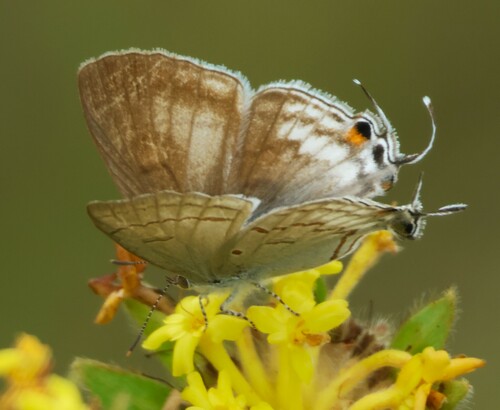
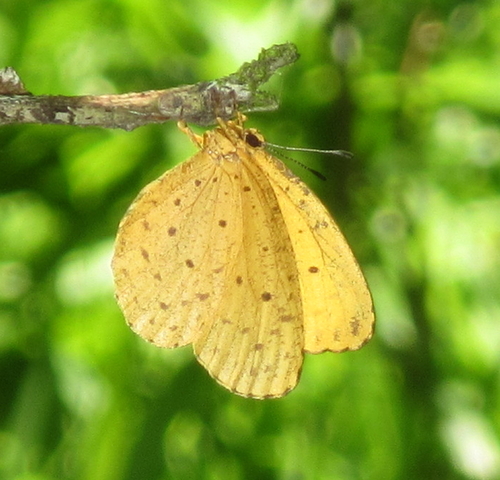
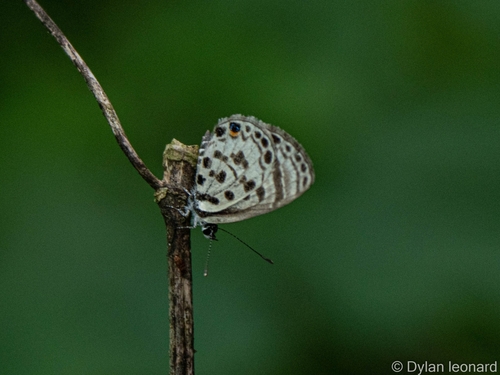
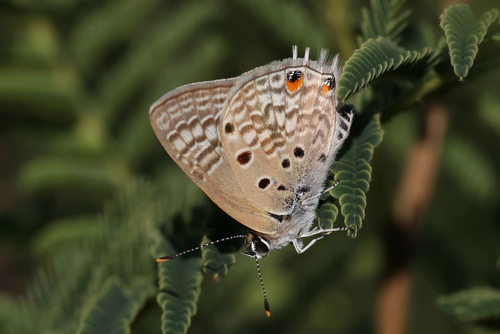
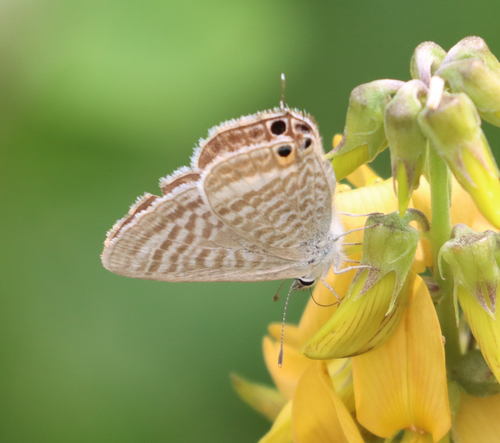
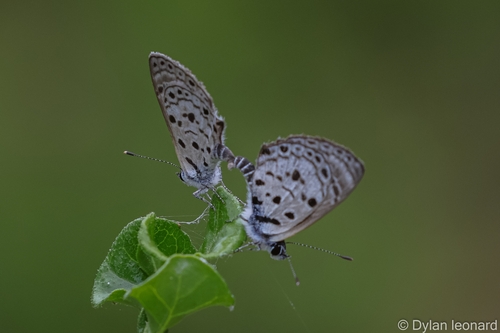
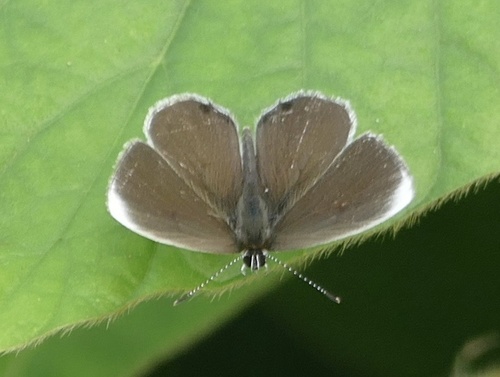
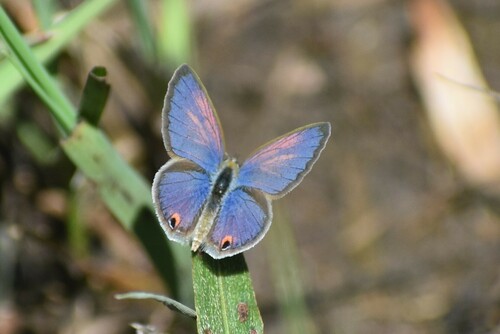
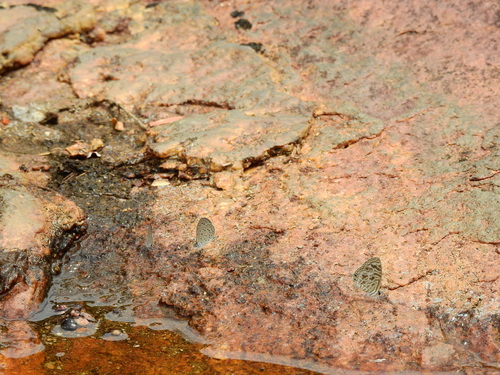
Zizula hylax, the tiny grass blue, is a species of blue butterfly. Male upperside: dull violet blue, which changes to a brighter tint of violet in certain lights. Forewing: the costa very narrowly, the termen much more broadly dull brown; this edging to the termen in most specimens decreases in width from apex to tornus, and is outwardly followed by an anteciliary darker brown line. Cilia brownish anteriorly, posteriorly brownish at the base with the apical portions white. Hindwing: the ground colour brighter than on the forewing, the costal and terminal margins much more narrowly edged with brown, which edging is merged in the anteciliary dark brown line. Cilia: brown along their basal halves, white apically.

Underside: grey. Forewing: a dusky brown lunular line on the discocellulars; two subcostal spots above the cell, one on either side of the discocellular lunule; a very strongly curved discal series of five spots, of which the posterior three are somewhat lunular in shape and placed obliquely en echelon, the next above these hook shaped, the anterior spot round; both the subcostal spots and the spots of the discal series are black, each narrowly encircled with... Wikipedia →
Global Distribution

Parks Where Found

# Park Country Daily sighting probability
1 Keoladeo National Park 🇮🇳 India
~20%
2 Pilanesberg National Park 🇿🇦 South Africa
~10%
3 iSimangaliso Wetland Park 🇿🇦 South Africa
~10%
4 Daintree National Park 🇦🇺 Australia
~10%
5 Kruger National Park 🇿🇦 South Africa
~10%

Cities Where Found

# City Country Daily sighting probability
1 Salem 🇮🇳 India
~40%
2 Madurai 🇮🇳 India
~40%
3 Vadodara 🇮🇳 India
~40%
4 Karachi 🇵🇰 Pakistan
~40%
5 Antananarivo 🇲🇬 Madagascar
~30%
6 Raipur 🇮🇳 India
~30%
7 Thrissur 🇮🇳 India
~30%
8 Surat 🇮🇳 India
~30%
9 Lusaka 🇿🇲 Zambia
~20%
10 Semarang 🇮🇩 Indonesia
~20%

Before you go

What are the chances of seeing a Tiny Grass Blue in iSimangaliso Wetland Park?

With luck

About 10% of wildlife watchers report a Tiny Grass Blue sighting in iSimangaliso Wetland Park on a given day, based on 12 verified sightings from GBIF citizen-science data from 2019 to 2026. It is the 168th most-seen of the 316 insects we can rate there. Over three days the chance rises to about 20%, and over a week to about 40%, if each day is a fresh chance.

When is the best time to see a Tiny Grass Blue in iSimangaliso Wetland Park?

April

In that month about 20% of wildlife watchers report a Tiny Grass Blue in iSimangaliso Wetland Park on a given day, against under 5% in February, June–August and October–November, the lowest months.

What time of day is best to see a Tiny Grass Blue?

Between 11 am and 2 pm

Across all the parks we cover, that three-hour window holds the most Tiny Grass Blue sightings with a recorded time, and about 9 in 10 of them come between 6 am and 6 pm: it is a daytime animal.

Is iSimangaliso Wetland Park the best place to see a Tiny Grass Blue?

3rd of 5

Of the 5 parks where we can rate Tiny Grass Blue sightings, iSimangaliso Wetland Park ranks 3rd at about 10%. The best odds are in Keoladeo National Park (India, about 20%) and Pilanesberg National Park (South Africa, about 10%).

Which relatives of the Tiny Grass Blue live in iSimangaliso Wetland Park?

Same family: Lycaenidae

The closest relatives of the Tiny Grass Blue that you can see in iSimangaliso Wetland Park (family Lycaenidae, Gossamer-winged Butterflies) are Common Hairstreak (about 20%), Forest Hairtail (about 20%) and African Grass Blue (about 20%), with each one's daily chance of a sighting.

Where does the Tiny Grass Blue sighting chance come from?

GBIF citizen-science records

It is estimated from how often the Tiny Grass Blue is recorded against all the insects logged in iSimangaliso Wetland Park (12 verified sightings from 2019 to 2026), calibrated against known sighting rates. Figures are rounded to the nearest 10% because citizen-science data supports honest approximations, not decimals, and months with records from fewer than five people show "—". How it works.

← Back to iSimangaliso Wetland Park