Sanderson's Bumble Bee

Sanderson's Bumble Bee

Bombus sandersoni

Daily sighting probability ~10% · With luck
at Isle Royale National Park

In 3 days ~30% in a week ~60%

7 Verified sightings at Isle Royale National Park From 2019 to 2026
44 In all 3 parks
July Best month
☀️ Diurnal When it's spotted

About the Sanderson's Bumble Bee

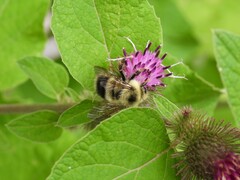
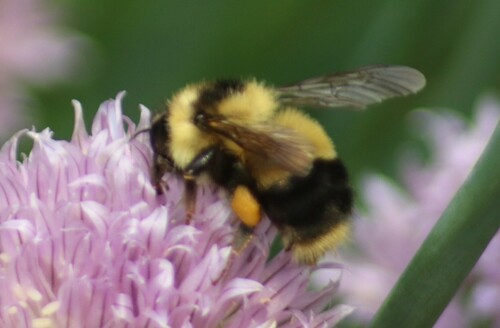
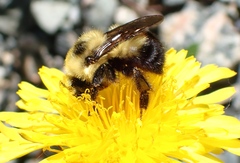
Bombus sandersoni is a species of bumblebee known commonly as the Sanderson bumblebee. It is native to North America, where it occurs across Canada and in the eastern United States. The queen is 15 to 16 millimeters long and 6 millimeters wide at the abdomen. It is black with pale hairs on the head and yellow on the abdomen. The worker is up to 13 millimeters long and 5 millimeters wide. It is similar to the queen except the tip of the abdomen is black. The male is 10 to 13 millimeters long and 5 to 6 millimeters wide. It has long hairs, yellow on the head and part of the abdomen and black at the end of the abdomen.

This bee occurs in maritime Canada, temperate forest, the Canadian Prairies, tundra, and taiga. It lives in and around wooded areas. It feeds on several types of plants, including cohosh, fireweeds, kalmia, honeysuckles, bergamot, blackberries, and bilberries. It nests underground.

This bee has faced no significant declines. It may, however, be more sensitive to climate change than other bee taxa. This species was found to harbor the bee parasite Nosema bombi. Wikipedia →
Global Distribution

Parks Where Found

# Park Country Daily sighting probability
1 Isle Royale National Park 🇺🇸 United States
~10%
2 Riding Mountain National Park 🇨🇦 Canada
~10%
3 Great Smoky Mountains National Park 🇺🇸 United States
~10%

Before you go

What are the chances of seeing a Sanderson's Bumble Bee in Isle Royale National Park?

With luck

About 10% of wildlife watchers report a Sanderson's Bumble Bee sighting in Isle Royale National Park on a given day, based on 7 verified sightings from GBIF citizen-science data from 2019 to 2026. It is the 45th most-seen of the 48 insects we can rate there. Over three days the chance rises to about 30%, and over a week to about 60%, if each day is a fresh chance.

What time of day is best to see a Sanderson's Bumble Bee?

Between noon and 3 pm

Across all the parks we cover, that three-hour window holds the most Sanderson's Bumble Bee sightings with a recorded time, and about 9 in 10 of them come between 6 am and 6 pm: it is a daytime animal.

Is Isle Royale National Park the best place to see a Sanderson's Bumble Bee?

Yes

Of the 3 parks where we can rate Sanderson's Bumble Bee sightings, Isle Royale National Park has the highest daily chance: about 10%. Next come Riding Mountain National Park (Canada, about 10%) and Great Smoky Mountains National Park (United States, about 10%).

Which relatives of the Sanderson's Bumble Bee live in Isle Royale National Park?

Same order: Hymenoptera

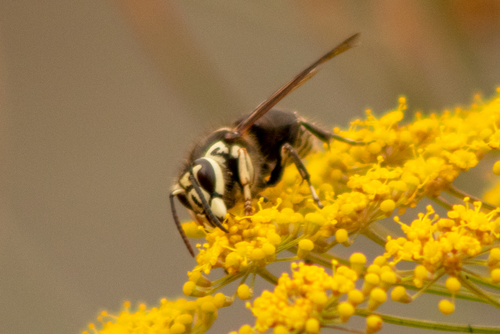
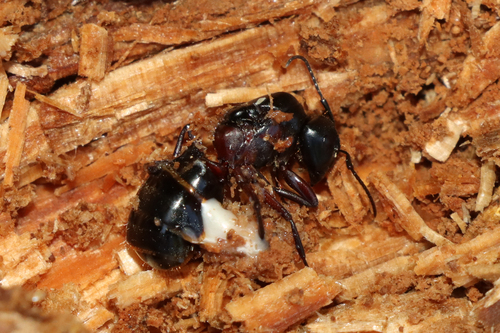
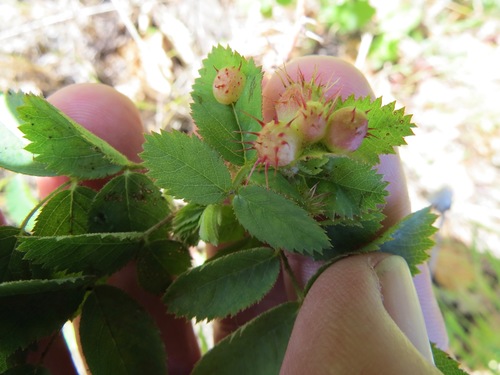
The closest relatives of the Sanderson's Bumble Bee that you can see in Isle Royale National Park (order Hymenoptera, Ants, Bees, Wasps, and Sawflies) are Bald-Faced Hornet (about 10%), Hercules Carpenter Ant (about 10%) and Spiny Leaf Gall Wasp (about 10%), with each one's daily chance of a sighting.

Where does the Sanderson's Bumble Bee sighting chance come from?

GBIF citizen-science records

It is estimated from how often the Sanderson's Bumble Bee is recorded against all the insects logged in Isle Royale National Park (7 verified sightings from 2019 to 2026), calibrated against known sighting rates. Figures are rounded to the nearest 10% because citizen-science data supports honest approximations, not decimals, and months with records from fewer than five people show "—". How it works.

← Back to Isle Royale National Park