
Completed
North American Luna Moth
Actias luna
- KingdomAnimalia (Animals)
- PhylumArthropoda (Arthropods)
- ClassInsecta (Insects)
- OrderLepidoptera (Butterflies and Moths)
- FamilySaturniidae (Emperor and Giant Silk Moths)
- GenusActias (Moon Moths)
- SpeciesActias luna (North American Luna Moth)
In 3 days ~80% in a week >90%
31 Verified sightings at Isle Royale National Park From 2019 to 2026
688 In all 6 parks
July Best month
☀️ Diurnal When it's spotted
About the North American Luna Moth
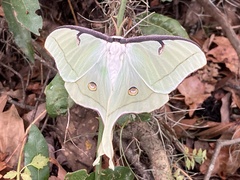
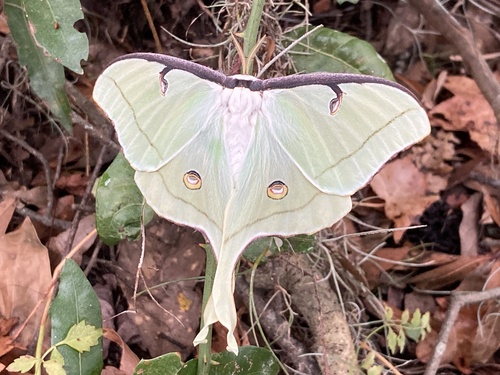
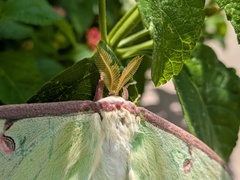
The luna moth (Actias luna), also called the American moon moth, is a Nearctic moth in the family Saturniidae, subfamily Saturniinae, a group commonly named the giant silk moths. The moth has lime-green wings and a white body. Its caterpillars are also green. Its typical wingspan is roughly 114 mm (4.5 in), but wingspans can exceed 178 mm (7.0 in), ranking the species as one of the larger moths found in North America.
Across Canada, it has one generation per year, with the winged adults appearing in late May or early June, whereas farther south it will have two or even three generations per year, the first appearance as early as March in southern parts of the United States.
As defense mechanisms, larvae emit clicks as a warning and can also regurgitate intestinal contents, confirmed as having a deterrent effect on a variety of predators. The elongated tails of the hindwings are thought to confuse the echolocation detection used by predatory bats.
A parasitoid fly deliberately introduced to North America as a biological pest control for the invasive species spongy moth (also known as gypsy moth) appears to have had a negative impact on luna moths and other native moths. Wikipedia →
Recent sightings of North American Luna Moth in Isle Royale National Park
LIVEiNaturalistGlobal Distribution
Parks Where Found
| # | Park | Country | Daily sighting probability |
|---|---|---|---|
| 1 | Isle Royale National Park | 🇺🇸 United States | |
| 2 | Great Smoky Mountains National Park | 🇺🇸 United States | |
| 3 | Congaree National Park | 🇺🇸 United States | |
| 4 | Acadia National Park | 🇺🇸 United States | |
| 5 | Shenandoah National Park | 🇺🇸 United States | |
| 6 | Cape Breton Highlands National Park | 🇨🇦 Canada |
Cities Where Found
| # | City | Country | Daily sighting probability |
|---|---|---|---|
| 1 | Washington | 🇺🇸 United States | |
| 2 | Baltimore | 🇺🇸 United States | |
| 3 | Orlando | 🇺🇸 United States | |
| 4 | Philadelphia | 🇺🇸 United States | |
| 5 | Austin | 🇺🇸 United States | |
| 6 | Dallas | 🇺🇸 United States | |
| 7 | Houston | 🇺🇸 United States | |
| 8 | New York City | 🇺🇸 United States | |
| 9 | Chicago | 🇺🇸 United States | |
| 10 | Boston | 🇺🇸 United States |
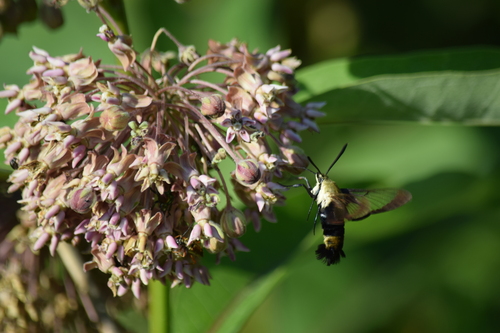
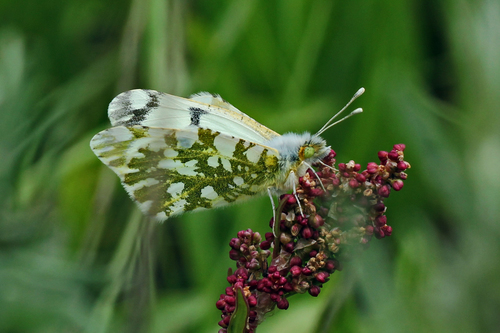
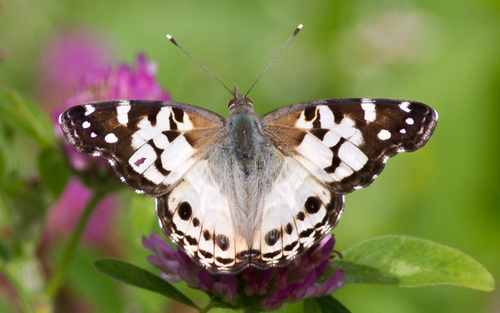
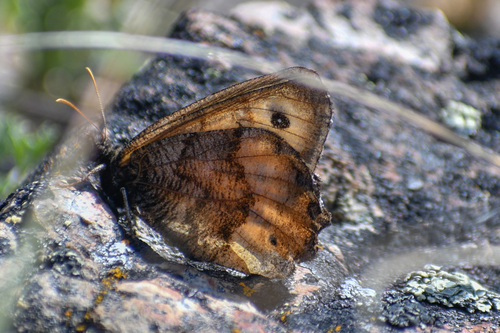
Closest Relatives at Isle Royale National Park



Before you go
What are the chances of seeing a North American Luna Moth in Isle Royale National Park?
Likely
About 40% of wildlife watchers report a North American Luna Moth sighting in Isle Royale National Park on a given day, based on 31 verified sightings from GBIF citizen-science data from 2019 to 2026. It is the 2nd most-seen of the 48 insects we can rate there. Over three days the chance rises to about 80%, and over a week to over 90%, if each day is a fresh chance.
What time of day is best to see a North American Luna Moth?
Between noon and 3 pm
Across all the parks we cover, that three-hour window holds the most North American Luna Moth sightings with a recorded time, and about 7 in 10 of them come between 6 am and 6 pm: it is a daytime animal.
Is Isle Royale National Park the best place to see a North American Luna Moth?
Yes
Of the 6 parks where we can rate North American Luna Moth sightings, Isle Royale National Park has the highest daily chance: about 40%. Next come Great Smoky Mountains National Park (United States, about 30%) and Congaree National Park (United States, about 30%).
Which relatives of the North American Luna Moth live in Isle Royale National Park?
Same order: Lepidoptera
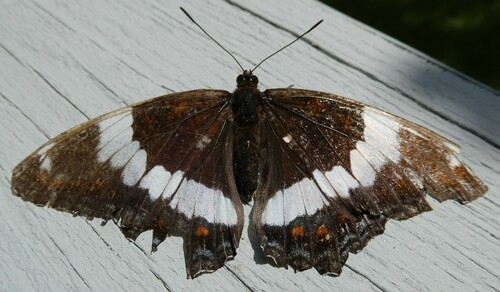
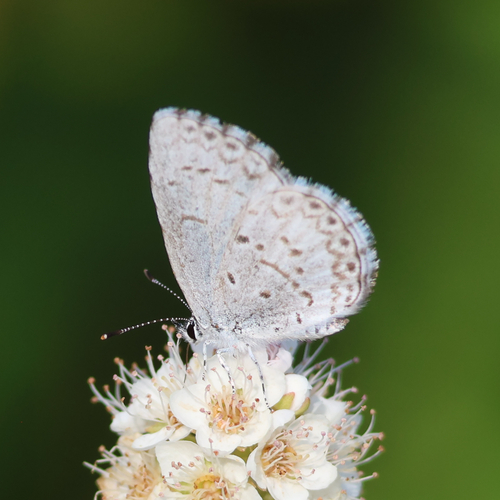
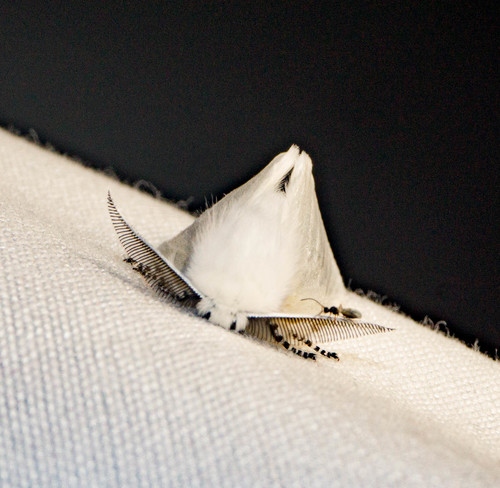
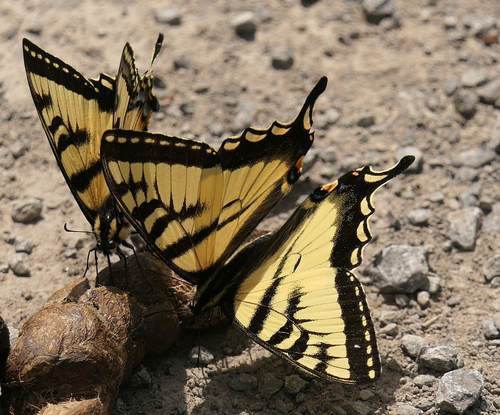
The closest relatives of the North American Luna Moth that you can see in Isle Royale National Park (order Lepidoptera, Butterflies and Moths) are Red-Spotted Admiral (about 40%), Northern Azure (about 40%) and White Satin Moth (about 40%), with each one's daily chance of a sighting.
Where does the North American Luna Moth sighting chance come from?
GBIF citizen-science records
It is estimated from how often the North American Luna Moth is recorded against all the insects logged in Isle Royale National Park (31 verified sightings from 2019 to 2026), calibrated against known sighting rates. Figures are rounded to the nearest 10% because citizen-science data supports honest approximations, not decimals, and months with records from fewer than five people show "—". How it works.
