About the White Satin Moth
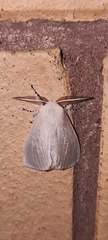
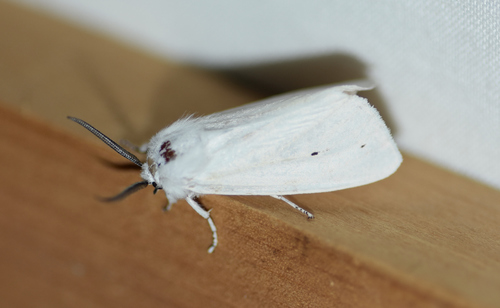
Leucoma salicis, also known as the white satin moth or satin moth, is a moth of the family Erebidae. The species was first described by Carl Linnaeus in his 10th edition of Systema Naturae from 1758. It is found in Europe including the British Isles excluding the far north. In the east it is found across the Palearctic to Japan. The species was introduced to North America in the 1920s.
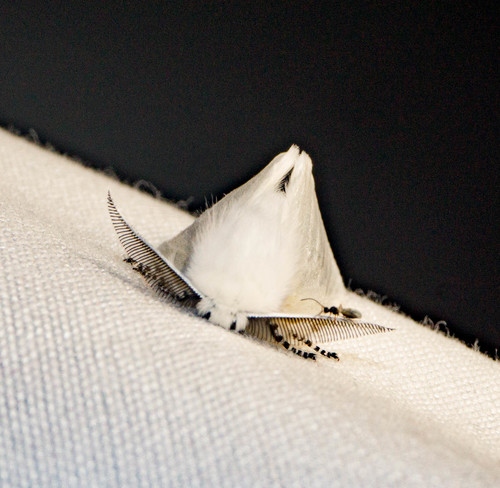
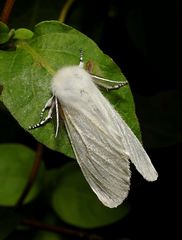
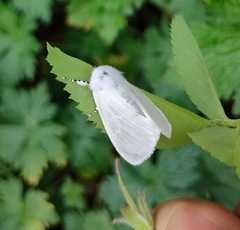
Leucoma salicis has a wingspan of 37–50 mm. White, sometimes with black spots. The head and collar as well as the pectinations of the antennae are black. Tibiae and tarsi with broad black rings. The East-Asiatic species Leucoma candida (Staudinger, 1892) with different male genitalia structure, has much purer glossy white and entirely opaque, more thickly scaled, wings and is on the whole smaller, with narrower wings. From central and eastern Siberia, Mongolia, Amurland, Korea, China and Japan. Yellowish-grey specimens are ab. sohesti Capr. Specimens from Tian-shan with black pectinations of the antennae of the male are nigripennata Staudinger. ab. nigrociliata Fuchs has sharp black third of the costal margin and glossy black fringes; Germany, ab. rubicunda Strand... Wikipedia →