
Western Shovel-nosed Snake

Western Shovel-nosed Snake

Sonora occipitalis

Silhouette: Alex Slavenko · PhyloPic

LCLeast ConcernNTVUENCR
Daily sighting probability ~10% · With luck
at Joshua Tree National Park

In 3 days ~30% in a week ~50%

19 Verified sightings at Joshua Tree National Park From 2019 to 2026
24 In all 2 parks
August Best month
☀️🌙 Day & Night When it's spotted

About the Western Shovel-nosed Snake

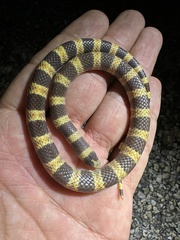
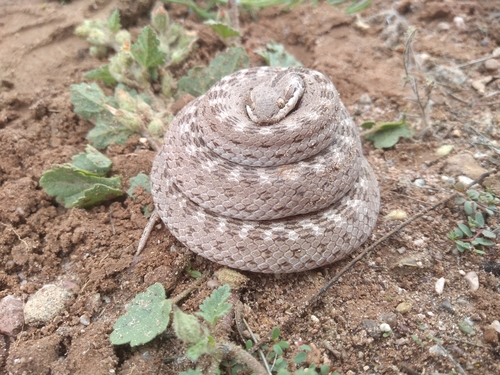
The western shovel-nosed snake (Chionactis occipitalis) is a small species of snake of the family Colubridae. A small (11 - 17 inch) snake with alternating bands of orange and tan on cream or tan on cream. Less commonly specimens have been documented as having black bands on white. The snout is usually cream to light yellow and has a noticeable point to assist in digging. The small black eyes are covered by a black mask. The western shovel-nosed snake is distinguished from the similar looking coral snake, by the yellow snout and lack of full banding around the belly. A similar species, the Sonoran Shovel-nosed Snake has less than 20 bands on its body.

The snake is found in the United States (Arizona, California, Nevada) and Mexico. The snake is primarily found in Sonoran Desert scrub or Mojave Desert scrub. The western shovel-nosed snake feeds on a variety of invertebrates including insects, spiders, centipedes, and scorpions. They have been documented eating the eggs of other reptiles.

Snakes are primarily fossorial. The Western shovel-nosed Snake spends most of its life in sand or sandy soil, with peak activity for... Wikipedia →

Global Distribution

Parks Where Found

# Park Country Daily sighting probability
1 Joshua Tree National Park 🇺🇸 United States
~10%
2 Death Valley National Park 🇺🇸 United States
~10%

Before you go

What are the chances of seeing a Western Shovel-nosed Snake in Joshua Tree National Park?

With luck

About 10% of wildlife watchers report a Western Shovel-nosed Snake sighting in Joshua Tree National Park on a given day, based on 19 verified sightings from GBIF citizen-science data from 2019 to 2026. It is the 25th most-seen of the 39 reptiles we can rate there. Over three days the chance rises to about 30%, and over a week to about 50%, if each day is a fresh chance.

When is the best time to see a Western Shovel-nosed Snake in Joshua Tree National Park?

July and August

In those months about 20% of wildlife watchers report a Western Shovel-nosed Snake in Joshua Tree National Park on a given day, against under 5% in September and November–February, the lowest months.

What time of day is best to see a Western Shovel-nosed Snake?

Between 7 and 10 pm

Across all the parks we cover, that three-hour window holds the most Western Shovel-nosed Snake sightings with a recorded time, and about 7 in 10 of them come between 6 pm and 6 am: it is seen both by day and at night.

Is Joshua Tree National Park the best place to see a Western Shovel-nosed Snake?

Yes

Of the 2 parks where we can rate Western Shovel-nosed Snake sightings, Joshua Tree National Park has the highest daily chance: about 10%. Next come Death Valley National Park (United States, about 10%).

Which relatives of the Western Shovel-nosed Snake live in Joshua Tree National Park?

Same family: Colubridae

The closest relatives of the Western Shovel-nosed Snake that you can see in Joshua Tree National Park (family Colubridae, Colubrid Snakes) are Gopher Snake (about 30%), Coachwhip (about 30%) and Western Patch-nosed Snake (about 20%), with each one's daily chance of a sighting.

Where does the Western Shovel-nosed Snake sighting chance come from?

GBIF citizen-science records

It is estimated from how often the Western Shovel-nosed Snake is recorded against all the reptiles logged in Joshua Tree National Park (19 verified sightings from 2019 to 2026), calibrated against known sighting rates. Figures are rounded to the nearest 10% because citizen-science data supports honest approximations, not decimals, and months with records from fewer than five people show "—". How it works.

← Back to Joshua Tree National Park