Gopher Snake

Gopher Snake

Pituophis catenifer

Silhouette: Alex Slavenko · PhyloPic

LCLeast ConcernNTVUENCR Endemic
Daily sighting probability ~30% · Possible
at Joshua Tree National Park

In 3 days ~70% in a week ~90%

134 Verified sightings at Joshua Tree National Park From 2019 to 2026
937 In all 13 parks
May Best month
☀️🌙 Day & Night When it's spotted

About the Gopher Snake

Pituophis catenifer, the gopher snake, is a species of nonvenomous colubrid snake endemic to North America. Nine subspecies are currently recognized. The specific name, catenifer, is Latin for "chain-bearing", referring to the dorsal color pattern.

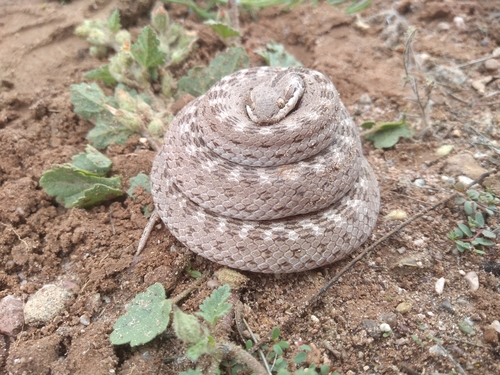
Adult gopher snakes are typically 36-84 in (91–213 cm) in length, when fully mature. Dorsally, gopher snakes are yellowish or a light, sandy brown, with a series of large, dark brown or black markings and smaller, darker spots along the sides. Ventrally, they are a lighter yellowish, either uniformly or with brown markings. They also come in several morphs, depending on the subspecies.

This snake is often mistaken for the prairie rattlesnake (Crotalus viridus), but can be easily distinguished from a rattlesnake by the lack of a tail rattle, no black-and-white banding on its tail, and the shape of its head, which is narrower than a rattlesnake's. Additionally, rattlesnakes (and indeed most vipers) possess a large venom gland located behind each eye, giving their heads a much rounder, more angular shape, as opposed to the more cylindrical, slender head shape of a gopher snake or other colubrid. Wikipedia →

Sounds

Recording0:10

United States · 2026

© Sean C. · iNaturalist · CC BY-NC 4.0

Recording0:16

United States · 2015

© Chris Harrison · iNaturalist · CC BY-NC 4.0

Recording0:07

Canada · 2025

© John D Reynolds · iNaturalist · CC BY-NC 4.0

Global Distribution

Parks Where Found

# Park Country Daily sighting probability
1 Badlands National Park 🇺🇸 United States
~40%
2 Zion National Park 🇺🇸 United States
~40%
3 Sequoia and Kings Canyon National Parks 🇺🇸 United States
~30%
4 Death Valley National Park 🇺🇸 United States
~30%
5 Joshua Tree National Park 🇺🇸 United States
~30%
6 Saguaro National Park 🇺🇸 United States
~30%
7 Grand Canyon National Park 🇺🇸 United States
~30%
8 Guadalupe Mountains National Park 🇺🇸 United States
~20%
9 Yellowstone National Park 🇺🇸 United States
~20%
10 Channel Islands National Park 🇺🇸 United States
~20%
11 Big Bend National Park 🇺🇸 United States
~20%
12 Redwood National Park 🇺🇸 United States
~20%
13 Yosemite National Park 🇺🇸 United States
~10%

Cities Where Found

# City Country Daily sighting probability
1 Denver 🇺🇸 United States
~20%
2 Tijuana 🇲🇽 México
~20%
3 San Francisco 🇺🇸 United States
~10%
4 San Diego 🇺🇸 United States
~10%
5 Phoenix 🇺🇸 United States
~10%
6 Los Angeles 🇺🇸 United States
~10%
7 Sacramento 🇺🇸 United States
~10%
8 Salt Lake City 🇺🇸 United States
~10%
9 Mesa 🇺🇸 United States
~10%
10 Las Vegas 🇺🇸 United States
~10%

Zoos & Centres Where Found

# Zoo / Centre Country
1 San Diego Zoo 🇺🇸 United States In captivity
2 Denver Zoo 🇺🇸 United States In captivity
3 Living Desert Zoo and Gardens 🇺🇸 United States In captivity
4 Nanjing Hongshan Forest Zoo 🇨🇳 China In captivity
5 Los Angeles Zoo 🇺🇸 United States In captivity
6 Oakland Zoo 🇺🇸 United States In captivity
7 Phoenix Zoo 🇺🇸 United States In captivity
8 Audubon Zoo 🇺🇸 United States In captivity
9 Oklahoma City Zoo and Botanical Garden 🇺🇸 United States In captivity
10 San Francisco Zoo 🇺🇸 United States In captivity
11 Dickerson Park Zoo 🇺🇸 United States In captivity
12 Memphis Zoo 🇺🇸 United States In captivity
13 Arizona-Sonora Desert Museum 🇺🇸 United States In captivity
14 Cameron Park Zoo 🇺🇸 United States In captivity
15 Edmonton Valley Zoo 🇨🇦 Canada In captivity
16 Fresno Chaffee Zoo 🇺🇸 United States In captivity
17 Hogle Zoo 🇺🇸 United States In captivity
18 Bison Prairie 🇺🇸 United States In captivity
19 California Living Museum 🇺🇸 United States In captivity
20 Monterey Zoo 🇺🇸 United States In captivity
21 Santa Barbara Zoo 🇺🇸 United States In captivity
22 Zoologico de Chihuahua 🇲🇽 Mexico In captivity
23 Henry Vilas Zoo 🇺🇸 United States In captivity
24 Leningrad Zoo 🇷🇺 Russia In captivity
25 Como Zoo 🇺🇸 United States In captivity
26 Alligator Adventure 🇺🇸 United States In captivity
27 Reptile Gardens 🇺🇸 United States In captivity
28 The Living Planet Aquarium 🇺🇸 United States In captivity
29 Sequoia Park Zoo 🇺🇸 United States In captivity
30 Lindsay Wildlife Experience 🇺🇸 United States In captivity
31 Schramm Education Center 🇺🇸 United States In captivity
32 Doug Siden Visitor Center at Crab Cove 🇺🇸 United States In captivity
33 The River Center 🇺🇸 United States In captivity
34 MAARS (Midwest Avian Adoption and Rescue Services) 🇺🇸 United States In captivity
35 SEA LIFE Minnesota Aquarium 🇺🇸 United States In captivity

Before you go

What are the chances of seeing a Gopher Snake in Joshua Tree National Park?

Possible

About 30% of wildlife watchers report a Gopher Snake sighting in Joshua Tree National Park on a given day, based on 134 verified sightings from GBIF citizen-science data from 2019 to 2026. It is the 13th most-seen of the 39 reptiles we can rate there. Over three days the chance rises to about 70%, and over a week to about 90%, if each day is a fresh chance.

When is the best time to see a Gopher Snake in Joshua Tree National Park?

May and June

In those months about 40% of wildlife watchers report a Gopher Snake in Joshua Tree National Park on a given day, against under 5% in January, the lowest month.

What time of day is best to see a Gopher Snake?

Between 8 and 11 am

Across all the parks we cover, that three-hour window holds the most Gopher Snake sightings with a recorded time, and about 7 in 10 of them come between 6 am and 6 pm: it is seen both by day and at night.

Which relatives of the Gopher Snake live in Joshua Tree National Park?

Same family: Colubridae

The closest relatives of the Gopher Snake that you can see in Joshua Tree National Park (family Colubridae, Colubrid Snakes) are Coachwhip (about 30%), Western Patch-nosed Snake (about 20%) and Glossy Snake (about 20%), with each one's daily chance of a sighting.

Where does the Gopher Snake sighting chance come from?

GBIF citizen-science records

It is estimated from how often the Gopher Snake is recorded against all the reptiles logged in Joshua Tree National Park (134 verified sightings from 2019 to 2026), calibrated against known sighting rates. Figures are rounded to the nearest 10% because citizen-science data supports honest approximations, not decimals, and months with records from fewer than five people show "—". How it works.

← Back to Joshua Tree National Park