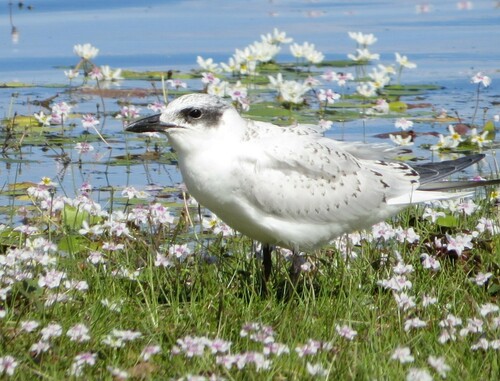
Australian Pratincole

Australian Pratincole

Stiltia isabella

Silhouette: Cristian Gutierrez-Ibanez · PhyloPic

LCLeast ConcernNTVUENCR
Daily sighting probability ~10% · With luck
at Kakadu National Park

In 3 days ~30% in a week ~60%

186 Verified sightings at Kakadu National Park From 2019 to 2026
186 In 1 park
November Best month
☀️ Diurnal When it's spotted

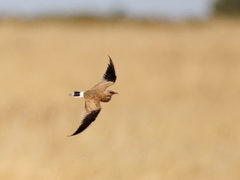
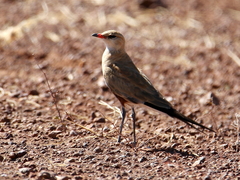
About the Australian Pratincole

The Australian pratincole (Glareola isabella) is a species of bird in the family Glareolidae. It breeds in Australia's interior and winters in northern and eastern parts of the continent, Indonesia and New Guinea. It is a medium-sized nomadic shorebird but is commonly found in arid inland Australia. It breeds predominantly from south-western Queensland to northern Victoria, and through central Australia to the Kimberley region in Western Australia. The Australian population is estimated at 60,000 individuals.

They are a migratory species that generally move to the southern parts of their distribution range to breed during spring and summer. During winter they migrate to northern Australia, New Guinea, Java, Sulawesi and southern Borneo. Although they are common, their occurrence is unpredictable and varies in location.

The Australian pratincole was formerly placed in the monotypic genus Stiltia. It was moved to the genus Glareola based on a 2022 molecular genetic study of the Charadriiformes by David Černý and Rossy Natale that showed that the species was embedded within the genus Glareola.

The pratincole is also known as the Arnhem Land grouse... Wikipedia →

Sounds

Call0:12

Australia · 2023

© Peter Boesman · XC860190 · CC BY-NC-ND 4.0

Uncertain0:24

Australia · 2023

© nick talbot · XC815383 · CC BY-NC-SA 4.0

Flight call0:21

Australia · 2017

© Tom Tarrant · XC494680 · CC BY-NC-SA 4.0

Global Distribution

Parks Where Found

# Park Country Daily sighting probability
1 Kakadu National Park 🇦🇺 Australia
~10%

More parks will be added in future updates.

Cities Where Found

# City Country Daily sighting probability
1 Denpasar 🇮🇩 Indonesia
<5%

Before you go

What are the chances of seeing an Australian Pratincole in Kakadu National Park?

With luck

About 10% of wildlife watchers report an Australian Pratincole sighting in Kakadu National Park on a given day, based on 186 verified sightings from GBIF citizen-science data from 2019 to 2026. It is the 90th most-seen of the 186 birds we can rate there. Over three days the chance rises to about 30%, and over a week to about 60%, if each day is a fresh chance.

When is the best time to see an Australian Pratincole in Kakadu National Park?

November

In that month about 30% of wildlife watchers report an Australian Pratincole in Kakadu National Park on a given day, against under 5% in March and April, the lowest months. February has too few records to rate.

What time of day is best to see an Australian Pratincole?

Between 9 am and noon

Across all the parks we cover, that three-hour window holds the most Australian Pratincole sightings with a recorded time, and about 9 in 10 of them come between 6 am and 6 pm: it is a daytime animal.

Where else can you see an Australian Pratincole?

Only Kakadu National Park, in our data

Kakadu National Park is the only park on Wallace's Line with enough records to rate Australian Pratincole sightings: about 10% of wildlife watchers there report one on a given day.

Which relatives of the Australian Pratincole live in Kakadu National Park?

Same order: Charadriiformes

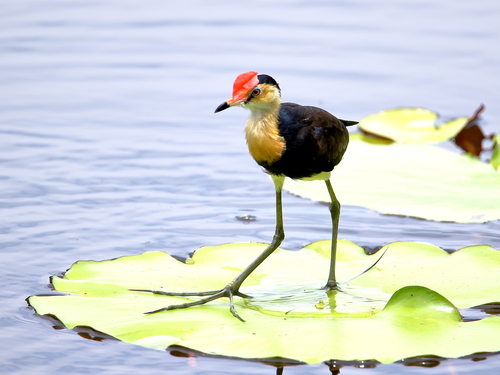
The closest relatives of the Australian Pratincole that you can see in Kakadu National Park (order Charadriiformes, Shorebirds and Allies) are Comb-crested Jacana (about 50%), Masked Lapwing (about 50%) and Whiskered Tern (about 20%), with each one's daily chance of a sighting.

Where does the Australian Pratincole sighting chance come from?

GBIF citizen-science records

It is estimated from how often the Australian Pratincole is recorded against all the birds logged in Kakadu National Park (186 verified sightings from 2019 to 2026), calibrated against known sighting rates. Figures are rounded to the nearest 10% because citizen-science data supports honest approximations, not decimals, and months with records from fewer than five people show "—". How it works.

← Back to Kakadu National Park