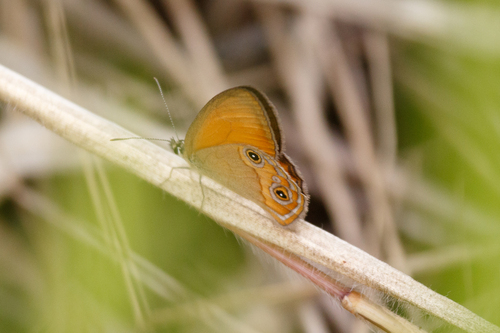
Shining Oak-Blue

Shining Oak-Blue

Arhopala micale

Daily sighting probability ~10% · With luck
at Kakadu National Park

In 3 days ~40% in a week ~70%

11 Verified sightings at Kakadu National Park From 2019 to 2026
38 In all 2 parks
January Best month
☀️ Diurnal When it's spotted

About the Shining Oak-Blue

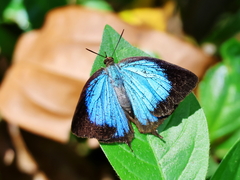
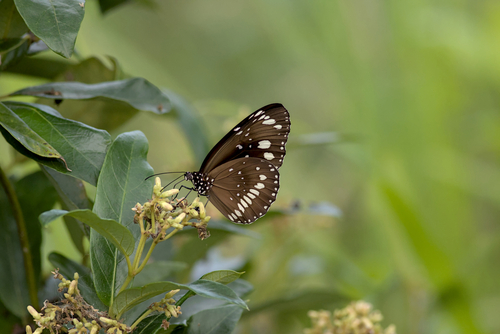
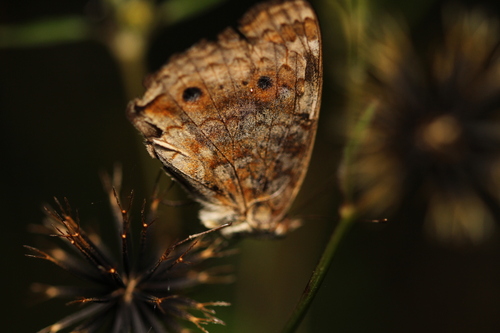
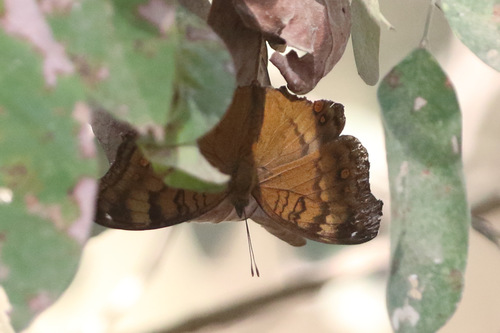
Arhopala micale, the common oakblue or shining oakblue, is a butterfly of the family Lycaenidae. The species comprises about 16 subspecies, which are found in Melanesia and New Guinea as well as the north coast of Australia (see subspecies section).

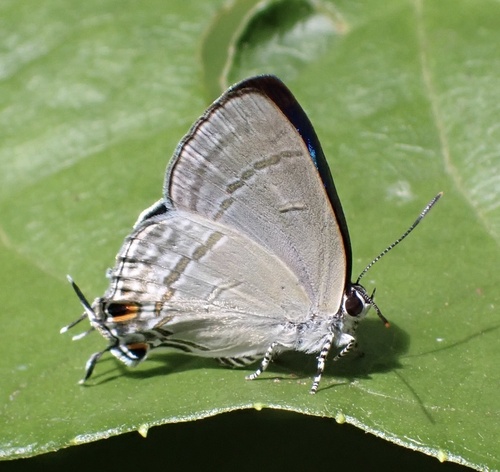
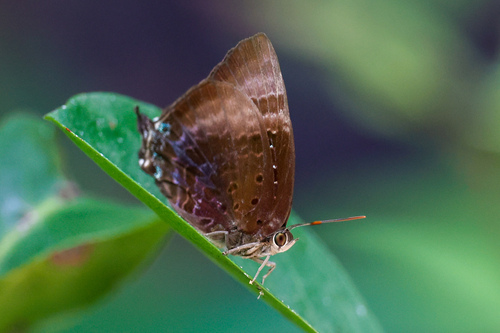
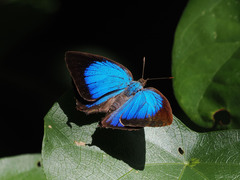
The wingspan of Arhopala micale is approximately 40 mm. The upper surface of the wings is very similar to that of A.sophrosyne, but overall it appears somewhat more ultramarine, particularly in the costal area of the forewing, which exhibits a more violetish-blue hue. The under surface lacks the intense brightening in the distal part of all the wings; the spots are larger, more irregular, and in the hindwing.— superba Rob. is beneath in both sexes browner, in the female above the black margin of the wings is broader and more sharply defined

The larvae feed on Buchanania arborescens, Cordia dichotoma, Calophyllum inophyllum, Terminalia muelleri, Glochidion ferdinandi, Cryptocarya hypospodia, Lagerstroemia speciosa, Hibiscus tiliaceus, Acmena, Cupaniopsis anacardioides, Heritiera littoralis and Oxera splendida. They are attended by the ant species Oecophylla smaragdina. Wikipedia →
Global Distribution

Parks Where Found

# Park Country Daily sighting probability
1 Kakadu National Park 🇦🇺 Australia
~10%
2 Daintree National Park 🇦🇺 Australia
~10%

Before you go

What are the chances of seeing a Shining Oak-Blue in Kakadu National Park?

With luck

About 10% of wildlife watchers report a Shining Oak-Blue sighting in Kakadu National Park on a given day, based on 11 verified sightings from GBIF citizen-science data from 2019 to 2026. It is the 36th most-seen of the 76 insects we can rate there. Over three days the chance rises to about 40%, and over a week to about 70%, if each day is a fresh chance.

When is the best time to see a Shining Oak-Blue in Kakadu National Park?

January and April

In those months about 30% of wildlife watchers report a Shining Oak-Blue in Kakadu National Park on a given day, against under 5% in February–March, May, August and November–December, the lowest months. Those are among Kakadu National Park's wettest months, with about 200 mm of rain a month against almost none in August.

What time of day is best to see a Shining Oak-Blue?

Between 10 am and 1 pm

Across all the parks we cover, that three-hour window holds the most Shining Oak-Blue sightings with a recorded time, and about 9 in 10 of them come between 6 am and 6 pm: it is a daytime animal.

Is Kakadu National Park the best place to see a Shining Oak-Blue?

Yes

Of the 2 parks where we can rate Shining Oak-Blue sightings, Kakadu National Park has the highest daily chance: about 10%. Next come Daintree National Park (Australia, about 10%).

Which relatives of the Shining Oak-Blue live in Kakadu National Park?

Same family: Lycaenidae

The closest relatives of the Shining Oak-Blue that you can see in Kakadu National Park (family Lycaenidae, Gossamer-winged Butterflies) are Black-Spotted Flash (about 10%), Tailless Lineblue (about 10%) and Purple Cerulean (about 10%), with each one's daily chance of a sighting.

Where does the Shining Oak-Blue sighting chance come from?

GBIF citizen-science records

It is estimated from how often the Shining Oak-Blue is recorded against all the insects logged in Kakadu National Park (11 verified sightings from 2019 to 2026), calibrated against known sighting rates. Figures are rounded to the nearest 10% because citizen-science data supports honest approximations, not decimals, and months with records from fewer than five people show "—". How it works.

← Back to Kakadu National Park