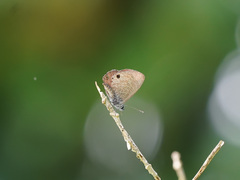
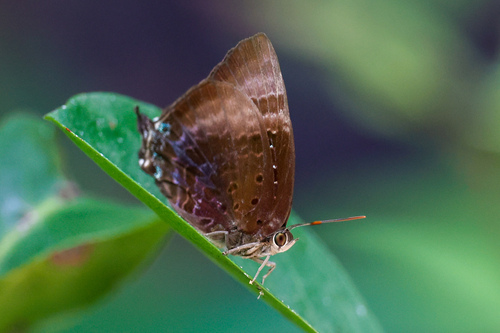
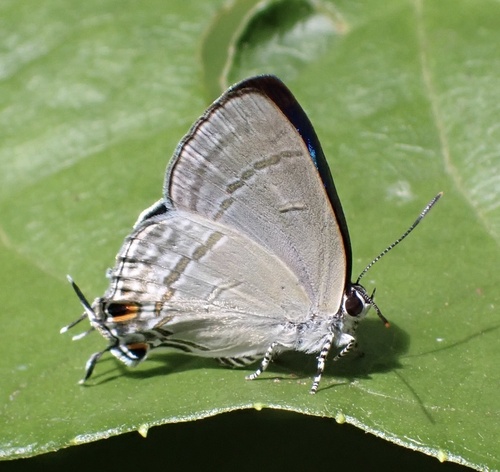
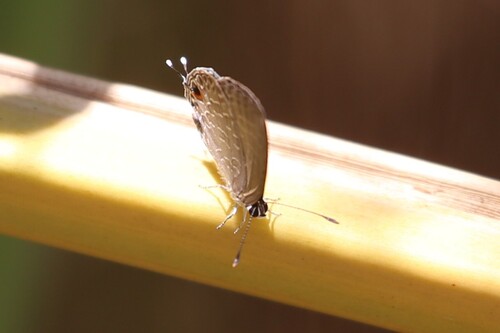
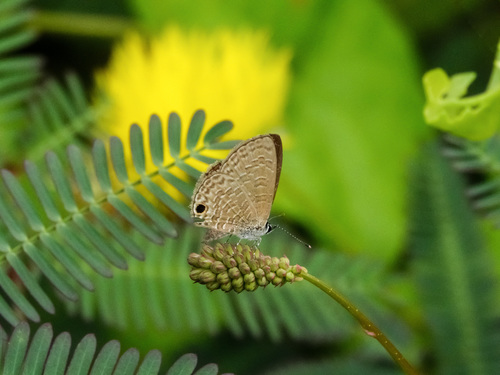
Tailless Lineblue

Tailless Lineblue

Prosotas dubiosa

Daily sighting probability ~10% · With luck
at Kakadu National Park

In 3 days ~30% in a week ~50%

5 Verified sightings at Kakadu National Park From 2019 to 2026
35 In all 3 parks
December Best month
☀️ Diurnal When it's spotted

About the Tailless Lineblue

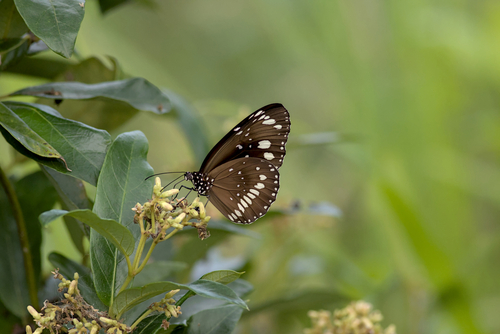
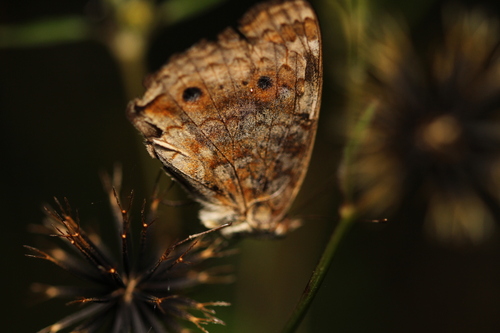
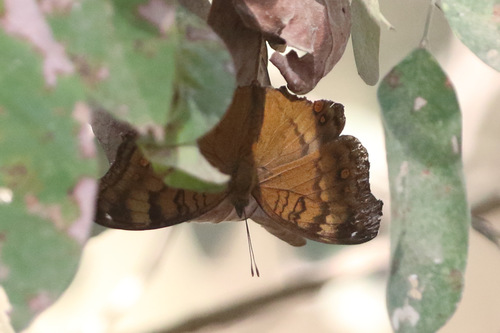
Prosotas dubiosa, the tailless lineblue or small purple lineblue, is a blue butterfly (Lycaenidae) found in Asia to Australia. The species was first described by Georg Semper in 1879. Unlike many other species in the Prosotas genus, P. dubiosa does not have hair-like filaments ("tails") protruding from its hindwings, thus the tailless in its common name.

Prosotas dubiosa subardates (Piepers & Snellen, 1918) - Java, Sulawesi The butterfly occurs in Sri Lanka and peninsular India and the Himalayas from Sikkim to Assam. The range extends onto Myanmar and Yunnan, and, possibly Thailand, Peninsular Malaysia, Singapore, Hong Kong, Sumatra, Borneo and Java. Possibly Philippines and Sulawesi. Further east the butterfly occurs in Australia, New Guinea and the Solomon Islands. In Australia the butterfly occurs from Northern Australia to New South Wales (Coffs Harbour).

List of butterflies of India (Lycaenidae... Wikipedia →
Global Distribution

Parks Where Found

# Park Country Daily sighting probability
1 Cuc Phuong National Park 🇻🇳 Vietnam
~20%
2 Kaeng Krachan National Park 🇹🇭 Thailand
~10%
3 Kakadu National Park 🇦🇺 Australia
~10%

Cities Where Found

# City Country Daily sighting probability
1 Jabalpur 🇮🇳 India
~30%
2 Tuen Mun 🇨🇳 China
~20%
3 Salem 🇮🇳 India
~20%
4 Guwahati 🇮🇳 India
~10%
5 Pune 🇮🇳 India
~10%
6 Bengaluru 🇮🇳 India
~10%
7 Mumbai 🇮🇳 India
~10%
8 Kaohsiung 🇹🇼 Taiwan
~10%
9 Hong Kong 🇨🇳 China
~10%
10 Singapore 🇸🇬 Singapore
~10%

Before you go

What are the chances of seeing a Tailless Lineblue in Kakadu National Park?

With luck

About 10% of wildlife watchers report a Tailless Lineblue sighting in Kakadu National Park on a given day, based on 5 verified sightings from GBIF citizen-science data from 2019 to 2026. It is the 62nd most-seen of the 76 insects we can rate there. Over three days the chance rises to about 30%, and over a week to about 50%, if each day is a fresh chance.

When is the best time to see a Tailless Lineblue in Kakadu National Park?

February and December

In those months about 30% of wildlife watchers report a Tailless Lineblue in Kakadu National Park on a given day, against under 5% in January, March–April and August–November, the lowest months. Those are among Kakadu National Park's wettest months, with about 270 mm of rain a month against almost none in August.

What time of day is best to see a Tailless Lineblue?

Between 10 am and 1 pm

Across all the parks we cover, that three-hour window holds the most Tailless Lineblue sightings with a recorded time, and about 9 in 10 of them come between 6 am and 6 pm: it is a daytime animal.

Is Kakadu National Park the best place to see a Tailless Lineblue?

3rd of 3

Of the 3 parks where we can rate Tailless Lineblue sightings, Kakadu National Park ranks 3rd at about 10%. The best odds are in Cuc Phuong National Park (Vietnam, about 20%) and Kaeng Krachan National Park (Thailand, about 10%).

Which relatives of the Tailless Lineblue live in Kakadu National Park?

Same family: Lycaenidae

The closest relatives of the Tailless Lineblue that you can see in Kakadu National Park (family Lycaenidae, Gossamer-winged Butterflies) are Shining Oak-Blue (about 10%), Black-Spotted Flash (about 10%) and Purple Cerulean (about 10%), with each one's daily chance of a sighting.

Where does the Tailless Lineblue sighting chance come from?

GBIF citizen-science records

It is estimated from how often the Tailless Lineblue is recorded against all the insects logged in Kakadu National Park (5 verified sightings from 2019 to 2026), calibrated against known sighting rates. Figures are rounded to the nearest 10% because citizen-science data supports honest approximations, not decimals, and months with records from fewer than five people show "—". How it works.

← Back to Kakadu National Park