Forget-Me-Not

Forget-Me-Not

Catochrysops strabo

Daily sighting probability ~10% · With luck
at Kanha National Park

In 3 days ~40% in a week ~70%

5 Verified sightings at Kanha National Park From 2019 to 2026
5 In 1 park
October Best month
☀️ Diurnal When it's spotted

About the Forget-Me-Not

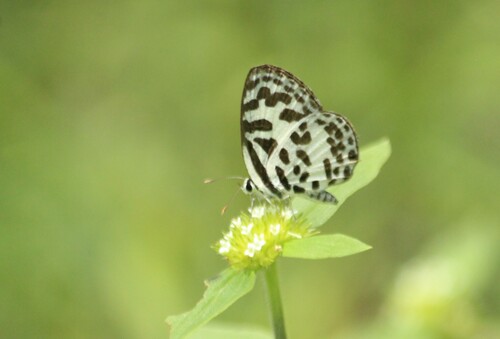
Catochrysops strabo, the forget-me-not, is a small butterfly found in Asia that belongs to the lycaenids or blues family. The species was first described by Johan Christian Fabricius in 1793. It is found in Sri Lanka, Maldives, India, from Sikkim to Indochina and in Sundaland, Sulawesi and the Philippines.

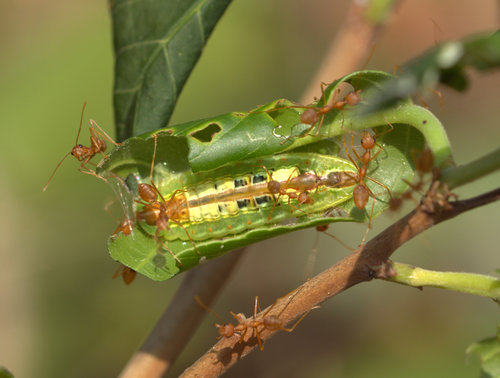
The wingspan is 25–30 mm. The larvae feed on Ougeinia dalbergioides, Schleichera trijuga and Desmodium species. Catochrysops strabo strabo Catochrysops strabo asoka (Himalayas, Massuri) Catochrysops strabo caledonica (Loyalty)

Catochrysops strabo celebensis (Sulawesi, Tukangbesi, Kalao, Buton, Sula, Maluku) Catochrysops strabo lithargyria (Sri Lanka, Assam, Burma) Catochrysops strabo luzonensis (Philippines, Palawan, Talaud, Sangihe) Catochrysops strabo naerina (Mentawi)

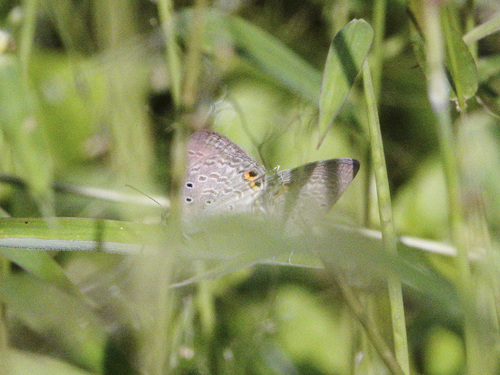
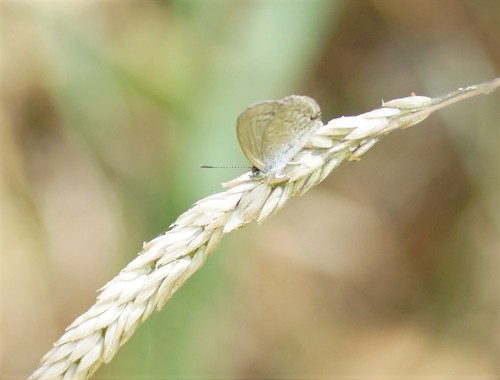
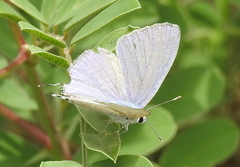
Upperside: Pale violet with in certain lights a blue, slightly silvery sheen. Forewing: a slender anteciliary dark line. Hindwing: interspace 1 with a short transverse subterminal brown bar edged inwardly with white; interspace 2 with a prominent round black spot edged very faintly on the inner side by a diffuse bluish lunule; the dark subterminal spots of the underside... Wikipedia →

Global Distribution

Parks Where Found

# Park Country Daily sighting probability
1 Kanha National Park 🇮🇳 India
~10%

More parks will be added in future updates.

Cities Where Found

# City Country Daily sighting probability
1 Jabalpur 🇮🇳 India
~30%
2 Salem 🇮🇳 India
~20%
3 Tuen Mun 🇨🇳 China
~20%
4 Hyderabad 🇮🇳 India
~10%
5 Prayagraj 🇮🇳 India
~10%
6 Mumbai 🇮🇳 India
~10%
7 Dhaka 🇧🇩 Bangladesh
~10%
8 Chennai 🇮🇳 India
~10%
9 Pune 🇮🇳 India
~10%
10 Bengaluru 🇮🇳 India
~10%

Before you go

What are the chances of seeing a Forget-Me-Not in Kanha National Park?

With luck

About 10% of wildlife watchers report a Forget-Me-Not sighting in Kanha National Park on a given day, based on 5 verified sightings from GBIF citizen-science data from 2019 to 2026. It is the 81st most-seen of the 106 insects we can rate there. Over three days the chance rises to about 40%, and over a week to about 70%, if each day is a fresh chance.

When is the best time to see a Forget-Me-Not in Kanha National Park?

October

In that month about 30% of wildlife watchers report a Forget-Me-Not in Kanha National Park on a given day, against under 5% in February–March and May–September, the lowest months. That is one of Kanha National Park's driest months, with about 50 mm of rain against 430 mm in July.

What time of day is best to see a Forget-Me-Not?

Between 11 am and 2 pm

Across all the parks we cover, that three-hour window holds the most Forget-Me-Not sightings with a recorded time, and about 9 in 10 of them come between 6 am and 6 pm: it is a daytime animal.

Where else can you see a Forget-Me-Not?

Only Kanha National Park, in our data

Kanha National Park is the only park on Wallace's Line with enough records to rate Forget-Me-Not sightings: about 10% of wildlife watchers there report one on a given day.

Which relatives of the Forget-Me-Not live in Kanha National Park?

Same family: Lycaenidae

The closest relatives of the Forget-Me-Not that you can see in Kanha National Park (family Lycaenidae, Gossamer-winged Butterflies) are Common Pierrot (about 20%), Large Oakblue (about 20%) and Gram Blue (about 20%), with each one's daily chance of a sighting.

Where does the Forget-Me-Not sighting chance come from?

GBIF citizen-science records

It is estimated from how often the Forget-Me-Not is recorded against all the insects logged in Kanha National Park (5 verified sightings from 2019 to 2026), calibrated against known sighting rates. Figures are rounded to the nearest 10% because citizen-science data supports honest approximations, not decimals, and months with records from fewer than five people show "—". How it works.

← Back to Kanha National Park