Grey Count

Grey Count

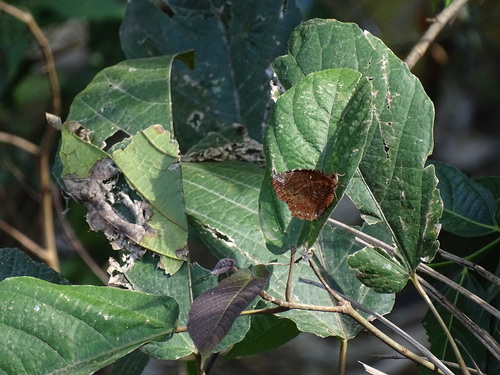
Tanaecia lepidea

Daily sighting probability ~30% · Possible
at Kanha National Park

In 3 days ~60% in a week ~90%

15 Verified sightings at Kanha National Park From 2019 to 2026
55 In all 5 parks
November Best month
☀️ Diurnal When it's spotted

About the Grey Count

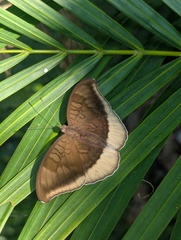
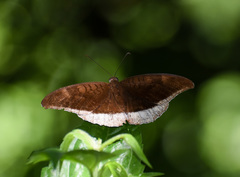
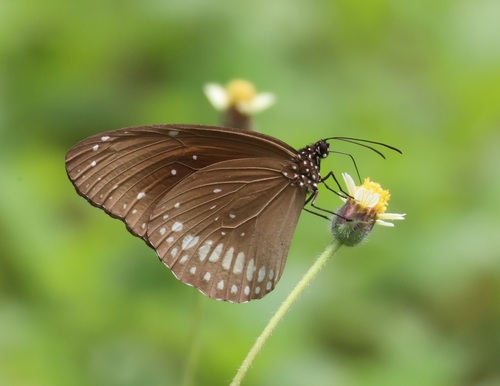
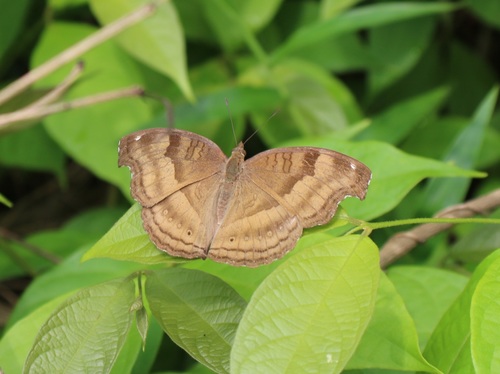
Tanaecia lepidea, the grey count, is a species of nymphalid butterfly found in South and Southeast Asia. The upperside is dark brown, with obscure black markings of transverse lines across the cells of both forewings and hindwings and an oblique discal fascia on the forewing. An ash-grey continuous band flows along the termen of forewings and hindwings, gradually broadening from the narrow apex of the forewing, to the tornus of the hindwing, where it covers about one-third of the wing.

The cilia are white. The antennae, head, thorax and abdomen are dark brown; beneath, the antennae are ochraceous, the rest dusky white washed with ochraceous. The underside is brown. The colours are paler on the hindwing; the forewing somewhat narrowly, the hindwing much more broadly suffused with lilacine-grey on the terminal margins and along the dorsal margin of the hindwing. Cells of both wings have dark brown sinuous transverse lines and looplike markings; both forewings and hindwings are crossed by somewhat diffuse broad discal and narrower postdiscal dark bands, prominent on the forewing, obscure on the hindwing. The male has a patch of specialized dark scales above... Wikipedia →
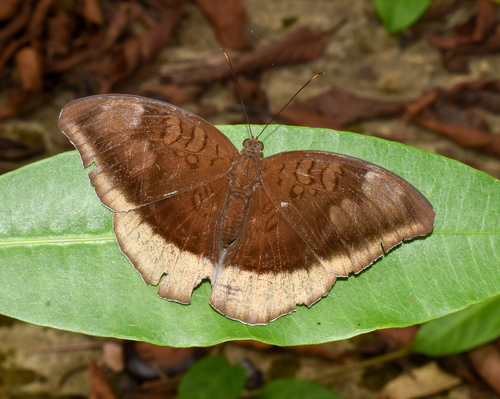
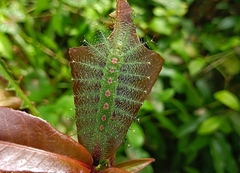
Global Distribution

Parks Where Found

# Park Country Daily sighting probability
1 Kanha National Park 🇮🇳 India
~30%
2 Periyar National Park 🇮🇳 India
~20%
3 Khao Yai National Park 🇹🇭 Thailand
~20%
4 Cat Tien National Park 🇻🇳 Vietnam
~10%
5 Doi Inthanon National Park 🇹🇭 Thailand
~10%

Cities Where Found

# City Country Daily sighting probability
1 Guwahati 🇮🇳 India
~30%
2 Thiruvananthapuram 🇮🇳 India
~20%
3 Kochi 🇮🇳 India
~20%
4 Chattogram 🇧🇩 Bangladesh
~20%
5 Kozhikode 🇮🇳 India
~20%
6 Ponnani 🇮🇳 India
~10%

Before you go

What are the chances of seeing a Grey Count in Kanha National Park?

Possible

About 30% of wildlife watchers report a Grey Count sighting in Kanha National Park on a given day, based on 15 verified sightings from GBIF citizen-science data from 2019 to 2026. It is the 20th most-seen of the 106 insects we can rate there. Over three days the chance rises to about 60%, and over a week to about 90%, if each day is a fresh chance.

When is the best time to see a Grey Count in Kanha National Park?

April and November

In those months about 40% of wildlife watchers report a Grey Count in Kanha National Park on a given day, against under 5% in May and July–September, the lowest months. Those are among Kanha National Park's driest months, with about 15 mm of rain a month against 430 mm in July.

What time of day is best to see a Grey Count?

Between 11 am and 2 pm

Across all the parks we cover, that three-hour window holds the most Grey Count sightings with a recorded time, and about 9 in 10 of them come between 6 am and 6 pm: it is a daytime animal.

Is Kanha National Park the best place to see a Grey Count?

Yes

Of the 5 parks where we can rate Grey Count sightings, Kanha National Park has the highest daily chance: about 30%. Next come Periyar National Park (India, about 20%) and Khao Yai National Park (Thailand, about 20%).

Which relatives of the Grey Count live in Kanha National Park?

Same family: Nymphalidae

The closest relatives of the Grey Count that you can see in Kanha National Park (family Nymphalidae, Brush-footed Butterflies) are Common Evening Brown (about 40%), Baronet (about 40%) and Common Crow (about 30%), with each one's daily chance of a sighting.

Where does the Grey Count sighting chance come from?

GBIF citizen-science records

It is estimated from how often the Grey Count is recorded against all the insects logged in Kanha National Park (15 verified sightings from 2019 to 2026), calibrated against known sighting rates. Figures are rounded to the nearest 10% because citizen-science data supports honest approximations, not decimals, and months with records from fewer than five people show "—". How it works.

← Back to Kanha National Park